



Lace Curtains: History, Design, and Production Insights
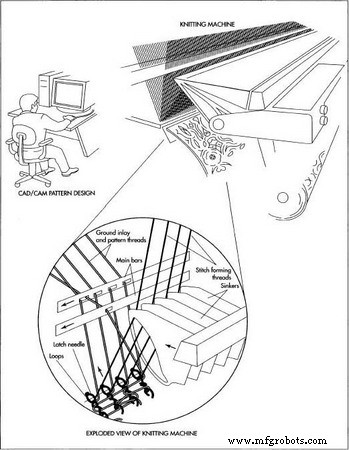
The term lace originates from the Latin word lacques, meaning loop or snare. It refers to any open‑work fabric created by looping, twisting, or knotting threads—by hand or machine—using fibers such as silk, linen, cotton, polyester, or rayon. Hand‑made laces today are typically linen, cotton, or silk, while machine‑made varieties favor polyester, cotton, or blended fibers for durability and cost efficiency. Lace is characterized by a contrast between open mesh and filled areas, producing an airy, light textile that allows light and air to pass through while offering privacy. The resulting fabric is ideal for window treatments, clothing embellishment, and decorative accents. The earliest lace curtains are undocumented, but the mid‑nineteenth century marked the first widespread use of machine‑produced lace, making curtains affordable to a broader market. These curtains complemented heavy draperies in Victorian homes, providing a delicate, translucent barrier that enhanced privacy and aesthetics. Modern lace curtains are manufactured on large Jacquard Raschel looms, producing thousands of yards annually at a reasonable price. Synthetic options such as polyester offer low maintenance and a wide color palette. Lace has been valued for millennia. Ancient Egyptian art from ~2000 B.C. depicts lace‑like hairnets, while Babylonian and Assyrian garments featured knotted ornamental braiding. During the Middle Ages, ecclesiastical textiles incorporated lace, and by the fifteenth century, it became a luxury in noble attire. Hand‑crafted laces made from fine Flemish linen were prized until the 19th century, when sumptuary laws restricted gold, silver, and silk, boosting lace's popularity. The Industrial Revolution introduced machine‑made lace in the early 1800s. The British lace industry pioneered knitted net technology, which lowered costs and enabled mass production. By 1870, American and European manufacturers were producing inexpensive lace curtains, including Nottingham’s signature square‑mesh pattern. Lace curtains peaked in Victorian homes in the 1880s, but by the early 1900s, they fell out of favor among the upper class. Today, lace curtains enjoy a resurgence, valued for their elegance and lightness. Lace curtains are typically woven from polyester, cotton, or a blend of both. Yarn is supplied in 5‑lb (2.3 kg) spools, usually in a natural beige tone. Colored curtains are dyed after weaving, ensuring consistent color across large panels. Design begins with a hand sketch, which is then scanned into a CAD/CAM system. Designers translate the sketch into a digital pattern, assigning stitch types—heavy, lace, or no stitch—for each pixel. The finalized pattern is stored on a computer disk and loaded into the lace‑making machine. Each roll carries a production ticket that records defects such as dropped stitches. Computerized looms detect irregularities via optical sensors, and supervisors review inspection reports. Dyed curtains undergo color checks; improperly dyed pieces return to the dye house. After cutting and sewing, curtains are inspected for size, shape, and seam integrity. Defective items may be reworked or sold as discounted seconds. Cotton‑based curtains produce lint that must be vacuumed to maintain a safe work environment; older plants rely on manual vacuuming, while newer facilities have integrated suction systems. Cotton lint is non‑recyclable and is discarded as waste. Polyester lint is recyclable; leftover yarn is baled and can be remade into new threads. Dye baths generate chemical effluents that are neutralized and filtered to meet federal water‑release standards.
Background
History
Raw Materials
Design
The Manufacturing Process
Making the Curtains
Dyeing
Quality Control
By‑products / Waste
Manufacturing process
- What is VMC Machining? An Expert Overview of Vertical Machining Centers
- Expert Guide to Aluminum Laser Marking: Precision, Durability, and Industry Applications
- MIG vs. TIG Welding: Selecting the Right Arc Welding Technique for Your Project
- Comprehensive Guide to Laser Marking: Types, Benefits, and Applications
- Key Considerations for High‑Volume Swiss Machining
- Lace Curtains: History, Design, and Production Insights
- Contrinex 2020: Cloud-Ready Sensors & Bluetooth Light Curtains for Safety
- Top Causes of Light Curtain Failures and How to Address Them
- Enhancing Safety in Robotic Workcells with Light Curtains and Advanced Protective Devices
- Robotic System Safety Solutions: Protecting Workers with Advanced Barriers and Sensors