



Shaving Cream: History, Ingredients, and Modern Manufacturing
Background
Shaving cream is a specialized formulation designed to soften and lubricate hair while protecting the skin during shaving. Compared to soap, oil, or plain water, it offers superior comfort, smoother results, and reduced irritation.
Historically, the first dedicated shaving cream appeared with Burma Shave in the early 20th century, rapidly gaining popularity. Prior to this, lather was produced by soaps and rudimentary soaps, offering only limited benefits.
The craft of soapmaking dates back centuries. By the 7th century Italian soapmakers were organized into guilds; by the 14th and 15th centuries soap production in Savona, Italy—giving rise to the French savon, Spanish jabón, and German Seife—had already taken root. Early American settlers produced soap by heating animal fat with lye in open kettles, a technique that persisted into the 20th century.
In the 18th century, manufacturers refined their processes by selecting higher‑quality fats and purer lye, leading to products such as Castile soap (originally olive oil‑based) that remain favored for facial cleansing today.
Commercial soap production grew in the late 17th and early 18th centuries, often linked to candle and tallow manufacturing. William Colgate pioneered in‑house fat rendering in the early 1800s, founding the company that still bears his name and remains a major producer of soap and cosmetics.
By the 1840s, Vroom & Fowler introduced Walnut Oil Military Shaving Soap—a concentrated foaming bar specifically for shaving. During World War II, shortages of controlled animal fats prompted widespread recycling of cooking fats, prompting manufacturers to improve purity and consistency. The war also sparked the invention of aerosol technology, which enabled the first aerosol shaving creams in 1950. Today, aerosols dominate the market.
Raw Materials
The goal of a shaving preparation is to hydrate and soften hair, cushion the razor, and leave a soothing film that matches skin pH. Typical formulations balance surfactants, emollients, and preservatives.
Standard recipes (subject to cosmetic regulations) include approximately 8.2% stearic acid, 3.7% triethanolamine, 5% lanolin, 2% glycerin, 6% polyoxyethylene sorbitan monostearate, and 79.6% water. Stearic acid provides firmness; triethanolamine acts as a surfactant; lanolin and the sorbitan ester are emulsifiers; glycerin offers moisture and softness.
Variations may replace lanolin with cocamidopropyl betaine, substitute triethanolamine with alternative surfactants, or use different oils and waxes. Proportional adjustments, processing times, and the choice of fragrance or aerosol propellant (butane, isobutane, propane) give each brand its distinct performance and feel.
The Manufacturing Process
Shaving cream production follows a controlled, laboratory‑style protocol, divided into two main phases.
- Oil‑phase heating: Stearic acid, lanolin, and polyoxyethylene sorbitan monostearate are melted in a jacketed kettle at 179–188 °F (80–85 °C). The kettle’s design—resembling a double boiler with circulating steam—ensures even heating. Blades inside the kettle mix the oils continuously.
- Cooling to 152 °F (65 °C): The mixture is allowed to cool, preparing it for the water‑phase.
- Water‑phase addition: Water, glycerin, and triethanolamine are introduced. Mixing continues for ~40 minutes until the blend is uniform.
- Fragrance addition: When the temperature drops to 125–134 °F (50–55 °C), volatile perfumes are added to avoid evaporation.
- Final cooling: The mixture is cooled to 89 °F (30 °C). A viscous mass is then passed through a silk or stainless‑steel screen to eliminate lumps and foreign particles.
- Packaging: For tubes, the cream is dispensed, capped, and crimped. For aerosols, the cream is poured into a can, sealed, and propellant (4–5 % of the can) is injected. The can is purged to relieve excess pressure and tested for integrity.
Quality Control
All modern shaving creams are subject to rigorous quality control and FDA regulation. Batches undergo in‑line and laboratory testing for pH, foam height, absorption rate, and microbial purity. Water used in production is typically distilled or UV‑treated, and microbiologists routinely test final products.
Individual containers are coded, enabling traceability from factory to shelf. Propellant content is tightly regulated; excess propellant would dry the cream upon dispensing, rendering it unusable.
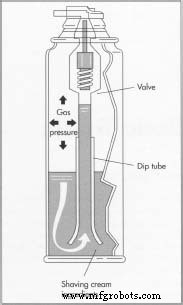
Manufacturing process
- The Ice Cream Cone: From Fairground Innovation to Global Sweet Icon
- Antibacterial Soap: Composition, Manufacturing, and Regulatory Landscape
- Ice Cream: A Rich History, Modern Production, and the Future of Flavors
- Soap: From Ancient Cleansing to Modern Manufacturing
- Laundry Detergent: History, Chemistry, and Production Processes
- Shaving Cream: History, Ingredients, and Modern Manufacturing
- Axiom Equipment Group Organizes Ice Cream Social to Fund Galloway Health Centre Handi‑van
- Unlocking Web Automation: How UiPath Simplifies Complex Internet Tasks
- Understanding the Soap Manufacturing Process: From Fats to Saponification
- Carbolic Soap Explained: History, Uses, and Disinfectant Power