



Why Electroless Nickel Plating Is the Industry’s Preferred Choice
Electroless nickel plating—often called EN plating—has become a cornerstone of modern manufacturing. By depositing a nickel‑phosphorus or nickel‑boron alloy without electric current, it delivers uniform, high‑hardness coatings that excel in corrosion resistance, wear protection, and dimensional stability.
Across aerospace, automotive, electronics, medical devices, oil & gas, and precision machining, companies are choosing EN plating to extend product life, reduce maintenance, and meet increasingly stringent performance standards.
Unlike traditional electroplating, the chemical reaction that drives EN plating is independent of electrical conductivity. This allows a truly even layer, even on deep holes, threads, and complex geometries—a key reason for its popularity in precision parts.
Unmatched Corrosion Resistance
The dense nickel‑phosphorus barrier shields substrates from moisture, chemicals, oxidation, and harsh environments. High‑phosphorus grades are especially effective, making EN plating ideal for marine vessels, chemical processing units, oil & gas components, salt‑exposed automotive parts, and food‑processing machinery.
Compared with many conventional coatings, EN plating delivers longer‑lasting protection, cutting lifecycle costs.
Uniform Coating Thickness
Traditional electroplating can leave uneven layers due to variable current density—edges over‑plated, recesses under‑plated. EN plating deposits material consistently across every surface, preserving tight tolerances even on the most intricate parts.
Critical for CNC‑machined components, valves, medical instruments, molds, and aerospace assemblies, this uniformity eliminates the need for post‑processing adjustments.
Superior Hardness and Wear Resistance
With proper heat treatment, EN coatings can match or exceed hard chrome in hardness, resisting abrasion, friction, and mechanical damage. Gears, shafts, bearings, molds, and hydraulic components routinely benefit from the extended service life EN plating offers.
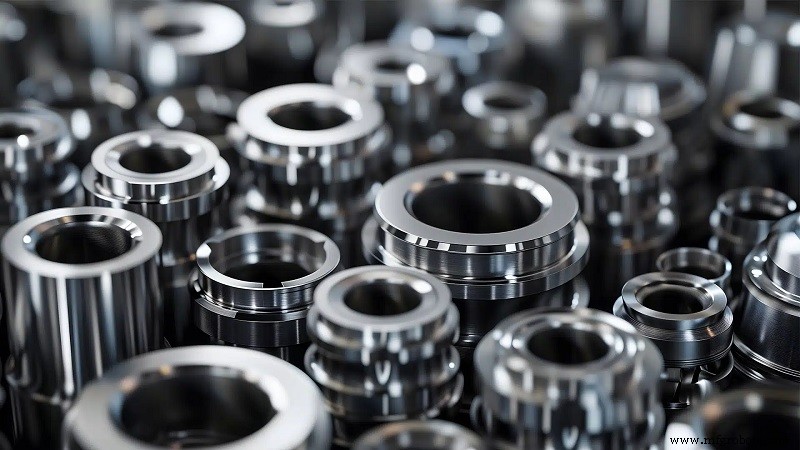
For a visual reference, see the image below.
Enhanced Lubricity and Low Friction
Its low coefficient of friction yields smoother operation and reduced wear in mechanical assemblies, hydraulic systems, injection molds, sliding components, and automotive parts. Selective incorporation of PTFE or other particles can further boost self‑lubrication.
Versatile Substrate Compatibility
EN plating adheres strongly to steel, stainless steel, aluminum, copper, brass, titanium, and even some plastics when properly prepared. This flexibility supports multi‑material assemblies across diverse sectors.
Improved Surface Appearance
Beyond function, EN plating delivers a polished, bright finish ranging from matte to semi‑bright, enhancing both industrial and consumer product aesthetics.
Precise Dimensional Control
Because deposition is uniform and predictable, designers can account for plating thickness in tolerances, ensuring fit, seal, and assembly accuracy without excessive grinding.
Non‑Magnetic Options
High‑phosphorus EN coatings can be non‑magnetic, making them suitable for electronics, aerospace sensors, medical devices, and scientific instruments where magnetic interference must be minimized.
Environmentally Friendly Alternative to Hard Chrome
Hard chrome uses hexavalent chromium, a regulated hazardous material. EN plating offers comparable hardness, corrosion resistance, and wear protection without the environmental and health risks, aligning with sustainability goals.
Design Considerations for EN Plating
Engineers should evaluate part geometry, tolerances, and substrate compatibility early in the design phase.
Coating Thickness Planning
Include plating thickness in engineering drawings and tolerances, especially for threads, precision fits, and sealing surfaces.
Surface Preparation
Polish, grind, or finish the base material before plating to achieve the desired cosmetic finish.
Heat Treatment Compatibility
Confirm that any post‑plating heat treatment won’t compromise the base material’s properties, especially for thin‑walled or precision parts.
Masking and Selective Plating
Use masking to protect areas that should remain uncoated, reducing rework and cost.
Future Trends
- Eco‑friendly plating chemistries
- Advanced automation and process control
- Composite and nano‑coating enhancements
- Broader adoption in high‑precision sectors
Conclusion
Electroless nickel plating delivers corrosion resistance, uniform thickness, high hardness, wear protection, dimensional stability, and aesthetic appeal. Its ability to coat complex geometries evenly makes it indispensable for precision manufacturing and high‑performance applications. As industries demand durability, reliability, and sustainability, EN plating remains a leading surface‑finishing solution.
Manufacturing process
- Types of Welding Flames: How They Affect Weld Quality
- Elasticity Explained: How Materials Recover Under Stress
- Advanced Automation in Bar Feeders Enhances CNC Lathe Efficiency
- Build Your Own DIY Homework Writing Machine at Home
- Single‑Miter vs. Double‑Miter Saw: Which Cutting System Gives You Precision and Ease?
- Master Rotary Encoders with Arduino: How They Work & Step‑by‑Step Integration
- Elevators: Design, History, and Future Innovations
- The Evolution of Galoshes: From Medieval Boots to Modern Innovation
- Comprehensive Guide to Stud Welding: Definition, Applications & Benefits
- Bluetooth‑Controlled Car: DIY Arduino Remote Vehicle