



When to Replace or Re‑Grind Ironworker Tooling: Key Indicators & Expert Guidance
February 11, 2026
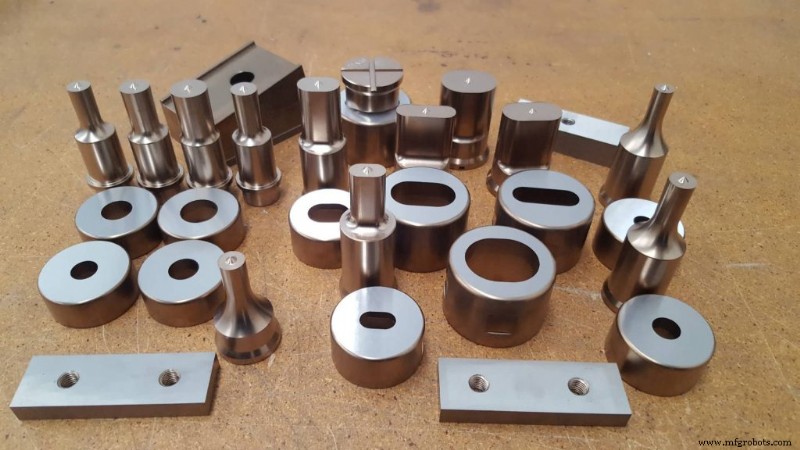
Upgrade your ironworker tooling with Gunna Engineering to eliminate cut‑quality issues and deliver durable, high‑performance solutions for Melbourne’s manufacturing sectors.
Precision steel fabrication demands tools that retain dimensional accuracy during continuous operation. When operators notice inconsistent cutting, it often signals deteriorating tooling integrity. Regular inspections can preempt downtime and sustain production reliability.
Performance Indicators That Affect Ironworker Tooling Output
Manufacturing inconsistencies often surface when tooling loses edge sharpness or structural alignment. Operators may observe varied cut quality, increased material drag, or irregular shearing performance during production. Machine strain rises as worn surfaces require more force to maintain standard output.
Dimensional variation accelerates if wear goes undetected during busy fabrication schedules. Routine reviews help identify small deviations before they compromise entire batches or downstream processes. Recording these changes provides a clear reference for assessing long‑term tooling fatigue.
Review the study "Numerical Evaluation of the Tool Wear Influence on Metal‑Punching Processes" for deeper insight into wear progression and its impact on cut quality.
Material and Operational Clues You Should Never Ignore
Surface defects, mechanical resistance, and abnormal cutting responses often serve as early warnings of progressive wear. These signs may appear minor initially but can worsen as structural hardness declines. Monitoring operational trends ensures machinery maintains stable performance under repetitive load conditions.
Watch for the following indicators:
- Burr Formation: Raised or jagged edges develop when cutting faces lose sharpness, indicating insufficient shearing efficiency across the tool surface.
- Increased Machine Strain: Higher resistance during each stroke signals fatigued cutting geometry that forces the machine to compensate with excess load.
- Distorted Workpieces: Irregular or misshaped components reveal alignment inconsistencies caused by uneven wear across the punch and die set.
- Surface Drag Marks: Linear friction trails form when tool faces lose hardness and can no longer glide smoothly through the material.
- Inconsistent Punch Ejection: Delayed or uneven material release indicates reduced clearance between mating components and impaired punch recovery.
Conditions That Require Tooling Replacement
When wear patterns exceed serviceable limits, replacing ironworker tooling becomes the most efficient option. Tools that fall outside dimensional or hardness thresholds no longer maintain safe or repeatable cutting performance. Replacing these components restores accuracy and reduces unwanted machine vibration during heavy‑duty fabrication.
Assess the following conditions:
- Oversized Punch Diameters: Increased punch diameters disrupt hole accuracy, compromise dimensional tolerance and elevate rework requirements.
- Severe Chipping: Edge breakdown weakens tool stability, causes inconsistent load transfer and accelerates structural fatigue.
- Excessive Re‑Grind Loss: Material loss from repeated sharpening reduces tool rigidity and shortens its functional service life.
- Hardness Degradation: Reduced hardness lowers resistance to deformation under pressure and affects cutting uniformity.
- Permanent Alignment Distortion: Warped tooling prevents controlled cuts, creates irregular shear contact and transfers damaging stress to the frame.
Precision Tooling Expertise for Enhanced Fabrication Output
Consistent production quality improves once tooling is accurately restored, correctly profiled, or replaced to achieve the cutting geometry required for demanding fabrication work.
Gunna Engineering delivers precision‑engineered tooling solutions built to perform under heavy‑duty fabrication demands while maintaining consistent production accuracy. Our specialised machining capability and proven refurbishment expertise ensure reliable, high‑tolerance ironworker tooling for workshops that require durable, long‑life performance.
Contact us for expert assessment, re‑grinding solutions, and replacement options tailored to demanding load conditions.
Related Blog Article: Punch & Die Clearance Guide: Choosing the Right Gap for Mild Steel, Stainless Steel, and Aluminium
Optimized by: Netwizard SEO
Manufacturing process
- Stamping: Types, Processes & Practical Applications in Metal Fabrication
- Fiberboard (MDF) Production: Process, Quality, and Future Trends
- Gelatin: From Ancient Protein to Modern Applications – Production, Uses, and Safety
- Precision Machining: Standard vs. Non-Standard Parts Explained
- Mining Iron Ore: Process, Types, and Extraction Techniques
- Build a Reliable Arduino-Based Lie Detector
- Raspberry Pi–Controlled Aquaponics System: Build Guide & Code
- Screwdrivers: From Archimedes to Modern Manufacturing
- Sintering Iron Ore Fines: Enhancing Blast Furnace Efficiency
- How Chip Vending Machines Deliver Hot, Fresh French Fries on Demand