



Sheet Metal Fabrication: Process, Techniques, and Industrial Applications
Sheet metal fabrication transforms flat metal sheets into functional components using advanced machinery and precision engineering. It’s a cornerstone of modern manufacturing across automotive, aerospace, healthcare, and electronics.
Understanding Sheet Metal Fabrication
At its core, sheet metal fabrication involves cutting, forming, and joining metal sheets—typically stainless steel, aluminum, copper, brass, zinc, or carbon steel—into desired shapes. Sheet gauges range from 0.006 to 0.25 inches, allowing designers to choose the right balance of malleability and strength for each application.
Computer‑aided design (CAD) and computer‑numerical control (CNC) machining enable the creation of accurate 3‑D models that are converted into G‑code. This code drives the machinery to perform precise cuts, bends, and assemblies, ensuring consistent quality and minimal waste.
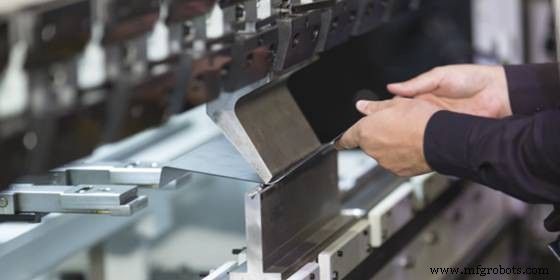
Three Core Fabrication Techniques
- Cutting
- Forming
- Joining
Cutting Techniques
Cutting is typically the first step, shaping the sheet into the required geometry. Techniques are divided into non‑shear and shear methods.
Non‑Shear Cutting
These methods rely on extreme heat, pressure, or abrasive media to remove material without mechanical shear.
Laser Cutting
Laser cutters focus a high‑powered beam that melts or vaporizes metal along a precise path. Compatible with both ferrous and non‑ferrous metals, laser cutting delivers clean edges and tight tolerances. A secondary gas (oxygen or nitrogen) protects the cutting head from oxidation and debris.
Plasma Cutting
Plasma cutters use ionized gas to melt conductive sheets, producing a rapid, high‑precision cut. The process is ideal for medium‑thickness aluminum and other electrically conductive materials.
Waterjet Cutting
High‑pressure water, optionally mixed with abrasive particles, cuts through both soft and hard metals—copper, steel, aluminum—without introducing heat‑affected zones. Typical pressures reach 60,000 psi, enabling clean cuts that rival laser performance.
Shear Cutting
Shear methods apply mechanical force to sever the metal, often through dies, punches, or press brakes.
Shearing
Ideal for high‑volume, straight‑edge cuts in soft metals. It’s cost‑effective but can leave burrs and slight deformation.
Punching
Punching creates holes or cutouts using a die and punch. Precise die selection is critical for repeatability.
Blanking
Blanking removes a shape from a sheet, producing a blank with high dimensional accuracy and minimal scrap.
Band Sawing
Band saws cut along a continuous blade, suitable for longer stock or complex contours. Horizontal saws handle straight cuts; vertical saws excel at intricate profiles.
Forming Techniques
Forming reshapes the metal while preserving its solid state. Common methods include:
Bending
Bending uses press brakes or rolling machines to achieve angles up to 180°. Suitable for spring steel, aluminum 5052, and copper.
Rolling
Cold and hot rolling compress the metal between rollers, reducing thickness and improving uniformity. Applications span discs, stampings, rims, and tubes.
Stamping
Stamping combines cutting and forming in one operation, using press brakes and dies. It’s fast, cost‑effective, and well‑suited for high‑volume production of complex shapes.
Hemming
Hemming folds the edge over itself, creating a double‑layered seam that strengthens the perimeter. The process requires two dies—a V‑die for folding and a flattening die for finishing.
Curling
Curling rounds the sheet’s edge, eliminating sharp edges and enhancing strength. Proper control of the three‑stage process is essential to avoid burrs.
Joining Techniques
Joining connects individual metal pieces into a single unit. Key methods include:
Welding
Welding melts the edges and fuses them with filler metal. Primary types: SMAW, MIG, and TIG, each suited for specific thicknesses and materials.
Riveting
Riveting drills a hole, inserts a rivet, and deforms the tail to lock the parts. Cold riveting is best for thin, non‑ferrous sheets; hot riveting is used for thicker steel.
Benefits of Sheet Metal Fabrication
Why choose sheet metal fabrication?
- Lightweight Components: Ideal for aerospace and automotive, improving fuel efficiency.
- Material Flexibility: Stainless steel, aluminum, copper, brass, and more are available.
- Precision & Speed: Modern CNC machines cut to 0.0005‑inch tolerances, reducing manual error.
- Cost‑Effective: High repeatability and automation lower labor costs.
Common Fabrication Materials
- Stainless steel
- Hot rolled steel
- Cold rolled steel
- Pre‑plated steel
- Carbon steel
- Aluminum
- Copper
- Brass
Surface Finishes
Finishes enhance both aesthetics and performance. Typical options include:
- Powder coating
- Bead blasting
- Brushing
- Electroplating
- Anodizing
- Laser engraving
- Screen printing
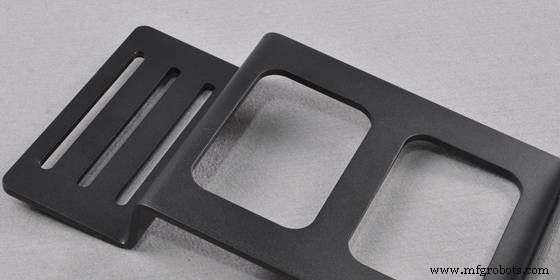
Industry Applications
Automotive
Sheet metal fabrication enables lightweight, high‑strength body panels—hoods, fenders, side panels, and roofs—using laser cutting and stamping.
Aerospace
Precision‑cut aluminum and titanium sheets form fuselage sections, wing spars, and structural brackets that meet stringent weight and safety standards.
Healthcare
Medical devices such as MRI components, surgical instruments, and sterilizable housings rely on accurate sheet metal prototypes and final parts.
Enclosures & Electronics
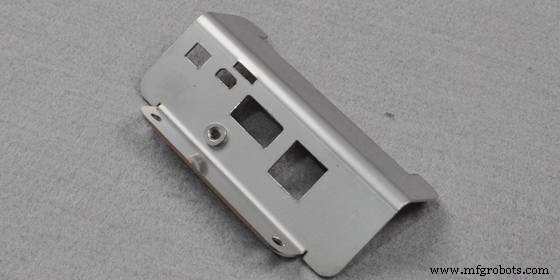
Robust enclosures protect sensitive equipment from dust and vibration while offering cutouts for cables, LEDs, and displays.
Design Tips for Manufacturability
Wall Thickness
Maintain uniform thickness between 0.9 mm and 20 mm. Laser cutting works best from 0.5 mm to 10 mm; bending suits 0.5 mm to 6 mm.
Holes & Slots
Hole diameter should match or exceed material thickness. Avoid placing holes too close to the edge; provide adequate clearance.
Bend Allowance & Deduction
Bend allowance adds material to the flat pattern; bend deduction removes material to balance the final shape.
Bend Radii
Set internal bend radii equal to sheet thickness to prevent cracking and distortion.
WayKen’s Sheet Metal Fabrication Services
WayKen delivers ISO‑certified sheet metal fabrication with a focus on quality, precision, and client satisfaction. From concept to final inspection, our team ensures every part meets the highest standards. Contact us for a quote and design review.
Conclusion
Sheet metal fabrication offers unmatched flexibility, speed, and accuracy across industries. Understanding the full spectrum of techniques, materials, and design best practices enables engineers to create lightweight, high‑performance components that drive innovation.
FAQ
How does the sheet metal fabrication process work?
The process starts with CAD modeling, followed by prototype development, testing, and iterative design before full‑scale production.
What are the main sheet metal fabrication techniques?
Cutting, forming, and joining—each with specialized methods such as laser cutting, bending, and welding.
What is the maximum thickness for sheet metal fabrication?
Typical thickness ranges from 0.5 mm to 6 mm for most processes, though some techniques handle up to 0.25 inches.
Manufacturing process
- Steel Rolling: Precision Manufacturing Process Explained
- Compost: The Ultimate Soil Enrichment Solution
- Choosing Between Helical Gears and Helical Rack & Pinion Systems
- Seven Surface Treatment Techniques for Plastics: Boosting Functionality and Aesthetics
- Read Heart Rate Pulses with Windows 10 IoT Core on Raspberry Pi – A Step‑by‑Step Guide
- Arduino Laser Tripwire Project: Build a Simple Intrusion Detector
- Paintbrushes: Types, Materials, and Manufacturing Process Explained
- Understanding Buoyancy: Formula, Examples, and Everyday Applications
- Laser Cutting Explained: Process, Types, and Applications
- Understanding and Reducing Inventory Shrinkage: Key Factors for Warehouse Success