



Cut Maintenance Time by 50%: How Optimizing Spray Systems Drives Cost Savings
Cut Maintenance Time by 50%: How Optimizing Spray Systems Drives Cost Savings
By Jon Barber, Director, Spraying Systems Co.
Imagine slashing the maintenance hours for your critical spray system by half or more—and being able to quantify the savings. It’s not just a possibility; recent advances in spray nozzle technology make it a reality.
Spray nozzles are the unsung heroes of production lines. Their precision and durability directly impact uptime, product quality, and operating costs. When a system runs sub‑optimally, the hidden costs can skyrocket: wasted water alone can reach nearly $100,000 per year in a seemingly minor issue. Add the price of excess chemicals, energy, scrap, unscheduled downtime, and overtime, and the total can hit hundreds of thousands annually.
To help you understand the financial impact, use the free online calculator at www.spray.com/save. It lets you input your own parameters and see the real cost of poor nozzle performance.
Once you grasp the magnitude, the next step is optimization. Start by familiarizing yourself with the most common causes of spray problems:
Causes of Spray Nozzle Troubles
- Erosion/Wear: Gradual metal loss enlarges or distorts the orifice, increasing flow, reducing pressure, and producing irregular spray patterns with larger droplets.
- Corrosion: Chemical attack can mimic erosion, damaging both the internal passages and the nozzle exterior.
- High Temperature: Elevated operating temperatures can soften standard materials unless temperature‑resistant alloys are used.
- Caking/Bearding: Evaporation leaves dry solids that block the orifice or internal channels.
- Clogging: Solid particles can lodge inside the orifice, restricting flow and distorting patterns.
- Improper Re‑assembly: Misaligned gaskets, O‑rings, or valves after cleaning can cause leaks and inefficiencies.
- Accidental Damage: Dropped or scratched nozzles during installation or cleaning alter the critical geometry.
Detecting Worn Nozzles
Visual inspection alone rarely reveals wear. Consider these warning signs:
- Increased Scrap & Quality Issues: Uneven coatings, cooling, or drying indicate nozzle degradation.
- Higher Maintenance Hours: Frequent cleaning or unscheduled downtime signals underlying problems.
- Altered Flow Rate: A rise in flow or drop in pressure (especially with positive displacement pumps) can mean an enlarged orifice.
- Pattern Deterioration: Streaks, uneven rings, or loss of coverage in hollow cone, full cone, or flat fan nozzles.
- Increased Drop Size: Larger droplets reduce surface area; test with a drop size analyzer if suspect.
- Lower Impact: Reduced pressure leads to weaker spray force, potentially compromising process effectiveness.
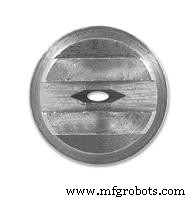
Good spray tip
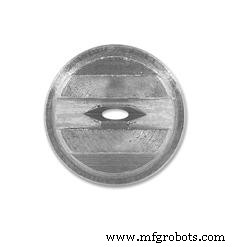
Worn spray tip
In the images above, the left tip is new and functions correctly, while the right tip, though visually similar, is 30 % over‑capacity—an issue invisible to the naked eye.
Preventing and Solving Spray Nozzle Issues
A systematic maintenance program is key. Define a schedule—perhaps after each shift or every few months—based on your specific application. Document each check to build a performance baseline and identify early wear.
Key evaluation points:
- Flow Rate: For centrifugal pumps, monitor flow meter readings; for positive displacement pumps, track pressure drops.
- Spray Pressure: Observe pressure gauges for unexpected increases (clogging) or decreases (wear).
- Pattern: Visually inspect; use a protractor to measure spray angle; consider a pattern analyzer for critical applications.
- Drop Size: Measure if flow or pressure changes occur.
- Nozzle Alignment: Ensure flat nozzles on a manifold are parallel; adjust tips 5–10° from the centerline.
- Product Quality: Track coating uniformity, temperature, dust, and humidity as indirect indicators.
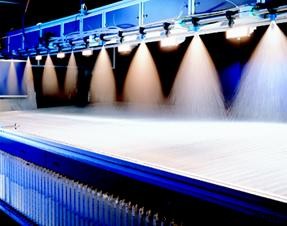
A Patternator measures spray distribution. The data informs optimal nozzle height and overlap.
Extending Nozzle Life: Four Proven Strategies
- Refine Cleaning: Use soft plastic bristles or wooden probes; avoid wire brushes or sharp tools that can damage the orifice. For stubborn clogs, soak in a non‑corrosive solvent.
- Add Strainers: Deploy line strainers or nozzles with built‑in strainers to filter out debris before it reaches the orifice.
- Reduce Pressure: Lowering spray pressure slows liquid velocity, mitigating wear and corrosion—when feasible.
- Minimize Abrasives & Corrosives: Reduce abrasive particle load or adjust chemical concentrations and temperatures to lower corrosive impact.
Replacing Nozzles: When Frequency Matters
After establishing a maintenance routine, evaluate whether continuing to use older nozzles is cost‑effective. Consider:
- Downtime cost from nozzle problems.
- Labor hours for extra maintenance.
- Excess water and chemical usage.
- Higher energy consumption.
- Quality penalties—scrap and rework.
Shorter replacement intervals may be justified if the cumulative savings outweigh the initial cost of new nozzles.
Material Matters: Choosing the Right Nozzle
Replacing an aluminum nozzle with another aluminum one isn’t always the best move. Upgrading to a material better suited for your fluid—such as stainless steel or carbide—can dramatically extend life. Refer to the abrasion resistance chart below and consult with a knowledgeable manufacturer to match material to your application.
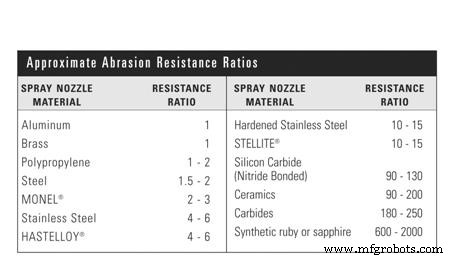
Abrasion resistance ratio chart
Consider corrosion resistance too: the interaction between spray fluid chemistry, concentration, temperature, and nozzle material dictates the optimal choice.
Quick‑Maintenance Nozzles
Modern designs allow tool‑free installation and removal, even in wet or greasy environments. Look for non‑slip extensions, easy‑twist grips, and single/double pipe clamps that let you swap entire mounts swiftly.
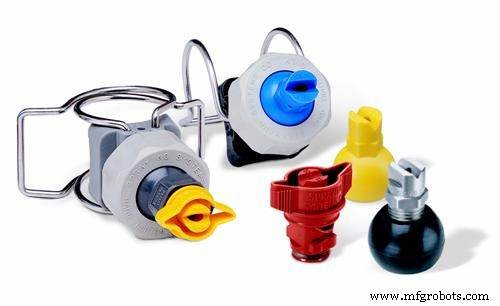
Features that reduce installation and maintenance time.
Partner with a Trusted Manufacturer
A reputable supplier goes beyond hardware sales. Expect:
- On‑site workshops and inspections.
- Staff training programs.
- State‑of‑the‑art testing to establish baseline performance.
These services help you pinpoint issues early, schedule maintenance proactively, and avoid costly downtime.
Implementing a robust Spray System Optimization Program can deliver significant time and money savings, proving your department’s value to overall company efficiency.
About the Author: Jon Barber is a Director at Spraying Systems Co. in Wheaton, Ill. Reach him at jon.barber@spray.com. For a free copy of the Spray System Optimization Handbook, call 1‑800‑95‑SPRAY.
Equipment Maintenance and Repair
- Revamping Maintenance Strategies: How PM Optimization & FMEA Reduce Post‑Repair Failures
- Condition‑Based Maintenance: Sensors & Systems for Predictive Asset Management
- Joint Reward Systems: Driving Collaboration and Results Across Plant Departments
- Why Rigorous Testing and Preventive Maintenance are Crucial for Summer Cooling System Health
- System Availability: Why It Matters, How to Measure, and Boost Your Production
- Why a Maintenance Work Order System Is Essential for Your Business
- Create a Free, Cloud‑Based Maintenance Ticketing System with Google Sheets Templates
- Key Objectives of a Maintenance Management System: Enhancing Reliability & Efficiency
- Unlock Operational Excellence: How a Maintenance Management System Boosts Efficiency & Productivity
- Essential Hotend Care: A Comprehensive Guide to 3D Printer Maintenance