



How to Convince Your Boss (and Their Boss) to Invest in a CMMS
Meet Justin…
Justin serves as the equipment and purchasing manager at a leading industrial dredging firm. Despite his expertise, his machinery suffers from frequent breakdowns, and his team’s productivity falls short of expectations. Maintenance costs are soaring.
Justin knows the solution: streamline processes and equip his team with the right tools. When he presented the idea of a Computerized Maintenance Management System (CMMS), he was met with a flat‑out “no” and a tight budget. The result? A continued reliance on clunky spreadsheets and reactive repairs.
A Common Roadblock
While Justin eventually secured approval, his story highlights a pervasive issue: maintenance departments often lose budget battles. If you’re in a similar situation, don’t lose hope—there’s a proven way to turn the tables.
Justin’s Success Story
A Tactical Playbook
This article equips you with a strategy to sell the vision of a modern maintenance operation to executives at all levels. We focus on securing approval for a CMMS, a technology that delivers the highest ROI but carries a hefty price tag and a cultural shift.
Table of contents
- Five benefits of a CMMS that business leaders care about
- Four objections decision-makers will raise—and how to neutralize them
- Nine questions you should answer before pitching a CMMS
- Finalizing your pitch
Five benefits of a CMMS that business leaders care about
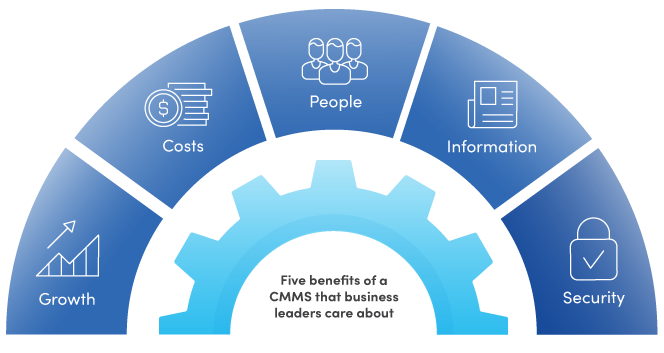
To capture executive attention, speak their language. Decision‑makers focus on growth, cost control, talent, data, and security—five pillars that a CMMS can strengthen.
1. Growth
According to a PwC survey, 81% of industrial manufacturing CEOs list company growth as their top priority.
Growth drives revenue, market share, and long‑term sustainability.
How a CMMS accelerates growth
A CMMS optimizes preventive and condition‑based maintenance, turning equipment into reliable production engines. The result: fewer downtime incidents, reduced inventory overhead, and higher output quality.
2. Cost control
“The first question you’ll be asked is, ‘How much money will it save and where?’” says Stuart Fergusson, Fiix senior manager of sales engineering.
Concrete cost‑saving numbers
- 5–15% reduction in overall maintenance spend through streamlined workflows
- Up to 20% savings on inventory and purchasing by eliminating stockouts and overstocking
- 20% drop in downtime costs via improved resource allocation and productivity
Joe Netherland, parts manager at Liberty Oilfield Services, shares that after adopting a CMMS, inventory “non‑events” became the norm, dramatically shrinking the quarterly audit cost.
3. Talent retention
More than 75% of CEOs worry about hiring skilled labor, and replacement costs can reach 33% of a worker’s annual salary.
How a CMMS helps
A CMMS centralizes asset data, maintenance workflows, and parts histories. New hires can onboard faster, reducing the learning curve and mitigating the impact of turnover. Integration with other departments also ensures knowledge flow across the organization.
4. Data intelligence
Data is the most valuable asset. Executives demand real‑time, actionable insights to anticipate issues and optimize decisions.
CMMS as a data engine
By capturing and organizing maintenance data—work orders, audit logs, sensor feeds—a CMMS enables predictive analytics. Automated reporting turns raw data into strategic decisions that cut failures, trim costs, and enhance equipment performance.
5. Security
Cybersecurity ranks among the top concerns of 20% of CEOs.
Cloud‑based CMMS platforms store data on secure servers with robust backups, eliminating the risk of physical or digital loss. Justin, who works in hurricane‑prone regions, notes that cloud storage saved his organization data during a severe storm.
Get a template for aligning business goals with maintenance goals here
Explore 20 Additional CMMS Benefits
Four objections decision-makers will raise—and how to neutralize them
Expect resistance. Most leaders won’t admit lack of value; they’ll cite budget constraints. Show a high ROI and make the money find its way into the project.

Key tactics:
- Define the problem with concrete examples—e.g., the cost of a recent equipment failure that a CMMS could have prevented.
- Amplify the gains—project the cumulative productivity boost if a major failure is avoided monthly.
- Highlight the gap—demonstrate that existing tools, budgets, and processes can’t address the issue as effectively as a CMMS can.

Provide a clear timeline. Executives want to know when they’ll see returns. Outline a roadmap with milestones, quick wins, long‑term goals, KPIs, and benchmarks. Anticipate obstacles—such as data migration—and present mitigation strategies.

Maintain stakeholder alignment. Assign a CMMS champion and secure commitment from key leaders to prevent cultural resistance and keep momentum.

Build trust in the vendor. Share case studies from industry peers, leverage peer testimonials, and, if possible, arrange a short reference call with similar roles.
Nine questions you should answer before pitching a CMMS

What is the cost? Provide estimates and payment options.

What problem does it solve? Cite real‑world examples and quantify benefits.

What are the alternatives? Explain why alternatives fall short.

When will value materialize? Present a draft roadmap.

Who leads the project? Identify accountability and stakeholder buy‑in.

What cross‑departmental effects? Map benefits, disruptions, and integration points.

What risks exist? Acknowledge potential IT risks and outline mitigation.

Alignment with corporate goals? Show how the CMMS supports strategic objectives.
How will change be managed? Provide a change‑management plan that ensures user adoption.
Finalizing your pitch
Justin’s perseverance paid off when he tied the CMMS directly to the company’s asset ROI. After approval, he witnessed a dramatic drop in downtime within 90 days.
“The system unified cost tracking, maintenance scheduling, and work orders into a single interface,” he says. “It simplified our operations and accelerated returns.”
Justin’s experience underscores that a well‑structured proposal, stakeholder buy‑in, and realistic ROI estimates are the keys to securing executive approval. With the right preparation, you can transform your maintenance operation into a strategic advantage.
Equipment Maintenance and Repair
- Remote Commissioning: Unlocking Efficiency and Flexibility in Industrial Operations
- Defeating Graffiti: Expert Strategies for Industrial Facility Owners
- Build a Maintenance Scrapbook: Proven Practices for Long‑Term Asset Management
- Driving CMMS Adoption: Proven Strategies for Successful Change and Continuous Learning
- Optimizing CMMS User Access: How Many Users Should You Need?
- Track and Manage Maintenance Costs Effectively
- Proven Strategies to Expand Your Steel & Metals Manufacturing Business
- Why Choose a Leading Edge SRL and When It’s Essential
- Build Your Own LED Driver: Benefits, Safety Tips, and Step‑by‑Step Guide
- Recognizing Hydraulic Hose Failure: Key Signs You Should Replace It