



Mastering Asset Maintenance: Key Factors for Optimal Performance

Whether you’re servicing office computers, HVAC units, or heavy industrial machinery, effective asset maintenance is essential for reliability, safety, and cost control. The challenge lies in tailoring a strategy that matches equipment type, operating conditions, and business objectives.
This guide highlights the critical elements you need to evaluate when designing an optimal maintenance program for any asset.
The Value of Asset Maintenance
In an office setting, maintenance spans visual inspections, routine repairs, and preventive service of workstations, building systems, and facility infrastructure. In contrast, industrial environments demand a deeper level of care—diagnosis, testing, troubleshooting, and overhaul of high‑voltage or high‑power equipment. Because comprehensive maintenance for every asset can be resource‑intensive, a well‑structured strategy is indispensable.
A sound maintenance strategy balances factors such as:
- Cost and resource constraints
- Tools, inventory, and spare parts availability
- Equipment condition and performance data
- Criticality to operations
- Workforce skills and training
- Standard procedures and ergonomics
- Health, safety, and regulatory compliance
Achieving perfection on the first try is rare, but understanding these variables brings you closer to a sustainable, high‑performance maintenance regime.
Optimizing Asset Maintenance: A Balanced Approach
Optimal maintenance is not about doing more work—it’s about doing the right amount of work. Excessive preventive tasks inflate costs, while too little maintenance risks costly failures. A balanced strategy incorporates three core principles:

1. Leverage Robust Asset Performance Data
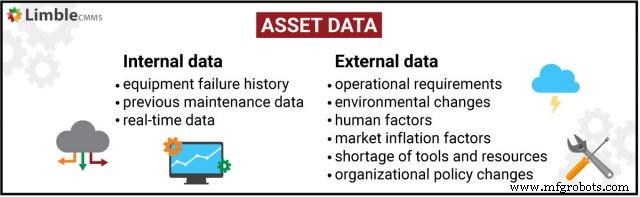
High‑quality data is the foundation of any effective maintenance plan. Start with OEM maintenance schedules and warranty information, then enrich the dataset with historical failure logs, prior work orders, and real‑time sensor feeds. Complement internal data with external variables such as operational load, environmental conditions, market trends, and organizational policy shifts.
2. Allocate Maintenance Resources Wisely
Not all equipment warrants the same level of attention. For example, a high‑impact conveyor motor may justify regular non‑destructive testing, whereas redundant or low‑criticality units can have fewer inspections to conserve manpower. Integrating a Computerized Maintenance Management System (CMMS) with predictive analytics ensures you apply the right resources to the right assets—avoiding waste while preventing critical failures.
3. Balance Needs Against Cost Through Life‑Cycle Analysis
Perform a Life‑Cycle Cost (LCC) or Total Cost of Ownership (TCO) assessment to capture acquisition, operation, maintenance, administration, and disposal costs. When maintenance expenses equal or exceed the cost of a new asset, it’s time to consider replacement rather than continued upkeep.
4. Align Strategy With Organizational Capabilities
Even the best maintenance plan falters without sufficient manpower, training, and technology. Conduct a gap analysis across technology, skill sets, culture, and process maturity. Address deficits by:
- Developing a clear maintenance policy that aligns with business goals and provides strategic direction.
- Creating detailed, asset‑specific procedures that standardize inspection, service, repair, and overhaul tasks.
- Implementing comprehensive training programs to reduce human error and improve safety.
- Fostering a proactive culture of continuous improvement, led by management and embraced by technicians.

5. Harness CMMS for End‑to‑End Optimization
A modern CMMS transforms maintenance from reactive to proactive. It centralizes data, automates workflows, tracks inventory, and surfaces key performance indicators. Key benefits include:
- Automated work order creation, assignment, and scheduling.
- Real‑time inventory management with auto‑reorder thresholds and parts kitting.
- Dynamic KPI dashboards—such as Mean Time Between Failures (MTBF), Mean Time to Repair (MTTR), and equipment availability—to monitor performance and drive decisions.
For instance, Limble CMMS automatically updates spare part usage when a technician closes a work order, enabling accurate forecasting and reducing stock‑outs.
Conclusion: The Path to Balanced Maintenance
True optimization occurs when maintenance activities precisely match equipment needs, without over‑ or under‑servicing. Achieving this balance requires data‑driven insight, resource efficiency, cost awareness, and an organization‑wide commitment to continuous improvement—all facilitated by a robust CMMS.
Equipment Maintenance and Repair
- Balancing Equipment Ownership and Cross‑Training for Maintenance Technicians
- Four Pillars of Successful Maintenance Programs: Boost OEE, Cut Costs, Reduce Downtime
- Key Lessons for Senior Management on Condition‑Based Maintenance
- 6 Essential Welding Practices for Plant Maintenance
- 5 Proven Maintenance Practices to Maximize Heavy Machinery Performance
- 6 Proven Strategies for World-Class Equipment Asset Management
- Amazon Lookout for Equipment: Revolutionizing Predictive Maintenance
- Hydraulic Equipment Reliability: Proactive Maintenance Best Practices
- The Critical Role of Preventative Maintenance in Manufacturing Equipment
- 6 Proven Strategies to Cut Equipment Maintenance Costs