



Polyurethane Explained: Versatile Material for Modern Manufacturing
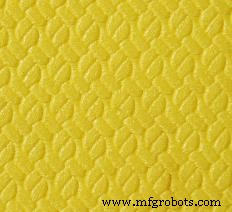
Polyurethane is a resilient, flexible and durable manufactured material that can take the place of paint, cotton, rubber, metal or wood in thousands of applications across virtually all fields. It can be hard like fiberglass, squishy like upholstery foam, protective like varnish, bouncy like rubber or sticky like glue. Since its invention during the 1940s, polyurethane has been used in a wide range of items, from baby toys to airplane wings, and it continues to be adapted for contemporary technology.
How it is Made
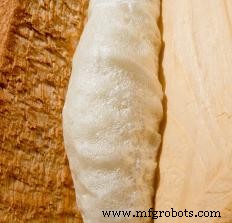
This substance is categorized as a polymer — a molecule that consists of a series of repeating smaller units called monomers — based on its chemical structure. It is manufactured by combining two types of compounds, a diisocyanate and a diol, which are monomers, through a chemical reaction. This makes a basic material whose variations can be stretched, smashed or scratched and will remain fairly indestructible. Depending on the different diisocyanates and diol or polyol constituents, the resulting polyurethane might be in the form of a liquid, foam or solid. Each form has its own advantages and limitations.
Elastomers

Some polyurethane is categorized as an elastomer. It has elastic properties while maintaining some rigidity, which is beneficial for items such as the wheels of a dolly, which must absorb shock without compressing too much. Polyurethane can be extremely flexible when used as a foam insulator in construction or a foam cushion in upholstery. It can be deformed over and over and still maintain its original shape. In other words, it has what is called structural memory.
Thermoplastics
Other polyurethane is a thermoplastic that resembles other kinds of plastic, metal or fiberglass. Thermoplastics are rigid and smooth, with a sealed surface that is impermeable to water. These are used when strength and durability are important, such as in seats at an airport terminal or packaging crates on a truck. Some polymer thermoplastics are difficult to recycle, but they can be reused.
Many Other Uses
Polyurethane can be found in every room of the house and in practically every building. Since this material became popular during World War II, the polymer has protected, reinvented, joined or transported countless items. It seals surfaces such as wood, metal and paint to protect them from rot, corrosion or fading. As an adhesive, polyurethane resists moisture and heat, so it is ideal for use in the sun or underwater. It also insulates walls, temperature-controlled vehicles and consumer coolers.
Industrial equipment
- Understanding the Oxygen (O2) Sensor: Role, Placement, and Failure Signs
- Understanding AS9100: The Aerospace Quality Management Standard
- Polyurethane Foam: From WWII Innovation to Everyday Essentials
- Understanding Lost Foam Casting: Process, Benefits, and Applications
- Structural Foam Explained: Composition, Strength, and Applications
- Polyurethane Foam: Composition, Properties, and Diverse Applications
- Is Polyurethane Foam Safe? Understanding Toxicity & Environmental Impact
- Spray Foam Insulation Explained: Benefits, Types, and Installation Tips
- Polystyrene Beads Explained: Uses, Properties, and Recycling
- Decoding 'N' in Pump Calculations: Its Role and Significance