



Jet Nozzles Explained: Boosting Aircraft Thrust & Fluid Dynamics
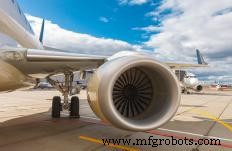
A jet nozzle is simply the portion of a jet engine that compresses the material going through it to increase thrust, which helps to propel the plane through the air. This is most often seen at the rear of a jet airplane engine. The term may also refer to a water jet nozzle or air jet nozzle, which all tend to have a similar shape, and to serve to increase the velocity of the fluids and gasses.
In the context of a jet engine, the jet nozzle is a cone-shaped object at the rear of the engine. It is typically possible to see the parts of the nozzle at the back of the engine, though it may be covered on some types of jet engines. If the engine is running, there is generally a great deal of air displacement around the back of the jet nozzle. This will often be easily seen because the air has been heated, and is traveling at a high velocity.
Like any other nozzle, the jet nozzle works by compressing the air as it moves through the nozzle. This creates pressure, which is used in propulsion. As the pressure goes up, the speed at which the air is expelled increases as well. Thus, the nozzle improves the thrust used to push the aircraft through the air.
In addition to being used in aviation, the term jet nozzle is sometimes used in other ways, such as a water nozzle or air nozzle. In those cases, the basic job of the nozzle is still the same. It is used to create high pressure, by which gasses such as air or liquids come out at one end at a greater force than it otherwise would. This is useful when it comes to producing longer streams, or for pressure cleaning, but it is quite different than those nozzles used for propulsion.
Some types of jet nozzles may include a turbine, which helps to further increase the pressure when needed. The substance going through the turbine flows at a greater velocity, which makes the pressure even greater as it is forced through the nozzle. This is especially useful in industrial types of uses, where high pressure applications are more common. This type of jet nozzle may be used for gasses, liquids, and even soft solids, depending on the application and its design function.
Industrial equipment
- Binder Jet 3D Printing Explained: Process, Benefits, and Limitations
- Abrasive Jet Machining: How It Works, Benefits, and Practical Applications
- Water Jet vs Laser Cutting: Which Delivers Superior Precision?
- Jet Engine: Design, Materials, and Manufacturing Excellence
- Understanding the Oxygen (O2) Sensor: Role, Placement, and Failure Signs
- Understanding AS9100: The Aerospace Quality Management Standard
- What Is A2 Steel? A Versatile, Cost‑Effective Tool‑Steel Grade for Industrial and Woodworking Applications
- Abrasive Jet Machining (AJM): How It Works & Key Benefits
- Haas Programmable Coolant Nozzle: Boost Precision and Efficiency in CNC Machining
- Decoding 'N' in Pump Calculations: Its Role and Significance