



Mudsill Explained: Essential Component for Building Stability
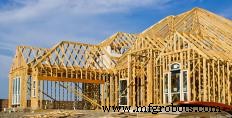
The mudsill is a basic component of many types of building construction. Essentially, it is a wood component that is attached to the foundation of a building. The presence of the mudsill creates a means of attaching various components of the framing for the building to the foundation. Along with creating the basis for attaching the framework, it can also help create additional integrity to the overall construction, since the framework is directly attached rather than merely resting on the foundation.
One of the more common applications of a mudsill is found with home construction. This is especially true with homes that are constructed on a concrete foundation or slab. By making use of treated lengths of wood, it is possible to bolt this wooden sill to all sides of the slab. Once in place, the mudsill provides a lip that protects the slab in a manner similar to the way a baseboard protects the bottom area of a wall.
It is not unusual for a mudsill to be used in conjunction with a rim joist. This combination helps to prepare for the construction of a sub-floor. The sub-floor is usually constructed of lumber that runs the length and width of the foundation and is bolted or screwed to the mudsill. Essentially, this creates a platform of timber that serves as the means of nailing or screwing the floor joists for the top or main floor to the foundation.
One of the main advantages of a mudsill is that it makes it possible to firmly secure the building to the foundation. Since it effectively creates a bottom plate that makes it possible to secure framework with studs or bolts, the building is less likely to be negatively impacted by natural events that would otherwise move the building off the foundation. For example, working as a sill plate, the mudsill would provide a little more structural integrity that would improve the chances of the building withstanding an earthquake.
While the mudsill is usually made of treated timber, there are also examples of ones that are constructed of metal. Often, these metal versions are constructed with holes predrilled into the body of the sill, making it possible to bolt it to the foundation with relative ease.
Industrial equipment
- Diamond Turning: Precision Machining for Advanced Optics and Beyond
- Ultrasonic Machining Explained: Process, Benefits, and Limitations
- Understanding the Oxygen (O2) Sensor: Role, Placement, and Failure Signs
- Understanding AS9100: The Aerospace Quality Management Standard
- What Is A2 Steel? A Versatile, Cost‑Effective Tool‑Steel Grade for Industrial and Woodworking Applications
- Understanding Metal Casting: Process, Benefits, and Applications
- Demystifying 3D Printing: A Clear Guide for Innovators
- Mudsill Explained: Essential Component for Building Stability
- Understanding Foundation Walls: Purpose, Construction, and Importance
- Decoding 'N' in Pump Calculations: Its Role and Significance