



Pull Handles 101: Understanding the ‘On‑Center’ Measurement
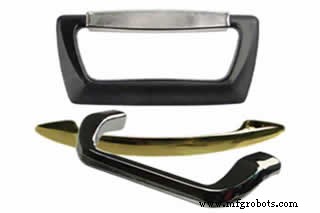
When selecting a pull handle for a cabinet, door, or machine, you’ll encounter several key dimensions. One that frequently appears on product listings is the ‘on‑center’ measurement. Knowing exactly what this term means—and why it matters—helps ensure a flawless installation and a handle that fits comfortably.
What Exactly Is the ‘On‑Center’ Measurement?
The ‘on‑center’ value is the linear distance between the two threaded holes that secure the pull handle to its surface. Each handle is fitted with a pair of threaded holes—typically on opposite ends—through which bolts or screws pass. By measuring the span between these holes, manufacturers provide the on‑center value in millimeters or inches.
Because the holes are usually concealed within the handle’s body, the on‑center figure is the only practical indicator of the spacing required for the mounting fasteners.
Why the ‘On‑Center’ Measurement Matters
Choosing a handle with an inappropriate on‑center dimension can lead to several problems:
- Misfit: The handle may be too wide for the available space, forcing you to compromise on aesthetics or functionality.
- Uneven Fastening: Incorrect spacing can result in uneven torque distribution, potentially loosening the handle over time.
- Structural Stress: A mismatch between the on‑center value and the mounting surface can place undue stress on the hardware or the material being fastened.
To avoid these pitfalls, measure the distance between the desired mounting points on your surface with a tape measure. Then, match that span to a pull handle whose on‑center measurement is equal to or slightly less than your available width.
Practical Tips for Selecting the Right Handle
- Consult the Manufacturer’s Specification Sheet: Most reputable brands provide a detailed datasheet that lists the on‑center dimension, weight, finish, and material.
- Account for Clearance: Add a few millimeters of clearance to accommodate tolerances in the mounting surface.
- Consider the Load: Heavier applications (e.g., industrial machinery) may require larger bolts and a handle with a more robust threading pattern.
- Verify with a Test Fit: Before drilling final holes, place the handle on the surface to confirm the spacing aligns with your expectations.
In Summary
The ‘on‑center’ measurement is the definitive distance between the threaded holes on a pull handle. It dictates where and how fasteners will be installed, directly influencing fit, stability, and longevity. By measuring your mounting surface and matching it to a handle’s on‑center dimension, you’ll ensure a secure, aesthetically pleasing installation every time.
Industrial equipment
- Recessed Pull Handles: Design, Benefits, and Installation Guide
- Weld-On vs Through-Pull Handles: Which Is Best for Your Applications?
- Pull Handles Explained: Types, Features, and Applications
- Crank Handles: Versatile Tools for Precision & Everyday Tasks
- DC vs. AC Motors: Key Differences and Choosing the Right One for Your Application
- The Construction Industry Explained: Scope, Roles, and Global Impact
- Understanding the Printing Industry: Key Roles and Services
- The Fabrication Industry Explained: Processes, Materials, and Impact
- Understanding the Security Industry: Products, Services, and Global Impact
- Understanding the Paint & Coatings Industry: Key Players & Products