



Weld-On vs Through-Pull Handles: Which Is Best for Your Applications?
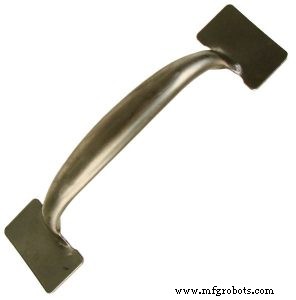
When selecting a pull handle, you’ll often face the choice between a weld‑on and a through‑pull design. Both styles feature a bar that you grip and pull to open cabinets, gates, machinery, and more. However, the installation method and suitability differ significantly.
What Are Through‑Pull Handles?
The most common option, through‑pull handles, have a series of holes on each end for fasteners. They’re called “through‑pull” because screws are driven through these holes into the substrate. Typically, each end contains two to four holes, allowing you to secure the handle with standard hardware.
What Are Weld‑On Pull Handles?
Weld‑on handles lack any holes and cannot be fastened with screws. As the name suggests, they’re installed by welding the ends to the metal surface. A welding torch melts the metal on the handle’s ends, which then fuses with the object’s metal, creating a permanent bond.
Choosing Between Through‑Pull and Weld‑On Handles
Both handle types serve the same basic function—manual opening—but their suitability depends on the material and application:
- Material Compatibility – Weld‑on handles are limited to metal surfaces that can withstand welding. If the object is wood, plastic, or non‑metallic, a through‑pull handle is required.
- Maintenance – Through‑pull handles need occasional tightening because screws can loosen, especially under vibration. Weld‑on handles have no fasteners, so they stay secure indefinitely.
- Installation Skill – Installing a weld‑on handle demands welding expertise and equipment, whereas a through‑pull handle can be fitted with basic tools.
In summary, choose a weld‑on handle for metal surfaces that demand a clean, low‑maintenance solution, and opt for a through‑pull handle when working with non‑metal materials or when welding isn’t feasible.
Industrial equipment
- Wheels vs. Casters: Understanding the Key Differences
- Recessed Pull Handles: Design, Benefits, and Installation Guide
- Pull Handles 101: Understanding the ‘On‑Center’ Measurement
- Pull Handles Explained: Types, Features, and Applications
- O‑Rings vs. Gaskets: Understanding Their Roles and Key Differences
- Iron vs. Steel: Key Differences Explained
- Milling vs. Grinding: Key Differences Explained
- Washers vs. Gaskets: Key Differences Explained
- DC vs. AC Motors: Key Differences and Choosing the Right One for Your Application
- Understanding Amps, Volts, and Watts: Key Differences Explained