



Insert Nuts Explained: How They Work and Why They’re Essential
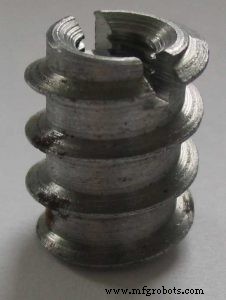
While hexagonal nuts dominate everyday hardware, many applications require a different shape. Insert nuts are cylindrical fasteners with threading on both the inside and outside, allowing them to be screwed or hammered into a material and then secured with a bolt. Though they may look unfamiliar, they’re a reliable solution for a variety of fastening challenges.
What Is an Insert Nut?
An insert nut is a hollow fastener that combines internal threading for a bolt with external threading that grips the host material. This dual‑thread design lets the nut be embedded into wood, metal, or composite, creating a strong anchor point for the bolt that follows.
How Insert Nuts Function
Insert nuts operate much like wall anchors. Rather than driving a bolt directly into a substrate that may weaken or crack, the nut is first inserted into the material. The external threads bite into the wood or other medium, securing the nut in place. A bolt is then threaded into the nut’s interior, forming a stable, high‑strength connection that resists pull‑out forces over time.
Screw‑In vs Hammer‑In Insert Nuts
There are two main installation methods:
- Screw‑In Insert Nuts: These are tightened into the material by hand or power. Because they are not forced, they reduce the risk of splitting or damaging the substrate.
- Hammer‑In Insert Nuts: These are driven into place with a hammer or impact driver. They’re ideal when speed is critical, but they can cause slight deformation in softer materials.
Both types provide the same secure bolt support; the choice depends on the material, application, and installation convenience.
Why Use Insert Nuts?
Insert nuts excel in scenarios where repeated assembly or high loads are expected. In wooden furniture, for instance, they prevent bolts from loosening or pulling out, ensuring long‑term stability. They’re also valuable in repair jobs where the original material has been weakened, allowing a new, robust anchor without compromising the surrounding structure.
Conclusion
Insert nuts—whether screw‑in or hammer‑in—are essential fasteners for applications requiring reliable, long‑lasting bolt support. Their dual threading allows easy installation and strong retention, making them a staple in both construction and repair.
Industrial equipment
- Wing Nut Explained: Design, Function, and How to Choose the Right One
- Castellated Nuts Explained: Design, Function, and Selection Tips
- Flange Nuts Explained: Design, Uses, and Benefits
- Diamond Turning: Precision Machining for Advanced Optics and Beyond
- Understanding Swage Nuts: How They Secure Sheet Metal in Aerospace Applications
- Ultrasonic Machining Explained: Process, Benefits, and Limitations
- Macadamia Nut: From Hawaiian Roots to Premium Production
- Understanding the Oxygen (O2) Sensor: Role, Placement, and Failure Signs
- Insert Molding Explained: Boost Efficiency & Cut Costs in Multi-Material Production
- Decoding 'N' in Pump Calculations: Its Role and Significance