



Superfinishing in Metalworking: Process, Benefits, and How It Differs from Polishing
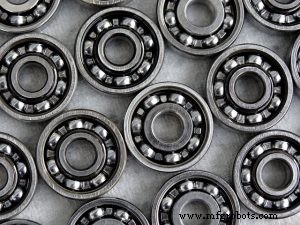
Superfinishing—also called micromachining or short‑stroke honing—is an advanced metal‑working technique that refines a workpiece’s surface beyond the finish achieved by grinding or conventional honing. By removing a very thin layer of material, it produces a distinctive cross‑hatched texture that improves surface performance in demanding applications.
How Superfinishing Works
After a part has been ground to a first‑pass finish, it is subjected to superfinishing. A rotating abrasive tape or stone with an ultra‑fine grain (typically 5–8 µm) contacts the surface. The rapid, controlled motion of the abrasive removes minute amounts of material while imprinting a uniform cross‑hatched pattern. This process not only enhances dimensional accuracy but also improves the part’s mechanical and chemical properties.
Superfinishing vs. Polishing: Key Differences
While polishing relies on friction to produce a mirror‑like, smooth surface, superfinishing intentionally creates a textured finish. A superfinished part feels ridged to the touch, and its surface reflects light diffusely rather than like a mirror. Consequently, superfinishing is chosen when a non‑reflective, low‑friction finish is required—such as in seals, bearings, and optical components.
Advantages of Superfinishing
- Tighter Tolerances: The finer abrasive grain allows for more precise material removal, enabling tighter dimensional control.
- Improved Surface Sealing: The refined surface reduces porosity, offering better resistance to moisture and chemical ingress—critical for components used in harsh environments.
- Enhanced Wear Resistance: The cross‑hatched texture can improve load distribution and reduce localized wear.
- Consistent Surface Finish: The process yields a uniform finish across complex geometries, reducing the need for post‑processing.
These benefits make superfinishing a preferred choice in aerospace, medical, and high‑performance industrial applications where durability and precision are paramount.
Industrial equipment
- What Is a Metalworking Lathe? An Expert Guide
- Notching in Metalworking: Precision Cutting with Punch Presses
- Phosphatizing in Metalworking: Process, Benefits, and Best Practices
- Turning vs. Milling: Key Differences in Metalworking
- Forging vs. Forming: How These Metalworking Processes Differ
- Swaging in Manufacturing: How Cold Forging Shapes Components
- Rubber Pad Forming: A Precise Metalworking Technique for Gentle Sheet Metal Shaping
- Planing vs. Shaping in Manufacturing: Key Differences Explained
- Electrical Discharge Machining (EDM): The Ultimate Guide to Precision Metal Fabrication
- Electrical Discharge Machining (EDM): How It Works & Why It Matters