



Understanding the Radial Arm Saw: History, Features, and Modern Alternatives
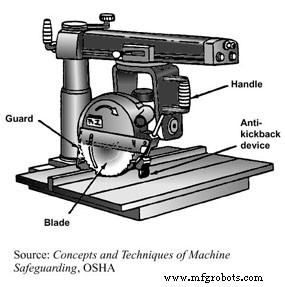
Woodworking often relies on specialized machinery to cut and shape timber with precision. The radial arm saw, a staple of mid‑century workshops, combines a circular blade with a movable arm, allowing craftsmen to execute a wide range of cuts—rip, crosscut, and miter—on a single platform.
Origins and Design
Invented in the early 1920s by Ray DeWalt, the radial arm saw was the first machine to offer a truly versatile, table‑mounted saw. Its circular blade is mounted on a pivoting arm that can swing through 360°, while a motor drives the blade at speeds up to 3,000 rpm. A safety guard and a handle provide operator control and protection.
Why Woodworkers Loved It
During the 1930s–1960s, when electric power tools were scarce, the radial arm saw filled a critical gap. It was simple to operate, affordable for small shops, and capable of both rip and miter cuts—something a miter saw could not do. The ability to make a straight rip and a precise angled cut on the same machine saved time and reduced material waste.
Modern Limitations
Today, radial arm saws face several drawbacks that have pushed many professionals toward newer machines:
- Cost and Footprint: Compared with a standard table saw, radial arm saws are larger, heavier, and often more expensive, making them less attractive for both commercial shops and hobbyists.
- Maintenance: The arm and blade assembly require regular alignment and sharpening. A dull blade can bite into the workpiece or, worse, the table, compromising safety.
- Material Constraints: While excellent for plywood and thin boards, they struggle with thick lumber. For cutting large timbers, a dedicated wide‑bore saw or a circular saw with a sturdy table is preferable.
Current Alternatives
High‑speed table saws, portable miter saws, and laser‑guided routers now offer comparable or superior performance with less bulk and lower operating costs. Most modern woodworking shops have replaced radial arm saws with these tools, while some enthusiasts keep them as vintage equipment for specialty projects.
In summary, the radial arm saw played a pivotal role in the evolution of woodworking machinery, but its practical limitations and the emergence of more efficient tools have relegated it to a niche position in contemporary workshop design.
Industrial equipment
- Understanding the Oxygen (O2) Sensor: Role, Placement, and Failure Signs
- Understanding Radial Force: How It Keeps Objects in Orbit
- Compass Saw: How It Works and Why It's Essential for Precise Curved Cuts
- Understanding Saw Tools: Types, Functions, and Applications
- Sawing Machines: From Origins to Modern Innovations
- Vertical Band Saw: Purpose, Features, and Applications
- Portable Metal Band Saw Explained: Features, Uses, and Benefits
- Understanding Vertical Metal Band Saws: Features, Operation, and Benefits
- Understanding Radial Hydraulic Pumps: Design, Applications, and Benefits
- Decoding 'N' in Pump Calculations: Its Role and Significance