



What Is a Desktop 3D Printer? A Practical Guide for Businesses
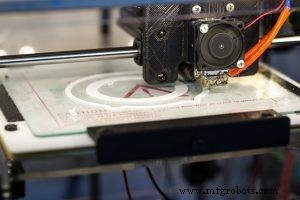
3D printing is reshaping manufacturing. Studies indicate prototyping, proof‑of‑concept creation, and small‑batch production are the top three applications. While industrial printers can span several meters, desktop 3D printers remain compact enough to sit on a desk.
What Is a Desktop 3D Printer?
A desktop 3D printer is a compact machine that fabricates objects from raw material—typically filament—right on a work surface. Its small footprint eliminates the need for dedicated lab space, making it ideal for offices and small shops.
Why Businesses Love Desktop 3D Printers
Space is often at a premium in small factories or R&D labs. Desktop printers fit comfortably on a desk, freeing valuable floor area. They also offer a cost advantage: a quality model can be purchased for under $1,000, compared with industrial units that run into tens or hundreds of thousands of dollars.
In fact, commercial users dominate the market—about 75% of desktop printers are deployed in professional settings, while only 25% serve hobbyists. Industries use them for rapid prototyping, tooling, and even low‑volume production.
Limitations to Keep in Mind
Most desktop units employ fused filament fabrication (FFF), a technology that is less versatile than SLS or SLA. If a company requires materials like nylon, ceramic, or metal, a larger industrial printer may be necessary.
Accuracy can also vary. While many entry‑level desktop printers produce parts with tolerances of ±0.2 mm, high‑end models achieve ±0.05 mm. For precision‑critical components, an industrial printer still delivers the best performance.
Industrial equipment
- Multi‑Nozzle 3D Printers Explained: How They Work and Why They Matter
- Continuous Inkjet Printers: The Ultimate Buying Guide for Businesses
- The Fundamentals of 3D Printing: Process, Applications, and Benefits
- Industrial vs. Desktop SLA/DLP 3D Printing: Which Is Right for You
- Choosing the Right Industrial 3D Printer: A Practical Guide
- PolyJet 3D Printing Explained: How It Differs from FDM and SLA
- How Loud Are 3D Printers? Find Quiet Models & Reduce Noise
- Role of a 3D Printer Operator: Skills, Responsibilities, and Career Opportunities
- Resin 3D Printers Explained: UV Light‑Cured Technology for High‑Precision, Smooth Prints
- How 3D Printers Transform Classroom Learning