



How to Revive North American Manufacturing: Sustainable, Smart, and Profitable
North American manufacturing has long been celebrated in popular discourse, yet concrete policy measures that can bring it back remain scarce. The nostalgic image of a thriving 1950‑60s factory floor rarely translates into actionable strategy.
The Economic Logic Behind Offshoring
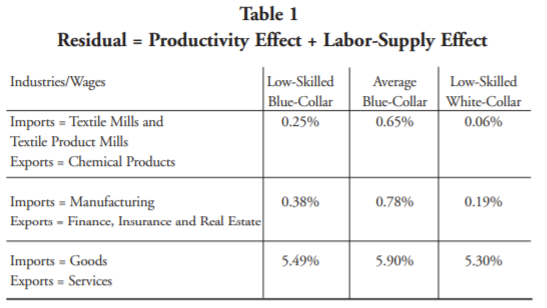
For decades, firms moved production overseas to capitalize on lower labor costs and rising productivity. In a purely cost‑based model, a factory is most profitable where the combined cost of inputs, labor, and transportation is minimized. This logic also explains why many industries spread production across Japan, China, Taiwan, Malaysia, and Indonesia—each segment matched to the most skilled labor pool available for that task.
While the shift reduced domestic employment, it also produced benefits for consumers, such as lower prices and a wider variety of goods. However, the fragmentation of the supply chain has made it difficult to re‑establish domestic manufacturing as a cohesive, resilient sector.
Environmental Regulation: A Double‑Edged Sword
In the 1960s and 70s, the United States launched the first Earth Day in 1970, leading President Nixon to establish the Environmental Protection Agency (EPA) the same year. Scholars estimate that environmental regulation contributed a 4.8% decline in relative total‑factor productivity for U.S. manufacturing—equating to an 8.8% drop in profits. While the figure alone is modest, when combined with the productivity gains from global supply chains, it helped accelerate the shift abroad.
Yet the Porter Hypothesis suggests that stringent regulations can spur innovation in cleaner technology, ultimately boosting efficiency and competitiveness. Modern automation and energy‑saving processes can reduce the carbon footprint of production and lower the cost of moving goods across borders, making near‑shore manufacturing more viable.
Automation and Labor: A Synergistic Future
The belief that robots replace workers is increasingly outdated. Statistics Canada found that firms employing industrial robots hire 15% more staff than those that do not. Automation can lift productivity, lower unit labor costs, and open new job categories that require different skill sets—often at entry‑level wages that are attractive to a broader workforce.
Countries that embrace robotics while maintaining strong labor protections—such as Germany—demonstrate that automation can coexist with a healthy middle class.
Re‑engineering Manufacturing for the 21st Century
To create a sustainable manufacturing renaissance, policy must focus on three pillars:
- Streamlining supply chains to keep unit costs competitive as global labor prices rise.
- Leveraging environmental standards to drive investment in clean, energy‑efficient technologies.
- Promoting automation that augments human labor, expands employment, and reduces overall production costs.
Education and training remain critical, but automation can also open low‑skill entry points, making manufacturing a viable career path for a diverse workforce.
Emerging solutions like Omnirobotic’s autonomous spray‑coating technology illustrate how robotics can deliver high‑mix, high‑quality production without manual programming. By integrating 3D vision and AI, these systems enable manufacturers to process complex parts efficiently, driving profitability and reducing environmental impact.
Discover the potential payback of this technology here.
In short, the path to reviving North American manufacturing lies in smart policy, environmental stewardship, and technology that empowers workers—not replaces them.
Industrial robot
- What is VMC Machining? An Expert Overview of Vertical Machining Centers
- Strand Casting in Manufacturing: Process, Benefits, and Applications
- Press Joining: The Fast, Clean Sheet‑Metal Bonding Technique
- The Decline of U.S. Manufacturing Labor: Causes, Consequences, and Future Solutions
- Autonomous Manufacturing: Revolutionizing Production Efficiency and Workforce Empowerment
- Unlocking Manufacturing Efficiency: The Tangible Benefits of Digital Twins
- Smart Manufacturing Explained: Transforming Production with IoT
- Automated Manufacturing: How Computerized Control Transforms Production
- Inside China’s Manufacturing Landscape: Quality, Innovation, and IP Protection Explained
- Microfabrication Explained: Small-Scale Manufacturing for Advanced Technologies