Industrial manufacturing
Industrial robot
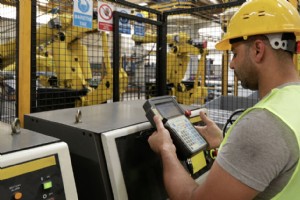
For milspec applications, there are extensive considerations in achieving extremely high quality and consistency. Following military weld specifications can be a major challenge with manual welding processes, especially when these specifications are particularly stringent. Robo
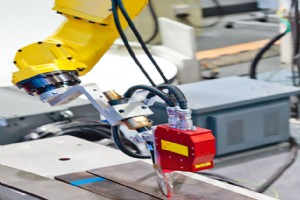
Robotic welding systems increase throughput and productivity for manufacturers. They also provide high quality and consistent welds. Over time the nozzle of a welding robot can become dirty after extensive use. Once the nozzle is dirty, the robot’s welding performance can start
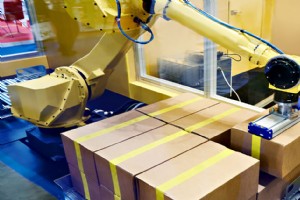
Many facilities choose to first automate core processes in production before considering the automation process of palletizing. Palletizing robots can bring a number of productivity benefits to just about any facility. Determining when it makes sense to invest in Material Hand
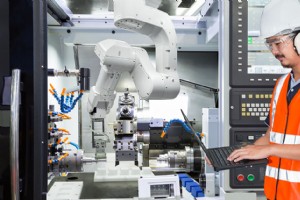
Pre-engineered robotic workcells offer many benefits over custom robotic solutions for certain applications. With proven performance, pre-engineered workcells reliably deliver quick return on investment (ROI) and high levels of productivity. With nearly all of the design and en
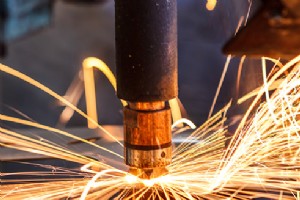
Manufacturers today have a choice between using two main types of robotic welding guns: conventional or through-arm. Conventional welding guns are located at the very end of the robot and have been the dominant type of welding gun for many years. A through-arm welding gun is di
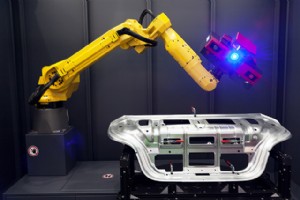
Robotic laser metrology has many advantages for manufacturers in the aerospace, automotive, and heavy industrial industries. This relatively new technology aims to provide highly accurate inspections, much faster than other inspection methods, helping accelerate throughput and

Industry 4.0, also known as the Industrial Internet of Things (IIoT), is changing how manufacturers operate all around the world. The ability to collect, analyze and act on granular production data has a transformative impact on operations, especially in terms of productivity a

Robotic welding can have a transformative impact on your business, beyond simply reducing labor costs. Introducing all the benefits inherent to robotic systems, manufacturers soon realize safety, quality and productivity benefits, among many others. Manual welding may be an ide
Virtual reality (VR) gets a lot of attention in today’s technological landscape, especially in regard to consumer products. Typically, the radical potential of VR in its end-form is what captures imaginations and fuels interest in the technology. But while VR may be limited in
Robotic welding offers many advantages over manual welding. In addition to higher productivity, robotic welding often allows for improved product quality, throughput, and lower operating costs. Because of the numerous benefits robotic welding provides, the technology has advanc
In machine tending applications, the main value of industrial robots lies in their ability to drastically cut cycle times to improve overall productivity. Industrial robots can provide a number of benefits, when compared to manual machine tending, that result in reduced cycle t
Over the course of the service lifetime of industrial robotic workcells, downtime is inevitable. Preventative maintenance can minimize unscheduled downtime, but equipment malfunction may occur at any time. For this reason, remote support is an invaluable asset. When choosing an
Robotic welding offers many benefits to manufacturers, particularly those that create large parts in the transportation industry. Typically, robotic welding is considered most effective for small, low mix parts with a high level of repeatability, but the most advanced, robotic
Robotic welding sensors can increase the flexibility and accuracy of robotic welding work cells. By giving a robot more information about where a part is located, how accurate the weld is, and the ability to learn from mistakes, a welding robot can enhance the benefits it alrea
Robotic automation brings a number of benefits to a wide range of applications. Typically, manufacturers see increased throughput, higher productivity, improved product quality and greater production efficiencies, among a number of other benefits. While robotic automation offer
Robotic welding often creates higher levels of productivity in any facility when compared to manual processes. However, this doesn’t mean there’s no room for improvement once welding robots are programmed and installed. Quite the opposite, in fact, robotic welding processes can

Robot simulation has become an integral part of the industrial robotic integration processes. As simulation software advances in capabilities, manufacturers stand to benefit from better robotic automation systems, quicker integration times and reduced programming requirements f

Pre-engineered robotic welding workcells are solutions that have already been designed and proven effective. Everything from the robot to the positioning device and the safety equipment has been engineered and implemented in other facilities before integration into your product
Robotic cutting applications are common when it comes to automation in production lines. Often, manufacturers are presented with a choice between using robotic oxyfuel cutting or robotic plasma cutting for their application. It’s not always an easy decision choosing between one
Robotic laser seam stepper welding works differently than traditional welding in an effort to maximize efficiencies and productivity. Laser seam steppers are cutting-edge technology, designed as a viable alternative to resistance spot welding or gas metal arc welding, represent
Industrial robot