Industrial manufacturing
Industrial robot

Many of the benefits of robotic welding primarily depend on uptime. Downtime kills its productivity. ROI is diminished and profitability is reduced drastically when robotic welding systems must be taken offline during production hours. Understandably, manufacturers try to avoid
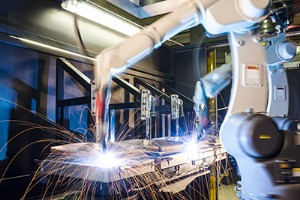
The robotic welding market is rapidly expanding due to lower robot costs and the proven benefits automated welding systems provide. To improve efficiencies and combat a number of process challenges, more and more manufacturers around the world are considering robotic welding to
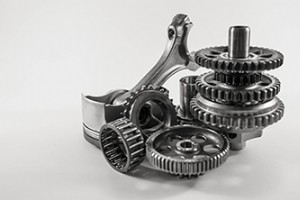
The aerospace industry has been using additive manufacturing (AM) for many applications. From aircraft and helicopter parts to engines and turbines, 3D technologies save time and money to create stronger, more efficient components. AM has improved part performance, reduced weig

Aerospace manufacturers use laser ablation to remove layers from solid metals and certain compounds to make those materials more suitable for industrial processes. Laser ablation offers absolute precision to carry out this task. How Laser Ablation Works A laser beam is focused
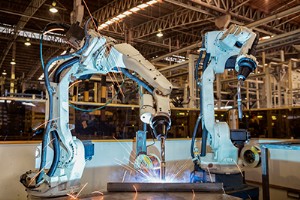
Laser welding is used in many different industries, typically for the precision it affords. Few industries require the precision of the aerospace industry, for example. Virtually no tolerance variation is acceptable. Cracks, distortions, and material damage can quickly result i
The differences between laser cutting and plasma cutting are important when selecting the best solution for your application. Although one approach is not necessarily superior to the other, each offers certain capabilities and benefits that make one more suitable to an applicat
Robotic laser welding has emerged as a highly productive automation solution over the past few years. It offers a number of advantages over traditional welding processes and can be used in completely different types of applications. Robotic laser welding delivers precise and cl
Robotic welding offers many bottom line benefits for manufacturers who choose to automate. Many of these benefits, depend on welding uptime. Unnecessary downtime can kill the productivity of robotic welding, eat into return on investment (ROI) and reduce the profitability of ov

First time users of robotic automation systems need to prepare their business for the many operational changes that occur once industrial robots are installed on the factory floor. Without a proper plan in place to leverage the full benefits of industrial robots, the productivi
In robotic automation, large workpieces present numerous unique challenges for integrators and end users. Whether it’s robotic welding, machine tending, material handling, non-destructive inspection or any other form of robotic automation, working with large parts can pose seve

Robotic automation is most effective when applications feature a high volume of the same parts. When operations demand automation of different processes with a high part-mix and lower volumes, the complexity of robot design increases and achieving quick return on investment (RO
Tungsten inert gas (TIG) welding is a high-quality welding process that is used for certain applications that require high precision and high-quality production. A variety of industries use it, but robotic TIG welding is a mainstay in the automotive, aircraft, and heavy industr
Robotic welding has come a long way over recent years with the advent of cloud-based computing. Managers and robot operators utilizing robotic workcells can now benefit from tools that enable real-time status monitoring, alarm notifications, and historical trends. Users of clou
Process inspection is a quality control measure made during the manufacturing of aircraft parts. Process inspection poses many challenges due to the number of parts and materials in need of inspection. Due to its labor-intensive nature, aircraft process inspection can be costly
Relatively fast processing speed, low heat input, low heat affected zone, and minimal distortion makes laser welding an ideal solution for many metal joining applications. The types of hi-precision welding are classified based on pulse intensity, the duration of the beam, and w
Hybrid-laser arc welding (HLAW) combines the use of laser light and an electric welding arc. The arc is usually provided by a gas metal arc welding power source in the spray-transfer mode. This mode sends a spray of tiny molten droplets across the arc from the electrode to the workpiec
Packaging robots offer many important benefits in applications across the industrial sector. When compared to manual processes, packaging robots bring the speed, accuracy, and productivity that robotic automation is known for, all while delivering relatively fast return on inve
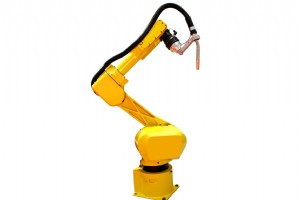
Anti-spatter liquid is an important part of robotic welding applications that suffer from excessive spatter levels. It’s a compound that protects consumables and part integrity from the accumulation of spatter during the welding process. Anti-spatter liquids create a barrier be
On the cutting edge of robotic technology, a number of researchers and startups are aggressively striving to achieve a higher level of intelligence in the use of industrial robots. Today’s industrial robots, even those enhanced with robotic vision systems, are rigid and inflexi
The importance of regular preventative maintenance for industrial robots is critical. When robots in your facility are properly maintained from a mechanical perspective, they’re effective lifespan is greatly extended. Not only does this improve the return on investment (ROI) on
Industrial robot