


Industrial manufacturing
Industrial robot

The end-effector, or end of arm tooling (EOAT), is an essential piece of an industrial robot. Manufacturers don’t include the EOAT in the design of the robot arm, adding an EOAT creates a flexible robot capable of performing a variety of tasks. It’s only once an end-effector is
The combination of robotics and machine vision technology can make for a powerful automation solution with far greater capabilities than either technology achieves on its own. Robotic vision systems come in many forms and can be used in a wide range of applications. Robotic vis
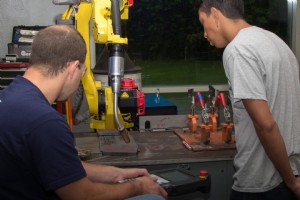
The introduction of robotic automation in any facility will introduce the need for qualified, trained operators to maintain robotic productivity. Robot training is an essential part of overall robotic productivity – robot operators should be constantly kept up to date with know
In any robot integration project, detailed simulation of robotic processes is essential for proof of concept, proof of design, and the ongoing success of robotic automation. Your robot integrator should deploy top of the line robot simulation software to ensure your systems del

Robotic laser metrology is a new technology that’s revolutionizing the manufacturing inspection processes. Typically leveraging a six-axis robotic arm and innovative laser radar technology, this form of metrology enables new levels of productivity, speed, and accuracy in part i
Pre-engineered robotic workcells offer many advantages over custom robotic systems. While highly complex applications may not be able to leverage a pre-engineered solution, for the applications that can, the benefits are clear. Users of pre-engineered robotic workcells pay lowe

Robotic laser welding presents many advantages over traditional welding processes in certain applications. Recent advancements in laser welding technology have made it even more appealing in a wide range of industrial settings. While laser welding is not a replacement for tradi

The productivity benefits of robotic welding are undeniable, but not all welding processes can be profitably automated. While robotic capabilities have advanced rapidly over the years, and continue to do so, it can still be difficult to tell if your facility is ready for roboti
Deburring is the process of removing burrs, edges, inconsistencies or fins off of parts. Robotic deburring is when this process is carried out by industrial robotic arms. While deburring is often a manual process, robotic deburring is starting to gain favor in the industrial se

Connected manufacturing is a rapidly growing trend in the industrial sector. Nearly every manufacturer is striving to unlock the full potential of Industry 4.0, or the Industrial Internet of Things (IIoT). When machines, internal systems and workers are all connected, the resul

Robotic welding is the largest segment of robotic automation and has been for decades. Despite its relative maturity, robotic welding technology continues to gain popularity and widespread adoption because of the productivity and return on investment (ROI) benefits it reliably

Robotic welding has gained tremendous popularity over the past few decades. Led by the automotive industry, robotic welding has quickly become the standard in many factories across the world. There’s a reason for this – robotic welding work cells provide significant advantages

Robotic integration is a critical part of automation. There’s a lot riding on a successful integration of robotic systems. The success or failure of automation systems, as well as their ability to achieve return on investment (ROI) and productivity goals, rests in some part on

Improving the lifespan of welding robots is an important aspect of achieving desired return on investment (ROI) and maintaining the highest possible levels of productivity. Welding robots that require constant maintenance or equipment replacement drive up operating costs unnece

Glass manufacturers can gain a competitive edge by investing in industrial robots. The handling of delicate or hot glass has historically been a difficult task for robots, but in recent years the dexterity, accuracy and reliability of robots has improved, making robotic investm

When implementing robotic welding in your facility, understanding robotic welding workflow is vitally important. In most cases, welding robots will significantly increase production throughput at one point in your production process and accommodating this is necessary to achiev
Industrial and collaborative robot safety should be a top priority in manufacturing facilities across the world. Robotic safety is about more than a legal requirement – it’s about safeguarding human lives and contributing to the overall productivity of automated production. Whi
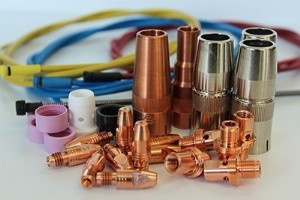
For robotic welding applications, automation peripherals can help maximize the productivity of robotic welding systems. Despite this fact, some view automation peripherals as an accessory, or an unnecessary part of a robotic system. In reality, there are many productivity benef

Robotic peripherals are an often-overlooked part of a robotic welding system, but these peripherals can have a major impact on productivity and profitability. Whether it’s contact tips or consumables, robotic welding accessories can help unlock the full return on investment (RO

The cost of a robotic welding system goes beyond the initial purchase. Maintaining peak productivity is key to achieving return on investment (ROI) and profitability in the long-term. However, robotic welding systems, looking forward at long-term costs, will always need regular
Industrial robot

August 2021 Tech Briefs: NASA Landslide Prediction, COOLR, and Nanoparticle Research

Reliability‑Centered Maintenance (RCM): A Maintenance Manager’s Blueprint for Cost‑Effective Asset Performance

Top 5 Must‑Have Resources for IIoT System Engineers & Architects (2017)

Why Every Food Manufacturer Needs an HACCP Plan

