


Industrial manufacturing
Industrial robot

Historically, heavy fabrication processes have been mostly manual for a number of reasons. For one, robotic technology of the past simply could not keep up with the extreme demands of heavy fabrication applications, such as those found in the welding of construction vehicles, l

When deciding to automate welding processes, return on investment (ROI) is likely your most pressing consideration. Robotic welding cells are a big investment and they need to deliver on expected returns. Navigating the world of robotic welding can be difficult, too. There are
Robotic material handling and tending systems are commonplace in the industrial sector. Material handling refers to robotic arms moving production parts, typically on or off a conveyor belt or to hold a part in place for production. Machine tending is similar, but more specific
Vision systems can dramatically enhance robotic capabilities. Without vision, “blind” robots are relegated to performing the same repetitive task, until programmed to do otherwise. Robots with robot vision systems have much greater flexibility and functionality because of their

Robotic welding is a dangerous process. As welding robots become more and more common in factories of all sizes, the need for safety has never been greater. Manufacturing professionals have a responsibility to their employees and their bottom lines to introduce and follow the s
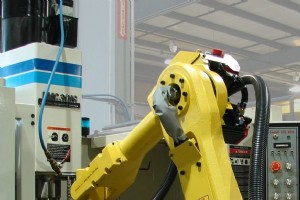
Machine tending applications are often slow to be automated, due to their perceived complexity. Manual processes are capable of loading and unloading machinery, but machine tending has the potential to be far more productive than this. Just about any machine tending process can

Investments in robotic machine tending pay for themselves over time. This is usually true in small and large operations alike, regardless of the machine being tended. Robotic machine tending provides return on investment (ROI) much like other robotic processes, although it may
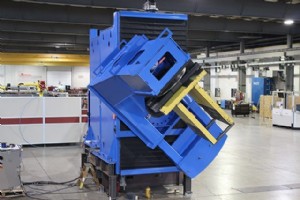
Robotic positioners are a fundamental component of robotic automation, particularly in robotic welding applications of large and/or high-volume parts. The positioner plays an important role in accuracy, repeatability and overall production quality. It is an essential considerat
Choosing the right robotic systems integrator is not an easy task, especially for first time robot buyers. The robot integrator will play a major role in the ongoing value of the automation system, but most immediately, an integrator will make design and implementation decision

The market for industrial robotics is set to explode, impacting all manufacturers. A recent report from Markets and Markets estimates the value of the industrial robotics market to be $71.72 billion by 2023, growing at a 9.60% compound annual growth rate (CAGR) during that peri

Robotic welding can provide game-changing productivity gains for manufacturers, regardless of the type of robotic welding being used. The consistency and accuracy gained by robotic welding for repeatable tasks can lead to improved throughput, product quality and higher profit m
Machine vision has played a vital role in the evolution of industrial robotics, and the two are becoming increasingly integrated. A main reason for this trend is that cameras have become more powerful and more accurate in rugged industrial settings than ever before. While robot
Industrial robots have come front and center on the international stage as they’ve become widespread in the industrial sector. As they’ve become more powerful, more advanced and more productive, the need for robot safety has increased. There are a number of ways manufacturers c

Robotic welding has the potential to bring major productivity gains to just about any manufacturing operation – large or small, high or low volume. However, robotic welding is often a major investment. In order for a manufacturer to achieve return on investment (ROI) in a timel

Choosing the right type of welding for your robotic welding application is a critical decision. Not all types of robotic welding are equal, despite producing similar outcomes. Two of the most common types of robotic welding – metal inert gas (MIG) and tungsten inert gas (TIG) –
The industrial internet of things (IIoT) has been making its way into more and more factories across the industrial sector, with robotic automation systems being one of the main vehicles of connectivity and new capabilities. The IIoT has transformative potential in the industri
Robotic Material Handling (MH) has emerged as one of the most effective and most popular industrial robotic applications. Together with robotic welding, they make up 70% of the global market for industrial robots. The market for MH robots is expected to grow at a 5% compound annual gro
Series Introduction Return on investment (ROI) is a key consideration for determining whether automation is right for your company. Due to inherent safety and efficiency challenges of manual processes, robotic welding is one of the most common types of robotic automation. Robotic weld
Robotic Welding: Increased Uptime and 85% Efficiency It is a common misconception that robots weld faster than humans. That’s not really an accurate assessment. In fact, most automation processes are engineered to mimic the motions of the manual laborer. Where robots deliver greater ef
Robotic Welding: Resolving Labor Shortage & Workplace Safety Workplace safety is of paramount importance, particularly to manufacturers who face higher insurance costs and a loss of their skilled labor force when potentially hazardous processes can lead to worker injuries or worse.
Industrial robot
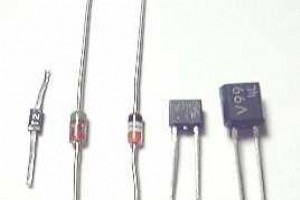
Varicap Diodes Explained: A Comprehensive Guide for Electronics Professionals

Choosing the Ideal CNC Machining Materials for Medical Devices – Top Medical Equipment Materials
Choosing the Right Tooling: High-Speed Steel vs. Carbide for Precision Machining
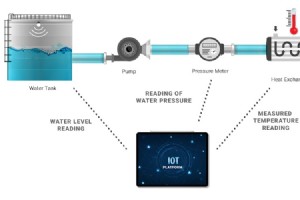
Elevate Industrial Efficiency with Advanced IoT Solutions

