



Real‑Time Software Tracing for Field‑Deployed IoT Devices
Software tracing remains an essential technique for every embedded developer, especially when paired with advanced visualization. Most embedded systems exhibit repetitive, cyclical patterns. During debugging, the goal is to pinpoint deviations from this normal behavior—those anomalies that signal underlying issues.
Tracing, in isolation, simply gathers data. Sifting through vast logs of text or numbers is like searching for a needle in a haystack. Proper visualization turns this into a visual pattern‑recognition task, a domain where the human brain excels. Interactive graphs that display execution times, response times, task switches, and inter‑task messaging let developers instantly spot irregularities and decide where to investigate further.
For over a decade, visual trace diagnostics have proven invaluable in lab environments. With the surge of secure “Internet of Things” cloud connectivity, it’s now logical to extend tracing to devices operating in the field. Since tracing is software‑based, no extra hardware is required, and any connected IoT device can upload diagnostic traces just like regular application data. This provides developers with real‑world insights that often elude pre‑deployment testing.
Think of software tracing as a virtual “flight recorder.” It continuously records, offering critical information when problems arise. Unlike physical flight recorders, the solution is purely software, designed to capture software‑specific faults.
Percepio’s DevAlert (see Figure 1) is a turnkey solution for IoT monitoring. It comprises:
- A firmware monitor that embeds tracing and alerting capabilities into your code.
- Tracealyzer, a visual trace diagnostic tool.
- A cloud service that categorizes, stores, and notifies developers while filtering duplicate alerts.
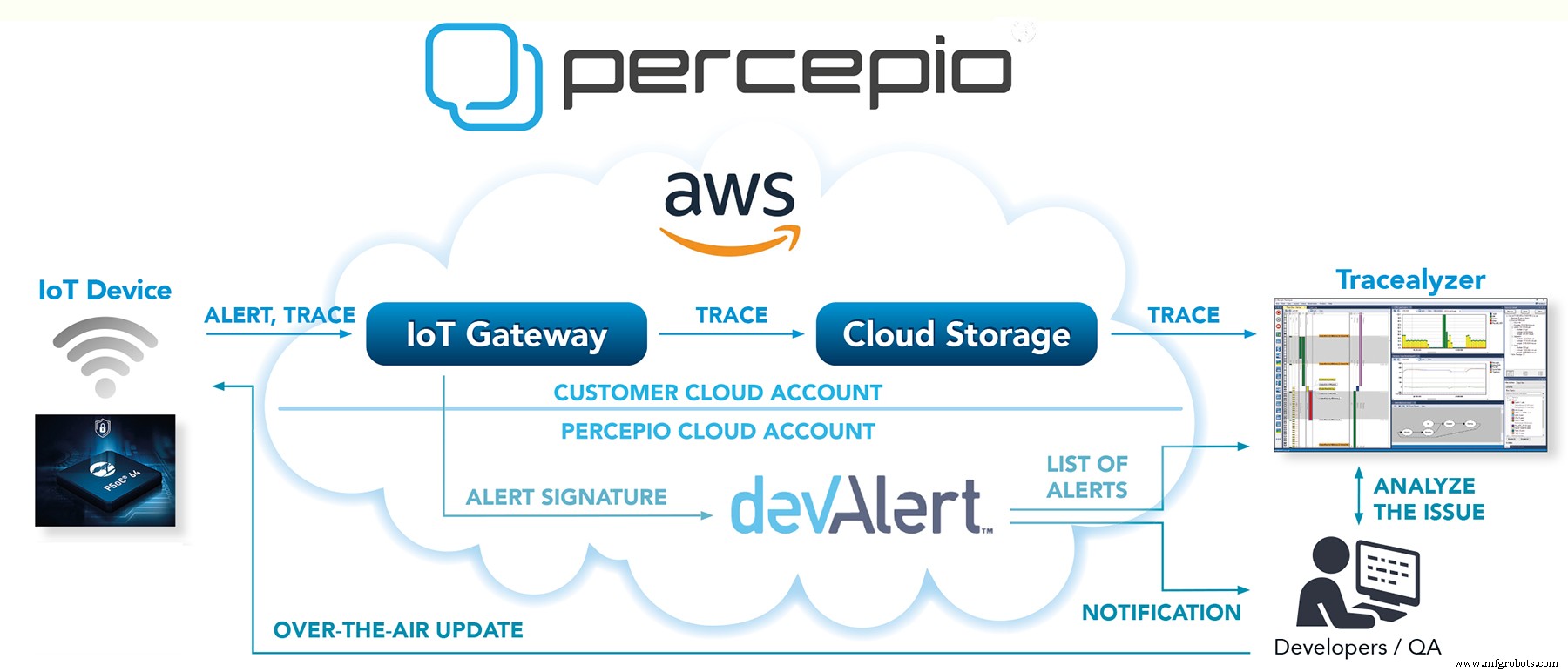
Figure 1. Percepio DevAlert delivers instant feedback on errors in cloud‑connected devices, enabling rapid, continuous improvement of firmware. (Click to enlarge)
The initial release targets AWS and is tailored for RTOS applications leveraging AWS IoT Core, though the architecture is adaptable to other cloud platforms.
Software Tracing Meets Cloud Connectivity
Tracing in the lab and tracing in production differ significantly. When extending lab‑ready visual diagnostics to field‑deployed devices, several considerations arise.
Unlike a direct USB or Ethernet link, cloud connections offer limited bandwidth and higher latency. For example, uploading 5 KB of trace data may take tens to hundreds of milliseconds over a wireless interface. However, DevAlert uploads are event‑driven: only when an alert is generated—such as a failed sanity check, hard fault, or watchdog reset—does a short trace of recent events get transmitted. This approach keeps bandwidth usage minimal while delivering the most critical information.
Security is paramount for every IoT device. DevAlert avoids creating new attack surfaces by leveraging the existing secure cloud connection of the device. It uses the same device authentication (e.g., X.509 certificates) and encrypted transport (TLS) that your application already relies on. Alerts are transmitted in a one‑way fashion—no incoming traffic—mirroring the security of regular IoT data.
Once in the cloud, only a lightweight metadata signature is sent to the DevAlert service; the full trace remains within the device’s own cloud account. Figures 2a and 2b illustrate the data flow and security layers.
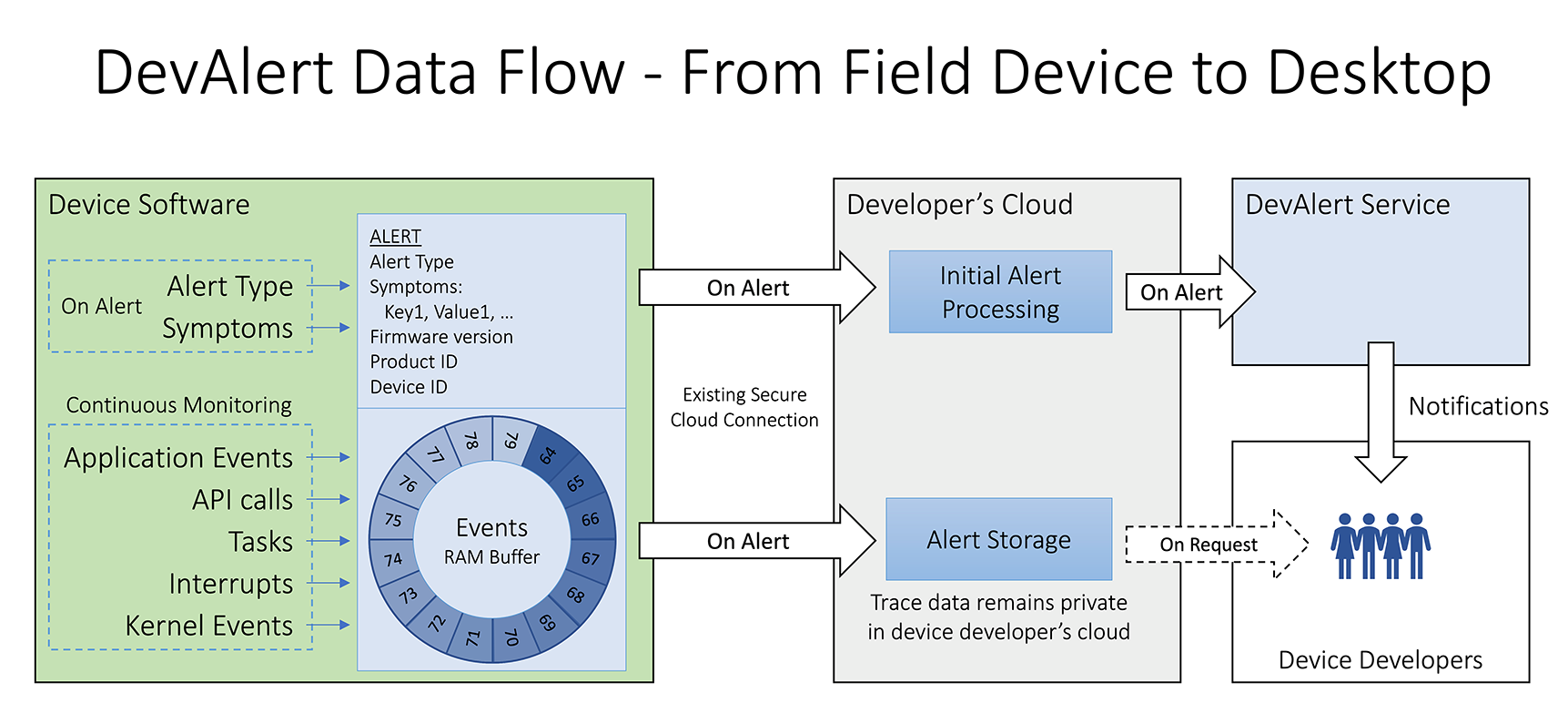 Figure 2a. Data originates in the device firmware; each alert includes a brief trace of preceding events. A metadata signature is forwarded to the DevAlert cloud service. (Click to enlarge)
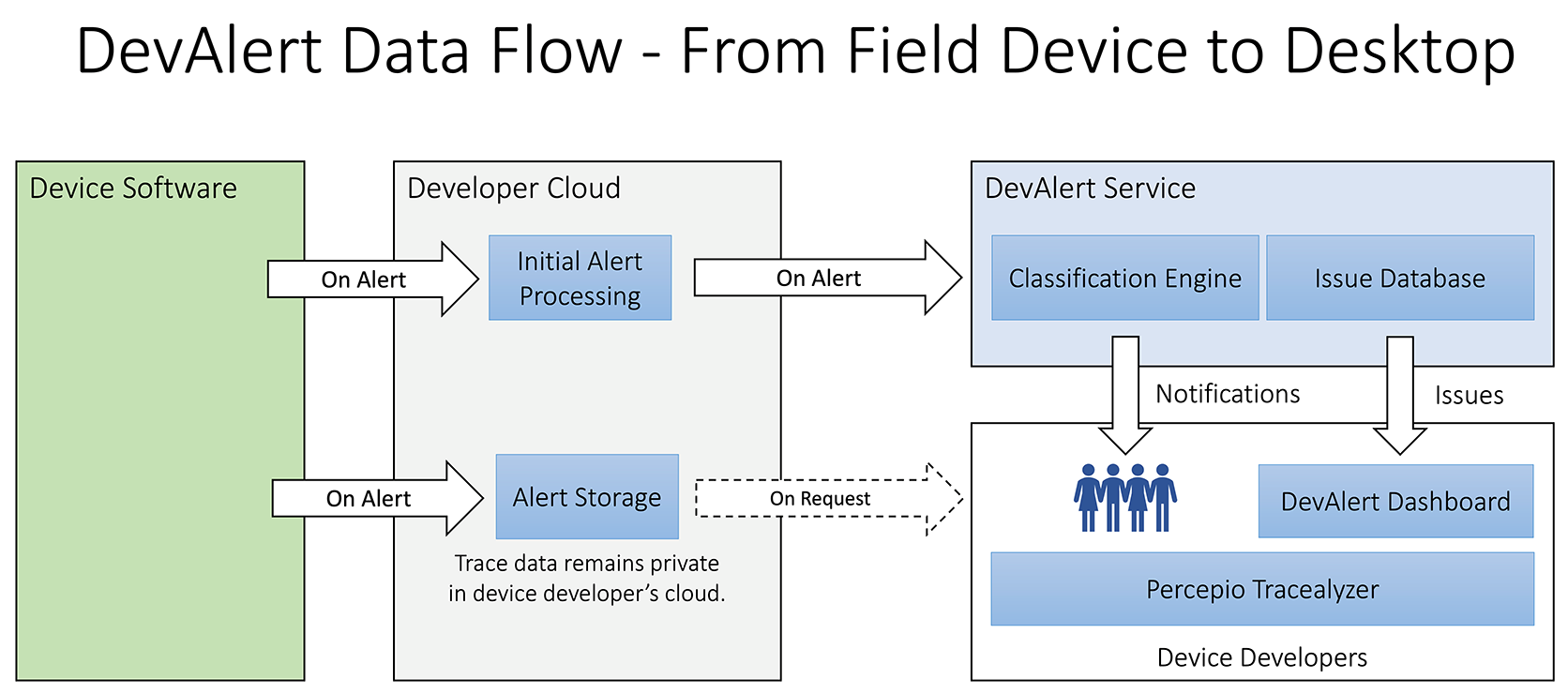
Figure 2b. The cloud service compares incoming alerts against all alerts from a customer’s fleet, notifying developers only on new issues. Duplicate alerts are logged but not re‑notified, preventing inbox clutter. (Click to enlarge)
Operational costs for transmitting alerts are usually negligible, especially when no issues are detected. Cloud providers charge minimal fees for occasional messages; for instance, sending 1 million MQTT messages to AWS IoT Core costs roughly US$ 1. Conversely, OTA updates that patch bugs require more data transfer. AWS estimates the cost of updating 600,000 devices at US$ 1,275—an investment far lower than the potential losses from unresolved defects (customer churn, negative reviews, or safety incidents).
DevOps for Embedded Development
Enabling devices to “phone home” on software faults establishes a powerful feedback loop between production firmware and the development team. Rapid detection, diagnosis, and OTA remediation embody the DevOps mindset, long established in mobile and cloud application development and now applicable to embedded systems via secure cloud platforms.
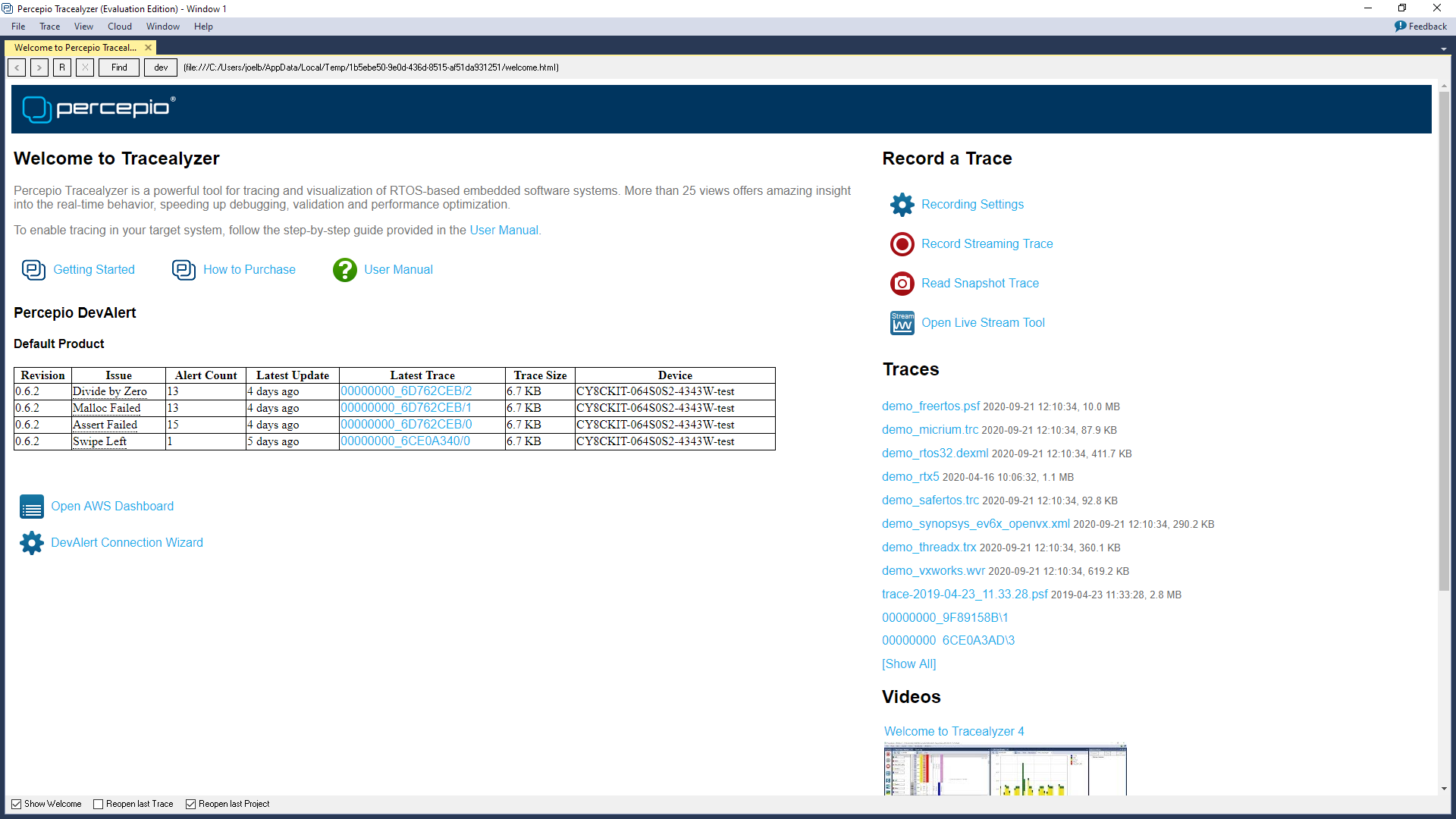
Figure 3. The DevAlert dashboard in Tracealyzer lists the most recent alerts and their associated traces, providing immediate context for developers. (Click to enlarge)
From a business perspective, DevOps‑style monitoring translates into fewer dissatisfied customers, lower support costs, and mitigated liability. Even though most embedded releases contain minor bugs that slip through verification, early visibility—ideally within seconds—enables swift analysis and OTA fixes. The resulting time‑to‑repair reductions and minimized customer impact can preserve brand reputation and revenue.
Beyond Bugs: Performance and User Experience
Alerts are not limited to defect reporting. Developers can instrument critical performance metrics or user‑interaction flows. For example, in a car infotainment system, a timer can trigger an alert if a user’s menu navigation stalls for more than five seconds. Aggregated alerts on the same UI path reveal usability bottlenecks, guiding iterative product improvements.
In summary, integrating software tracing with cloud‑based alerts in field‑deployed devices delivers tangible benefits—enhanced reliability, rapid issue resolution, and data‑driven product evolution—without excessive complexity. Fully embracing this workflow, however, requires OTA update capabilities and an agile organization that values continuous improvement post‑release.
Embedded
- Which Cloud ERP Provider Holds the Edge? SAP, Microsoft, or Oracle
- Renesas Expands Azure RTOS Integration Across RA, RX, and RZ/A Lines with FSP
- Dialog Unveils Wireless Ranging SDK for Precise BLE Distance Measurement, Enhancing COVID‑19 Contact Tracing
- Atmosic Low‑Power Wristband Powers Bluetooth 5 Contact Tracing for Toronto Wolfpack Events
- Edge Cloud Computing: The Essential Backbone for IoT’s Rapid Growth
- Software Testing for IoT Devices: Key Challenges & Solutions
- Mastering IoT Gateways: Seamlessly Connect Devices to the Cloud
- Cloud Software Evolution: Shaping Tomorrow’s Business
- Elevate Shop Efficiency with Cutting-Edge ERP Software
- Understanding Cloud ERP: Key Benefits and System Options for Modern Businesses