



Bluetooth Mesh Design: Understanding Nodes, Features, and Interoperability
Bluetooth Low Energy (BLE) has become the backbone of the IoT ecosystem, powering smart homes, home‑healthcare devices, and asset‑tracking solutions with its low‑power profile. Yet traditional BLE is limited to one‑to‑one or one‑to‑many links, and its short range makes it difficult to control all devices from a single point—especially in multi‑room homes where signals must penetrate walls and other obstacles.
What many IoT deployments need is true many‑to‑many communication: any node must be able to receive from multiple peers and broadcast to multiple peers. Imagine a group of four smart light bulbs that are controlled by several smartphones, while also listening for “Set” commands from a dimmer or an occupancy sensor. Traditional BLE simply cannot satisfy this requirement.
Bluetooth Mesh solves these challenges by adding mesh‑wide many‑to‑many routing, range extension, and low‑power operation while still allowing devices to run on small batteries. It has quickly become the preferred technology for home automation because every node can be accessed directly from a phone or tablet—no gateway is required—and because its standard message formats (known as Models) guarantee rapid, interoperable deployments across vendors.
This article is the first of a five‑part series that covers the core concepts of Bluetooth Mesh. We’ll explore its low‑power capabilities, privacy and security features, and how to pick the right device for your smart‑home application. Today we focus on the fundamental elements that make up a Bluetooth Mesh network.
Bluetooth Mesh Network Architecture
A Bluetooth Mesh network is built from nodes that can provide one or more of the following feature types:
- Relay Node/Feature
- Low Power Node (LPN)/Feature
- Friend Node/Feature
- Proxy Node/Feature
- Provisioner
click for larger image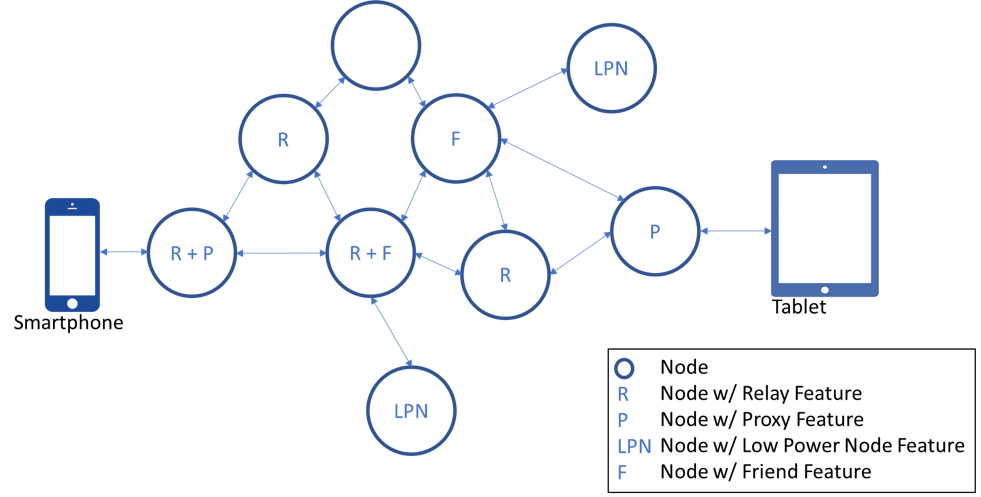
Figure 1: Bluetooth Mesh Network (Source: Cypress)
Nodes may combine multiple features. For instance, a node marked “R+F” supports both Relay and Friend, while an “R+P” node supports Relay and Proxy.
Relay Feature
The Relay capability lets a node forward messages over the advertising bearer. Wall‑powered devices, which can remain awake continuously, are ideal candidates for Relay nodes. Examples include smart light bulbs and wall‑mounted switches. Battery‑powered nodes typically omit Relay because constant listening would quickly deplete the battery.
Low‑Power Node (LPN) Feature
LPNs are designed for battery‑operated devices that must stay in deep sleep most of the time. Instead of listening for every packet, an LPN wakes at defined intervals, polls a Friend node for pending messages, and then returns to sleep. This architecture is perfect for sensor nodes, retail price tags, and other low‑energy applications.
Friend Feature
A Friend node acts as a memory buffer for one or more LPNs. It receives and stores messages destined for LPNs and hands them off when the LPN wakes and queries the Friend. Because it must hold multiple message queues, a Friend node may need more RAM than other node types.
Proxy Feature
The Proxy feature exposes the Mesh network to devices that do not natively support Mesh, such as smartphones or Wi‑Fi‑Mesh gateways. A Proxy node bridges the GATT (Bluetooth Low Energy Generic Attribute Profile) and advertising bearers, allowing non‑Mesh devices to send and receive messages. Deploying several Proxy nodes ensures resilience—if one goes offline, the network remains reachable.
Provisioning
Provisioning is the secure process of adding a new node to the network. Unprovisioned devices broadcast beacons; a provisioning device—often a smartphone or tablet—detects the beacon, authenticates the device, and installs the node’s network keys. This step prevents unauthorized devices from joining the Mesh.
According to the Bluetooth specification, a device may be qualified for Mesh without supporting every feature type. Many silicon vendors omit Friend and Low‑Power features, which can hinder battery‑operated applications.
Finding Supported Features on a Product
To determine which node/feature types a particular device supports, visit the Bluetooth SIG website, select Find a Product, and search for your device. For example, entering Cypress CYBT‑413034‑02 displays its Declaration ID (e.g., D040142). Clicking the ID leads to a list of supported layers, roles, and features. Below are screenshots from the Cypress module that illustrate this process.
click for larger image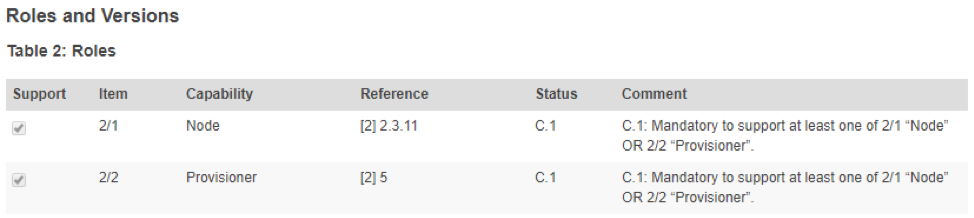
Figure 2: Roles and versions for a specific product are shown on the Bluetooth SIG website. In this case, the product supports both Node and Provisioner roles. (Source: Cypress)
click for larger image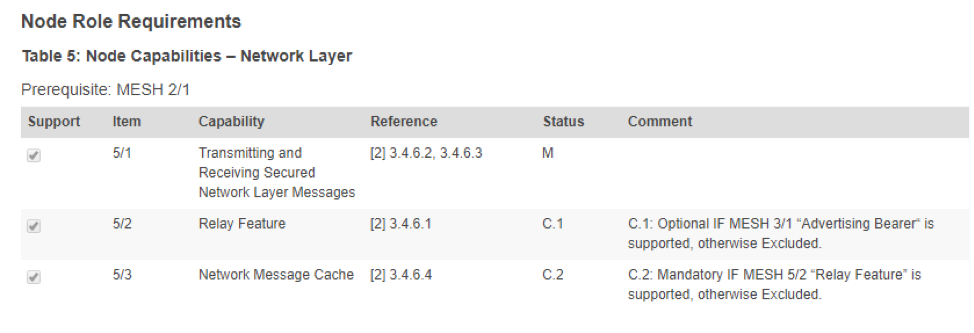
Figure 3: The Bluetooth SIG website also shows the node role capabilities for a specific product. In this case, the product supports the Relay feature. (Source: Cypress)
click for larger image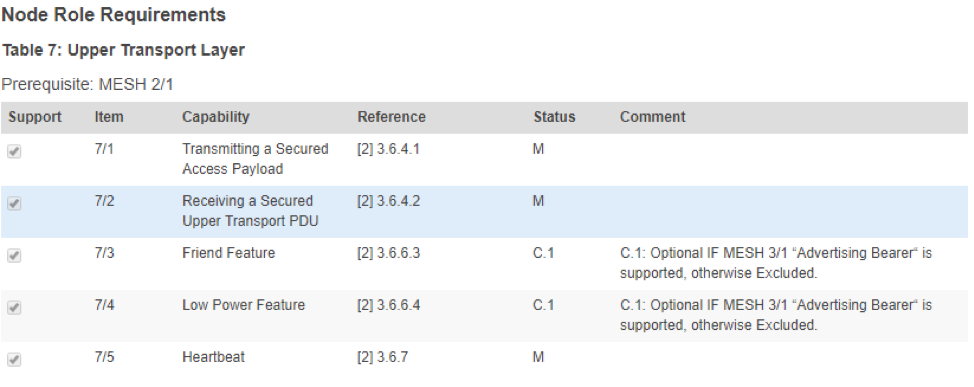
Figure 4: The Friend and the Low‑Power Node features are supported by this product as shown under Upper Transport Layer capabilities. (Source: Cypress)
click for larger image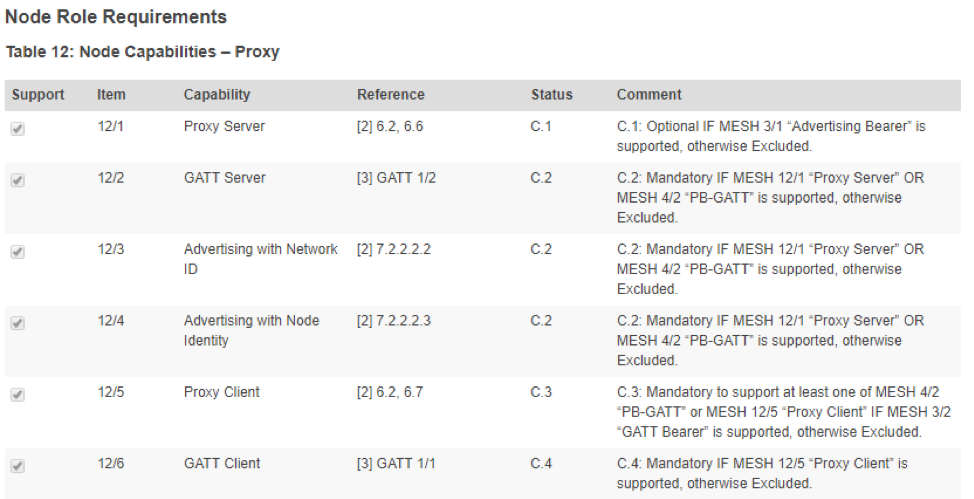
Figure 5: The proxy feature is supported as shown under Proxy capability. (Source: Cypress)
While the Cypress module showcases all the above features, remember that many of them are optional. For a robust Mesh network—especially one that includes battery‑powered devices—you’ll want to integrate Relay, Friend, Low‑Power, and Proxy nodes wherever possible.
For a deeper dive, watch the Learning More about Bluetooth Mesh video to see how node and feature types work together in practice.
In our next article, we’ll examine how communication flows through a Bluetooth Mesh network and explore Mesh models that enable device interoperability across application segments.
Embedded
- Analog vs Digital Sensors: Types, Applications, and Practical Examples
- Bluetooth Mesh Node Communication: Designing Robust Mesh Networks
- Bluetooth Mesh Security & Privacy: Building a Trusted IoT Network
- Choosing the Right Device for Bluetooth Mesh: A Practical Guide to Hardware, Software, and App Requirements
- Bluetooth Mesh Design Choices: Module vs. Discrete Device
- Cypress Launches Dual‑Mode Bluetooth 5.0 MCUs with Mesh Networking, Bridging IoT Devices to Smartphones
- Future Electronics Forms Global Partnership with Silvair to Accelerate Bluetooth Mesh Solutions
- Silicon Labs Introduces Pre‑Certified Wireless Gecko Modules Supporting Bluetooth Mesh, Zigbee, Thread, and BLE
- Java Variables and Data Types – A Comprehensive Guide with Examples
- Arduino‑Powered Smart Coffee Maker with Bluetooth Control and Temperature Monitoring