



Edge AI Chips: Driving the Future of On-Device Intelligence
In 2020, Deloitte projected that more than 750 million edge AI chips—complete or partial processors that execute or accelerate machine learning directly on devices—would be sold, generating US$2.6 billion in revenue. The edge‑AI chip segment is set to outpace the broader semiconductor market; by 2024, unit sales are expected to exceed 1.5 billion, translating to a compound annual growth rate of at least 20%—more than double the long‑term 9% CAGR forecast for the industry as a whole.
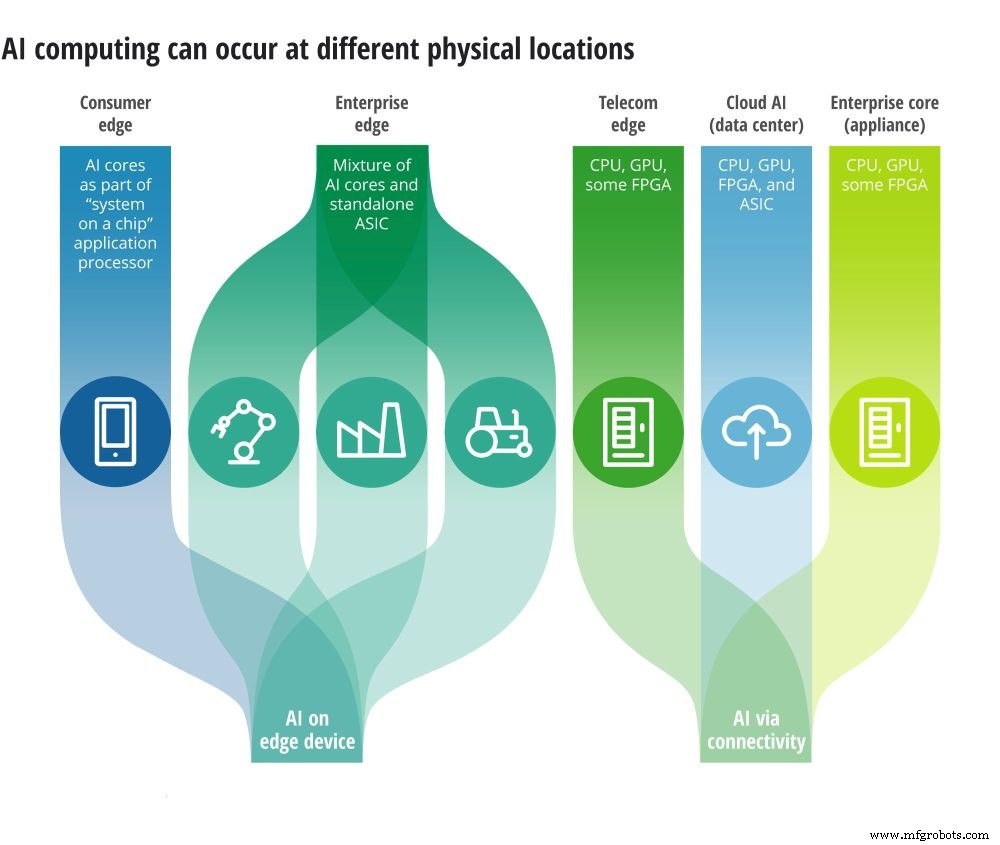
 Figure 1: Locations where intelligence can be embedded (Image: Deloitte Insights)
Edge‑AI chips are poised to appear in an expanding array of consumer hardware—high‑end smartphones, tablets, smart speakers, and wearables—as well as in enterprise devices such as robotics, security cameras, and industrial sensors. The consumer segment dominates, yet its growth rate is modest, with an 18% CAGR projected from 2020 to 2024. In contrast, the enterprise market is expected to surge at a 50% CAGR over the same period.
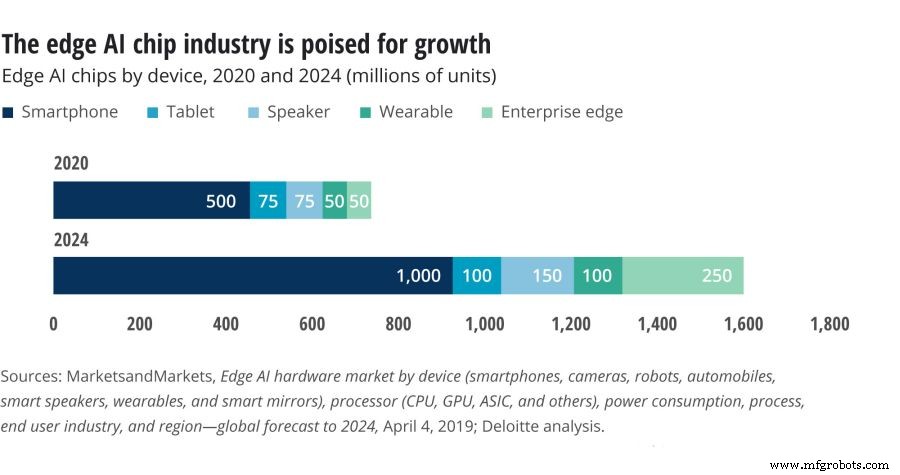
 Figure 2: Edge‑AI chip market overview (Image: Deloitte Insights)
Even in 2024, the consumer market is anticipated to represent over 90% of edge‑AI chip sales, both in volume and revenue. High‑end smartphones will account for more than 70% of all consumer edge‑AI chips in use, with the next few years driven largely by smartphone adoption. Roughly one‑third of the 1.56 billion smartphone units sold this year may already incorporate edge‑AI capabilities.
Traditionally, AI workloads were handled in data centers, enterprise cores, or telecom edge processors due to their heavy computational demands. Edge‑AI chips change that paradigm: they are compact, cost‑effective, power‑efficient, and generate minimal heat, making local processing on handheld and industrial devices viable. This shift reduces—or eliminates—the need to transmit large data volumes to remote servers, delivering faster response times and stronger privacy guarantees.
Local processing protects sensitive data; information that never leaves a device cannot be intercepted or misused. Moreover, an edge‑AI chip embedded in a phone can perform advanced tasks even without network connectivity.
That said, not every AI task is best handled locally. For workloads that exceed a device’s capacity, offloading to cloud or edge arrays remains appropriate. In practice, most applications adopt a hybrid model—partly on-device, partly in the cloud—with the optimal split determined by the specific use case.
The economics of edge AI in smartphones
Beyond smartphones, tablets, wearables, and smart speakers also integrate edge‑AI chips, but their market impact is currently limited. Tablet sales are relatively flat, and smart speakers and wearables together are projected to reach only 125 million units in 2020. Despite their modest size, penetration rates for edge‑AI chips in these categories are high.
At present, edge‑AI chips are predominantly found in premium smartphones—the top third of the price spectrum. However, adding an AI accelerator does not necessarily inflate consumer prices.
By examining die shots from Samsung, Apple, and Huawei, we can approximate the cost contribution of the AI core. Samsung’s Exynos 9820, for instance, allocates about 5% of its die area to AI processing. With the entire SoC priced at US$70.50, the AI portion represents roughly 5% of that cost, or US$3.50 per chip.
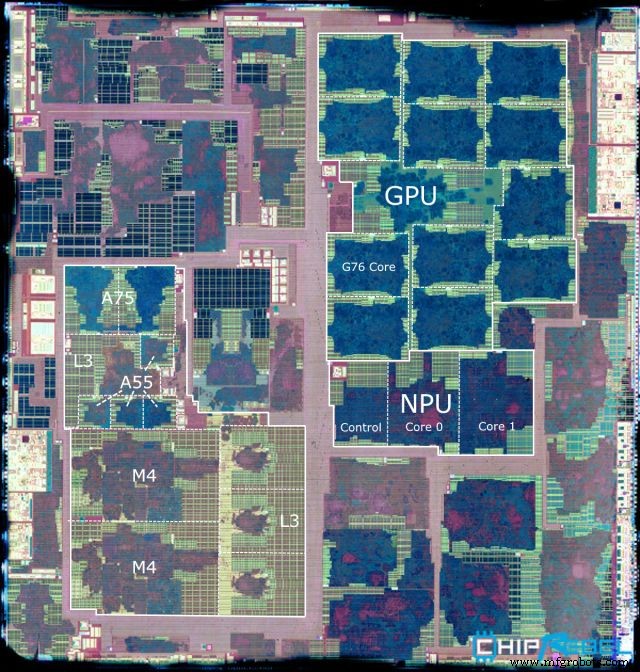
 Figure 3: Samsung’s Exynos 9820 die – 5% area dedicated to AI (Image: ChipRebel; Annotation: AnandTech)
Apple’s A12 Bionic dedicates roughly 7% of its die area to machine learning. With a total processor cost of US$72, this translates to an estimated US$5.10 for the AI core. Huawei’s Kirin 970, costing US$52.50, allocates 2.1% of its area to the NPU, suggesting a cost of about US$1.10 (Huawei notes 150 million of 5.5 billion transistors for the NPU, or 2.7% of total, which would place the cost near US$1.42).

 Figure 4: Apple’s A12 Bionic – 7% of die area for machine learning (Image: TechInsights/AnandTech)
While the cost estimates vary, an average of US$3.50 per NPU is reasonable. Applied to a half‑billion smartphones—and even more when accounting for tablets, speakers, and wearables—the total market volume is substantial. With a manufacturing cost of US$1–3 per chip, the addition of an edge‑AI NPU results in only a US$1–US$2 increase at the consumer price point, a negligible rise of under 1% for a US$250 phone.
Sourcing AI chips: In‑house or third‑party?
Device makers choose different paths to obtain edge‑AI chips, guided by product tier and sometimes geography. Many purchase application processor/modem SoCs from third‑party vendors like Qualcomm and MediaTek, which together captured roughly 60% of the smartphone SoC market in 2018. While not all their offerings include an AI core, higher‑end models such as Qualcomm’s Snapdragon 845/855 and MediaTek’s Helio P60 do.
Apple, by contrast, designs and produces its own SoCs—A11, A12, A13 Bionic—each incorporating edge‑AI functionality. Samsung and Huawei employ hybrid strategies, sourcing some SoCs from the merchant market while also using their own chips (e.g., Samsung’s Exynos 9820, Huawei’s Kirin 970/980) for other models.
» Continue reading page two of this article originally published on our sister site, EE Times Europe.
Embedded
- Why Edge Computing Is Essential for IoT Success
- Edge AI: Accelerating On-Device Intelligence and Transforming Consumer and Enterprise Markets
- Memory Technologies Powering Edge AI: Challenges and Opportunities
- Edge Computing Explained: Why It Matters for Modern Business
- Move the Cloud to the Edge: Accelerating IoT Decision-Making
- Edge Computing: The Key to Real‑Time Industrial IoT Success
- Edge Computing Explained: Why It’s Critical for Modern Businesses
- Harness Edge Computing to Drive Retail Success
- Edge Devices: Bridging Local Networks and the Cloud for Seamless IoT Data Flow
- Flying Optics Laser Systems: A Strategic Advantage for Metal Fabrication