



Inside a Sengled Smart LED Bulb: A Technical Teardown and Zigbee Connectivity Review
My home is powered by Amazon Alexa, with Echo, Echo Dot, and Echo Tap devices scattered throughout. When I first saw the second‑generation Echo redesign, I was underwhelmed by its appearance; I prefer a more “metallic” aesthetic. As a result, I began collecting first‑generation units while they were still available, preserving them for future use.
While clearing out a storage box, I discovered the Echo Plus—a variant that looks like the standard Echo but includes a built‑in Zigbee controller. This feature eliminates the need for a separate bridge to connect Zigbee‑based smart lights such as Philips Hue, though the Echo Plus only supports basic on/off control rather than full dimming or color‑changing functionality.
I purchased a refurbished Echo Plus for $80.99 and paired it with a 60W‑equivalent LED bulb for an additional $9.99. Shortly thereafter, new units were offered at $99.99 in a close‑out promotion, which included a free Philips Hue bulb. I added one of these to my test setup.
With a spare LED bulb in hand, I turned my attention to the Sengled Element Classic A19 (E11‑G13), a 2700K soft‑white smart bulb available on Amazon for $9.99. Below are some exterior packaging shots.
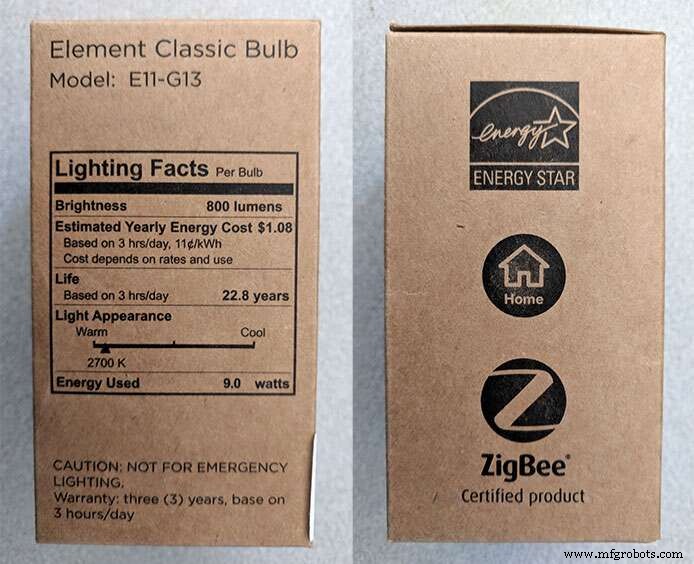
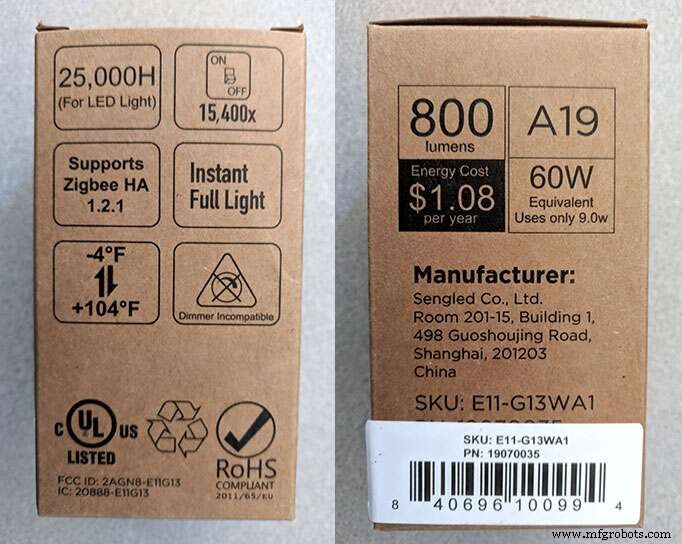
Inside the box you’ll find the bulb, two cardboard support pieces, and a single business‑card‑sized documentation sheet—no more, no less.
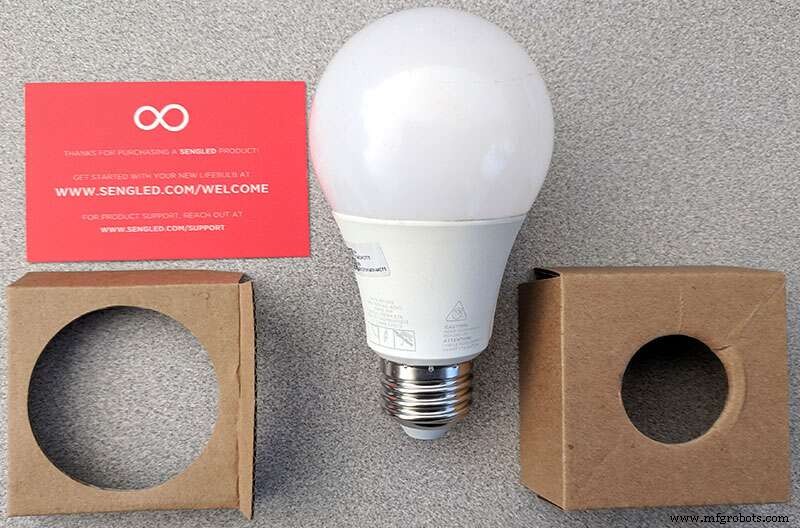
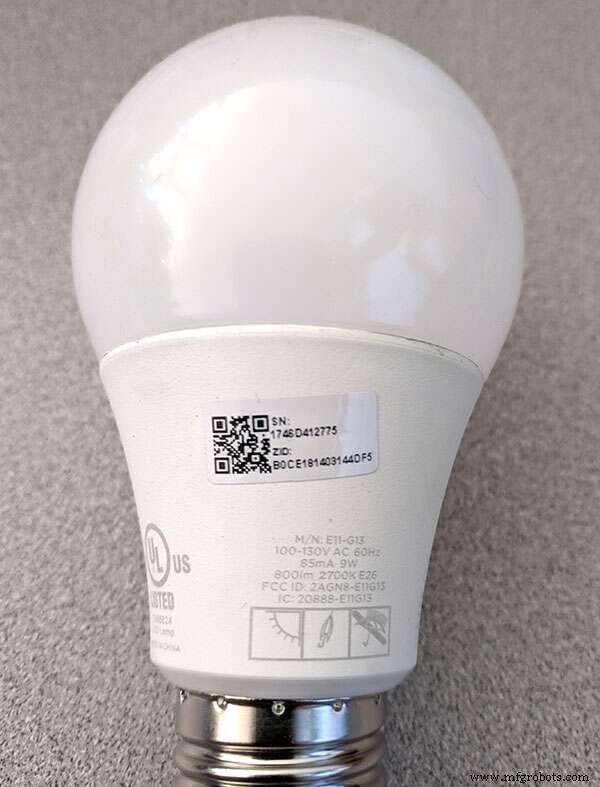
Below is the back of the documentation and a close‑up of the bulb itself.
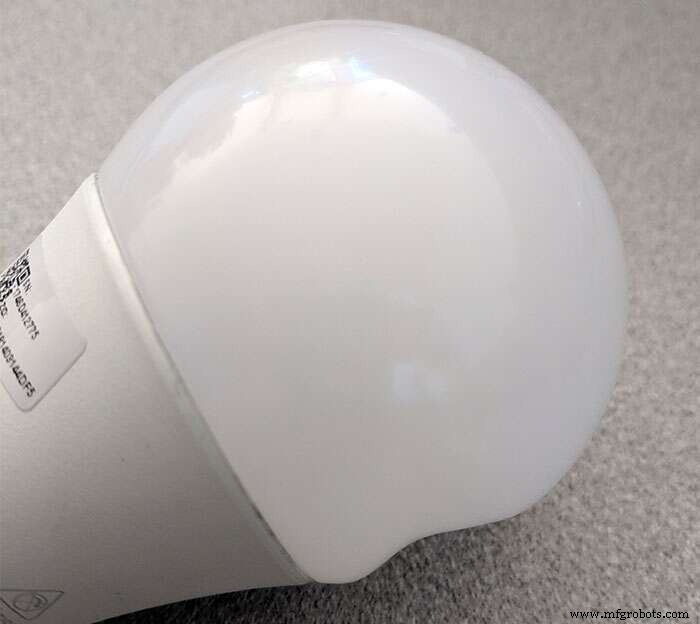
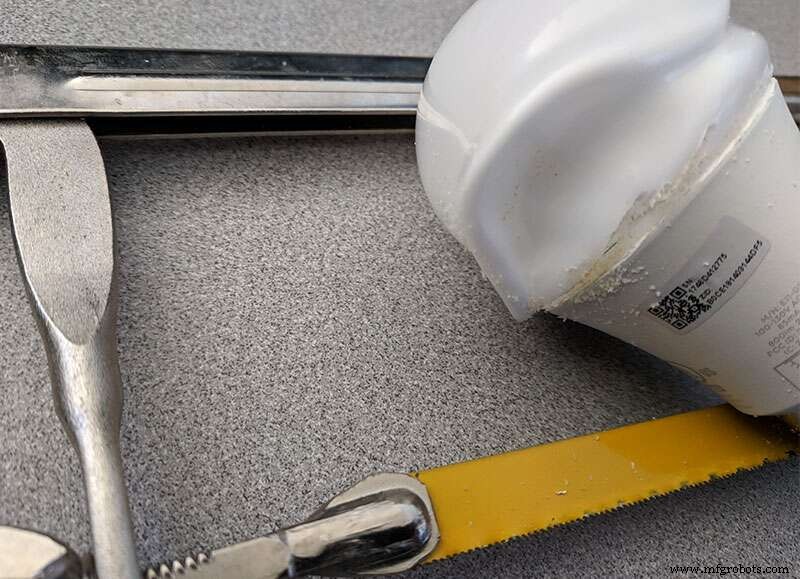
I attempted to separate the translucent plastic globe from the metal base with a heat gun, but the heat only deformed the globe. A hacksaw was required to cleanly split the bulb.
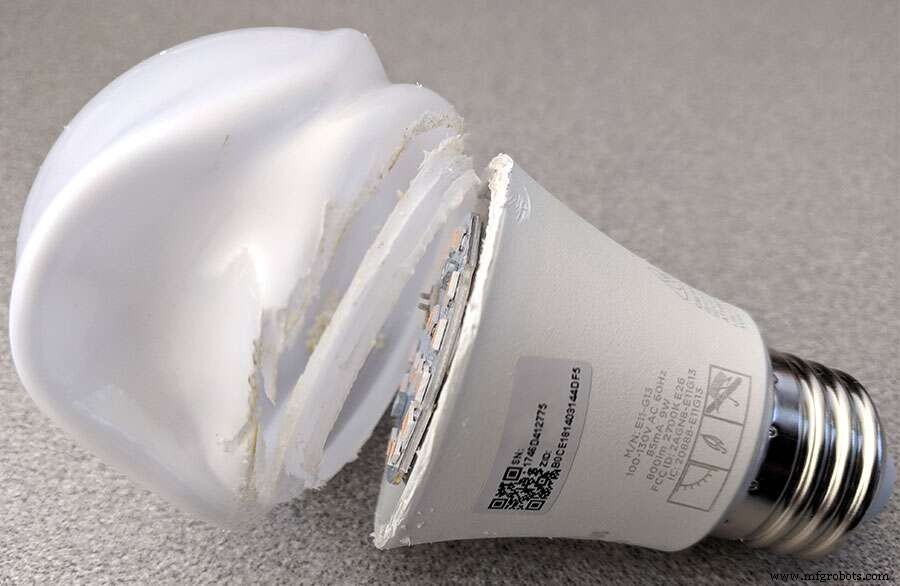
Inside the bulb’s housing, the components reveal the typical architecture of a smart LED: a small printed circuit board, LED chips, a driver module, and the Zigbee radio module that handles wireless communication.
This teardown provides a clearer understanding of how Alexa’s Echo Plus integrates with Zigbee devices and the internal structure of a cost‑effective smart bulb.
Internet of Things Technology
- From Fire to Filament: The Evolution and Production of the Modern Light Bulb
- Light‑Emitting Diodes: From Inception to 100‑Year Lifespans
- Wireless Data Transfer via LED (Li-Fi) – Arduino Project
- Arduino Web-Controlled Light Bulb: Step-by-Step Guide
- LED Whack‑a‑Mole Game with Arduino Uno – Interactive LED and Joystick Project
- Smart Traffic Light Control System with Real-Time Data
- DIY Christmas LED Light String Circuit: Simple Blinking & Dancing Lights
- DIY LED Lamp Kit: Build an Energy‑Efficient, Eco‑Friendly Light
- Mastering LED Strip Accessories: Connect, Control, and Customize Your Lighting
- LED Strip Diffusers: How They Evenly Distribute Light for Optimal Design