



IXrouter: Seamless Edge‑to‑Cloud Connectivity for Industrial IoT
Discover IXON Cloud’s cutting‑edge IoT edge device.
In this article we explain the concept of edge computing, the tangible benefits it delivers to industrial machine manufacturers, and the full suite of edge‑to‑cloud features embedded in the IXrouter.
Edge Computing: A Key Driver for Modern Manufacturing
Gartner identified edge computing as one of the Top 10 Strategic Technology Trends for 2019, underscoring its growing relevance for manufacturers worldwide. By processing vast data sets—big data—directly on industrial equipment, edge computing turns raw data into concise, actionable insights in real time.
The IXrouter, IXON’s industrial edge gateway, brings this capability to the factory floor. It connects machines to the IXON Cloud and delivers advanced, reliable insights faster than ever before.
What Is Edge Computing?
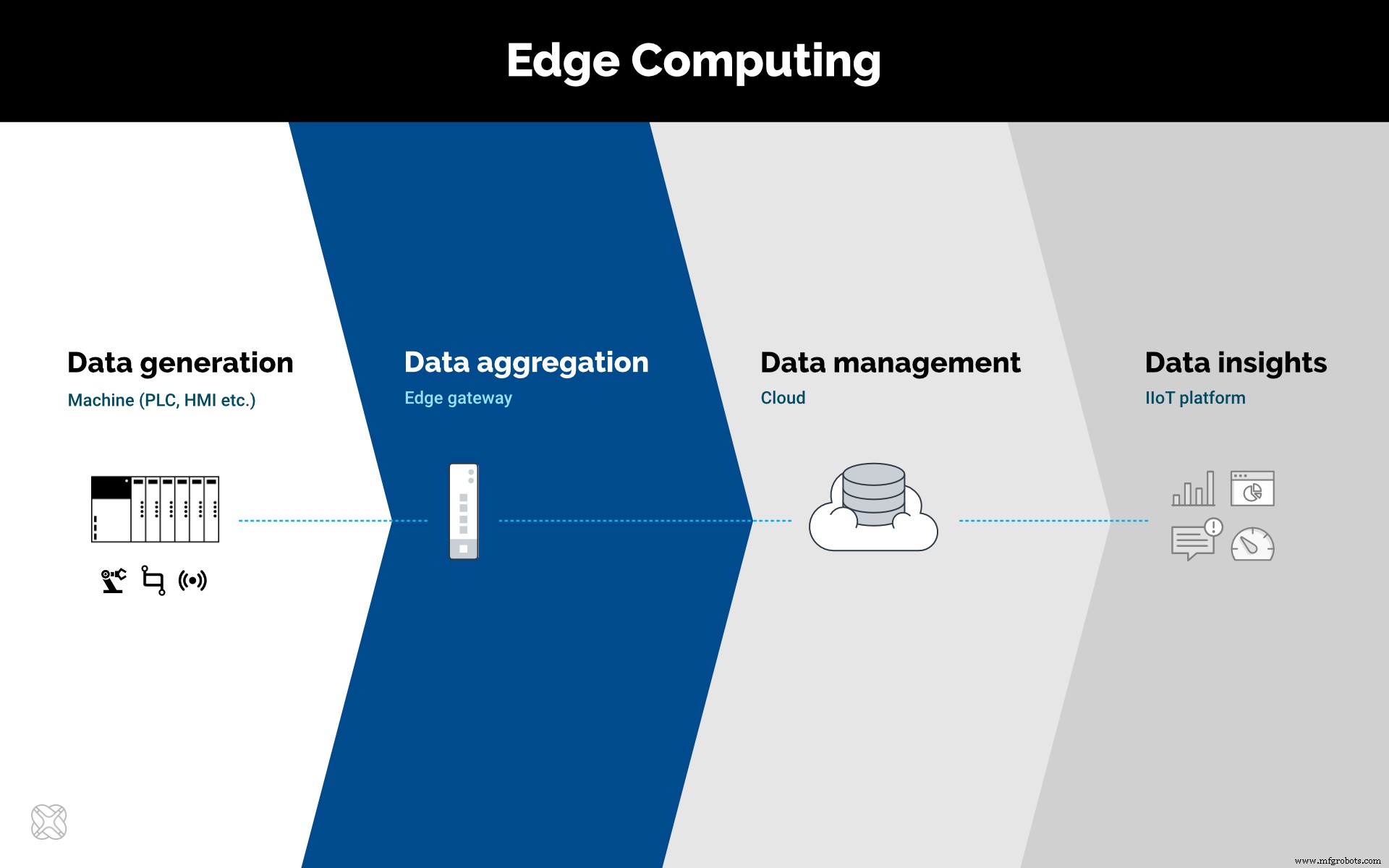
Edge computing processes data close to the source—on the machine itself—rather than sending every datum to a distant data centre. This proximity reduces latency, frees up bandwidth, and ensures continuous operation even when connectivity is intermittent.
Edge is not a replacement for cloud computing; it complements it. Together, they unlock the full potential of industrial IoT.
Benefits of Edge Computing in Manufacturing
The machine‑building sector stands to gain the most from IoT devices. Embedding storage and computation into equipment enables predictive maintenance, reduces costs, and boosts reliability and uptime.
Data‑driven smart manufacturing also lets companies tailor production runs to evolving consumer demand.
Edge computing shines where bandwidth is scarce or unavailable—such as offshore oil rigs—by allowing on‑site data collection, monitoring, and processing without relying on distant data centres (vXchnge, 2021).
Key advantages:
1) Low Latency
Latency is the delay that occurs when a request travels across long distances. Edge devices perform processing locally, then transmit only the results to the cloud, dramatically cutting response times.
2) Data Minimisation
Raw machine data is pre‑processed at the edge, reducing it to essential metrics such as averages, minima, and maxima before it’s sent to the cloud. This saves storage space and bandwidth.
3) Continuity of Service
Edge devices can locally buffer data during network outages, ensuring that no valuable machine information is lost. Once connectivity is restored, the buffered data is uploaded automatically.
“The goal of an edge device is to offload work from the data centre, provide backup capability, and offer complex data processing closer to acquisition.” — Misha Manulis, Medium
IXON Cloud & IXrouter: Merging Cloud and Edge
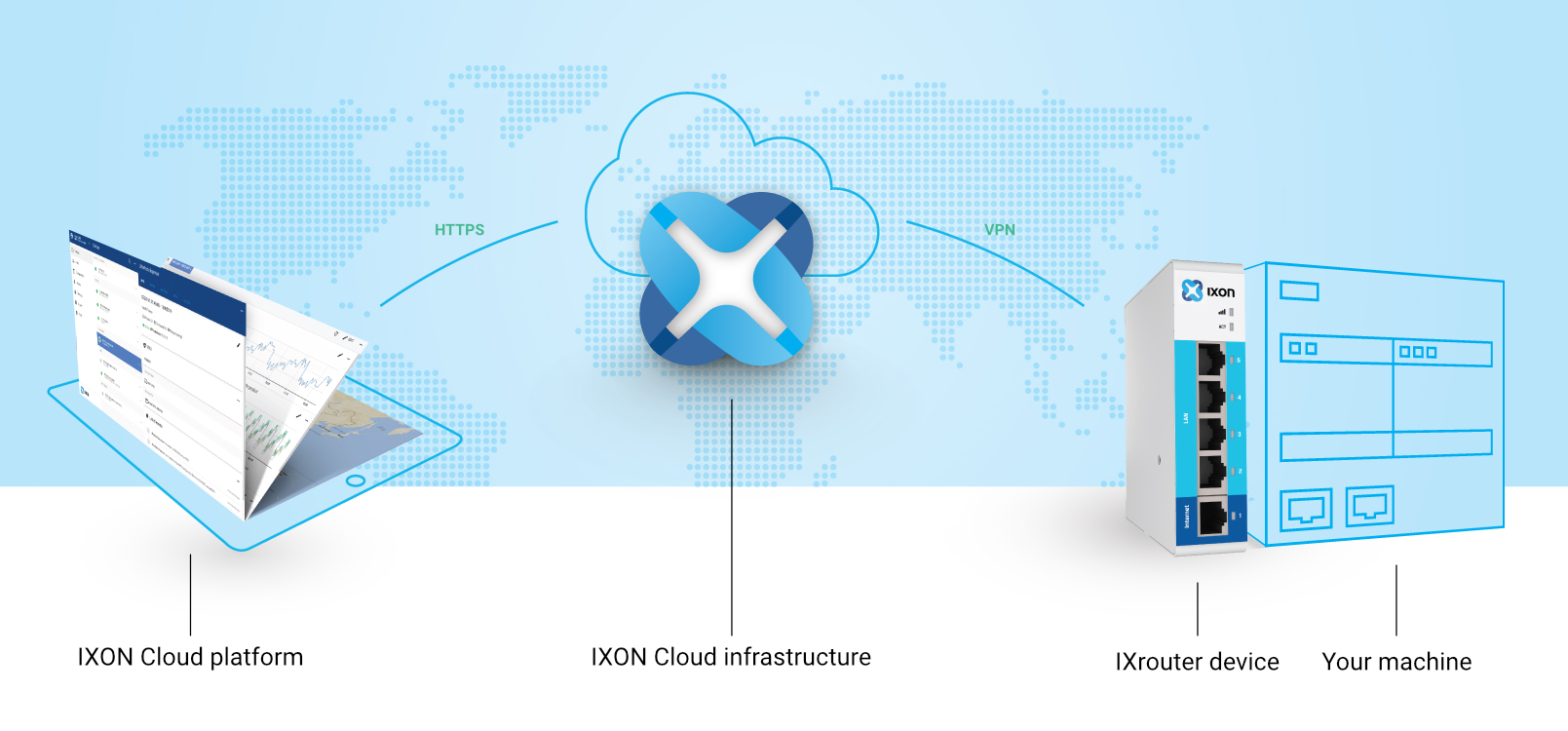
IXON’s platform uniquely combines cloud and edge for machine builders, system integrators, and building automation professionals. It enhances service, accelerates innovation, and unlocks new business models.
With the plug‑and‑play IXrouter, connect PLCs, HMIs, robots, and other industrial devices to the IXON Cloud in minutes.
The IXON Cloud provides robust big‑data capabilities—collection, storage, visualization, and alarming—while the IXrouter delivers high‑end edge technology for low latency, reliability, and secure transmission.
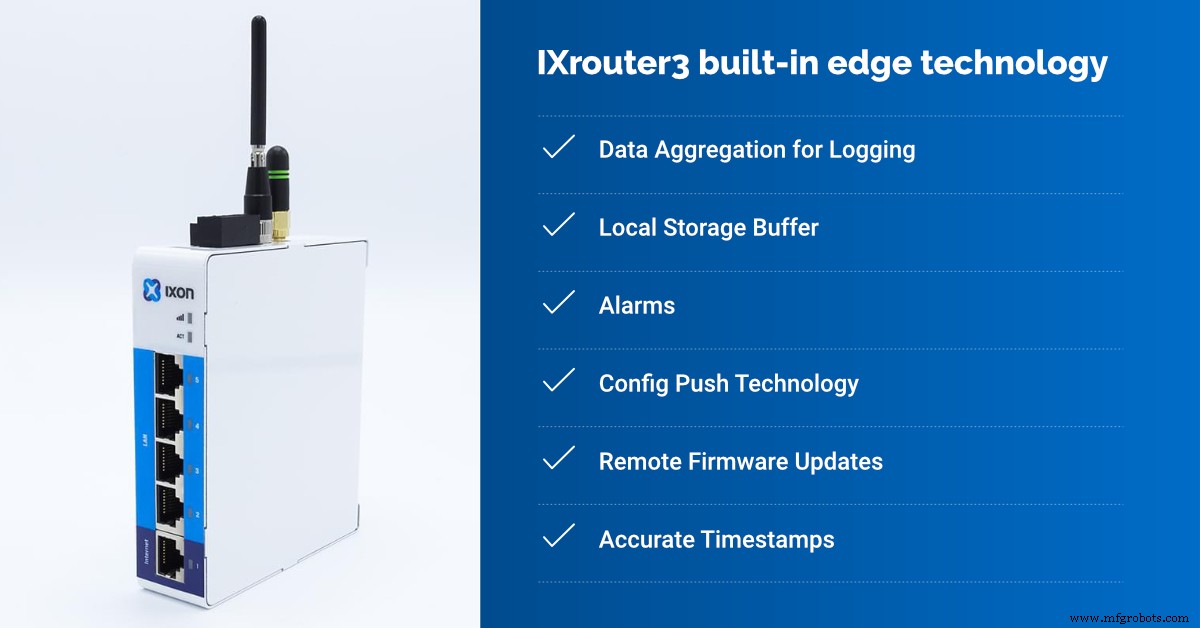
Six IoT Edge Technologies Built Into the IXrouter
1. Data Aggregation for Logging
Cloud Logging pulls data from PLCs over a lightweight MQTT connection, making it accessible through intuitive dashboards. Edge Aggregation logs data at high speed, consolidates it locally, and then sends a single sample to the cloud, reducing data volume while maintaining accuracy.
- Log on trigger vs Log on change
- Improved Machine Insight with Edge Aggregation for Cloud Logging
2. Buffer / Local Storage
The IXrouter safeguards data during internet outages by storing it on an 8 GB flash drive for weeks. Once connectivity resumes, it automatically uploads the backlog.
With the 4G/Wi‑Fi model, you can configure up to three fallback connections, ensuring continuous operation in any environment.
3. Alarming
Cloud Notify delivers robust, secure notifications whenever a machine triggers a pre‑configured alarm—be it a malfunction, supply shortage, or job completion. The IXrouter continuously monitors alarm conditions and forwards alerts to the IXON Cloud for instant delivery.
4. Configuration Push
All settings—network, data sources, variables, alarms, and notifications—are managed remotely via the IXON Cloud. A single “Push changes” button transmits the new configuration securely to the IXrouter.
5. Remote Firmware Updates
Our R&D team releases firmware updates regularly to add features, optimize performance, and enhance security. Update the IXrouter directly from the IXON Cloud with a simple click; the device will reboot and reconnect automatically. Updates typically take 2‑5 minutes.
6. Accurate Timestamps
Synchronizing time across a production line can be tedious and error‑prone. The IXrouter’s built‑in NTP server ensures every connected device shares the same, precise timestamp, eliminating drift and simplifying troubleshooting.
- Sync machine time for faster troubleshooting
Experience the Power of Combined Cloud and Edge
Digital transformation is no longer optional; it’s essential for staying competitive. Those who embrace edge‑to‑cloud solutions like IXON Cloud and IXrouter will lead the market.
Give it a try.
Test IXON Cloud and the IXrouter for 30 days—no obligations, no credit card required. Or order directly from sales@ixon.cloud or a local distributor.
[[Request IXrouter trial]]
Internet of Things Technology
- Edge & Cloud Computing in IoT: A Concise Evolutionary Overview
- IoT Edge Computing: Bridging Devices and Cloud for Real‑Time Insights
- Fog vs. Cloud: Optimizing IoT Deployments for Speed and Scale
- IXON Cloud IIoT Starter Kit – Plug‑and‑Play for Industrial IoT
- GE Launches Predix Cloud: Dedicated Platform for Industrial Data & Analytics
- Future Outlook: Advancing Industrial IoT for Production Excellence
- From Edge to Cloud: Mastering IoT Data Pipelines
- Why Cloud Computing Is Essential for Storing IoT Data
- Why Edge Computing is Essential for the IoT: Unlocking Real-Time Performance
- Smart Factory Connectivity: Advancing Industrial IoT Efficiency