



Autoclave-Compatible Materials: Ensuring Sterility & Safety
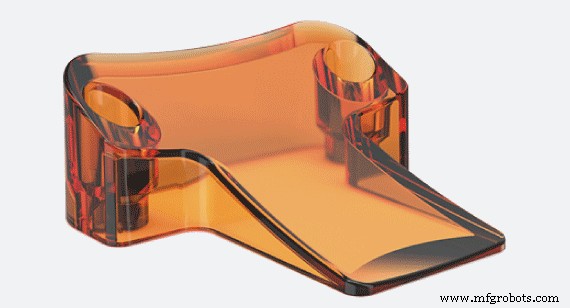 Molded from attractive, translucent ABS, this part was manufactured for Triax Technologies for their Proximity Trace device, which during the COVID-19 pandemic helped companies do contact tracing in the workplace.
Feeling a little apprehensive about that upcoming medical procedure? It’s understandable, but you’ll have far less to worry about knowing that the instruments will be sterile and free of microorganisms. Physicians began realizing the importance of sterilized equipment more than 150 years ago, but it wasn’t until 1879 that the French microbiologist Charles Chamberland invented a device to deliver it.
How Autoclaves Work
An autoclave works much like the pressure cooker some people use to pickle cucumbers and eggs. The instruments are first placed in a sealed chamber, after which a pump removes all air from within. The temperature is raised to at least 250°F (121°C), and pressurized steam is applied for 30 to 60 minutes.
Other sterilization methods are available, among them dry heat, radiation and ultraviolet light, ethylene oxide gas, and vaporized hydrogen peroxide, but this article will focus on autoclaving; more importantly, it will describe some of the materials and surface treatments able to resist the heat and moisture in this common form of sterilization.
What Works and Doesn’t Work in an Autoclave
Let’s start by naming a few materials that are definite no-nos with autoclaving. Fortunately, it’s a short list:
- Polyamide (nylon, or PA)
- Polyethylene (PE) and its low- and high-density variants, LDPE and HDPE (although the latter comes close)
- Polymethyl methacrylate (PMMA, better known as acrylic)
- Polystyrene (PS)
- Polyvinyl chloride (PVC)
Now, here are the keepers:
- Polypropylene (PP) is a low-cost polymer able to withstand autoclave temperatures. For an optically clear (and more expensive) alternative to acrylic, there's polycarbonate (PC), the stuff of bulletproof glass.
- Polyoxymethylene (POM), aka acetal or Delrin, is an engineering-grade thermoplastic that offers a low coefficient of friction, high stiffness and wear resistance, and good dimensional stability.
- Speaking of low friction, take a look at polytetrafluoroethylene (PTFE). You probably know it as Teflon, a fluoropolymer family that boasts strength and extreme chemical resistance across a broad temperature range.
- Polyetheretherketone (PEEK) is an organic thermoplastic that has become a go-to for the medical community since its invention in 1978. It is used for everything from medical implants to ultra-high vacuum and gas chromatography components.
- Silicone and its alternate form, LSR (liquid silicone rubber), is another wonder material. It’s a great option for a range of parts requiring flexibility, biocompatibility, and resistance to chemicals and bacterial growth. And yes, it's quite autoclavable.
So are polyphenylene sulfide (PPS), polysulfone (PSU), and polyether sulfone (PES). These and other thermoplastics are readily machined, injection molded, or 3D printed.
Autoclave-Safe Metals
Polymers are an excellent choice for various medical components, but so are metals, and four of the most common go-to alloys in this market are 304 and 316 stainless steel and their low-carbon cousins, 304L and 316L. All are widely used in medical instrumentation, surgical equipment such as scalpels and clamps, wheelchairs, wires, and waste containers.
316L is the most popular of these for parts that go in the body, including bone screws, fixation plates, and other implants, but for orthopedic devices requiring greater strength and fatigue resistance, cobalt chrome (CoCr) or Ti-6Al-4V titanium are generally the first choice.
With each of these metals, it's critical to passivate the parts after manufacturing using nitric or citric acid. This removes any free iron from the surface and creates a protective oxide layer, significantly increasing their corrosion-resistance.
Similarly, aluminum is a candidate for autoclavable medical parts, provided it is first conversion-coated using a medical-grade Type II (sulfuric acid) or Type III (hard coat) anodizing. That’s true as well for many steels—1018 mild steel, for example, or the much tougher 4140—but here again, their corrosion-prone surfaces must be protected with a hard chrome or perhaps a bright nickel plating.
The medical industry is demanding, filled with all manner of specifications and quality requirements. It's therefore crucial to investigate the type of sterilization needed to make parts safe for the intended application and determine which materials check that box. The good news is that we have many years of experience in this area and can help you determine which materials are right for your next project. Give us a call.
Composite material
- Tantalum Products Explained: Powder, Wire, Capacitors & Their High-Tech Applications
- 13 Types of Refractory Materials and Their Key Industrial Applications
- 7 Common Metals and Their Everyday Applications
- Titanium in Medicine: Advanced Applications from Orthopedics to Dentistry
- Choosing the Right Hinge Material: 5 Popular Options Explained
- Thermoset Polyurethanes: The Next Frontier in Medical Device Innovation
- How Medical Materials Have Transformed Orthopedic Surgery
- The Ultimate Guide to Overmolding Materials for Durable Plastic Parts
- Top Plastic Materials for Injection Molding: A Guide to Optimal Choices
- Check If Your 3D Printer Supports Advanced Materials