



How Pigment Powders Revolutionize Plastic Coloration: From Ancient Earth Hues to Modern Eco‑Friendly Options
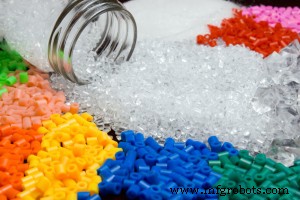
The plastic industry has entered a new era of color, offering an expansive palette from classic pigment blue and pigment orange to vibrant pigment yellow and beyond. These powders bring depth, consistency, and visual appeal that were once unattainable.
Tracing back to the earliest cave paintings, pigment use evolved from natural earth dyes—tree bark, indigo, and leaf extracts—to sophisticated synthetic formulations. Today, manufacturers rely on high‑performance pigments that meet stringent safety and environmental standards.
Historically, the Chinese and Egyptians pioneered pigment production, introducing mineral‑based colors and the legendary Egyptian blue. The Renaissance saw experimental techniques that broadened the color spectrum. A pivotal moment came in 1704 when Johann Gottlieb von Baeyer accidentally created Prussian blue, followed by French Ultramarine, Chrome Yellow, and Zinc Oxide. In the 19th century, Alizarin became the first affordable organic pigment, setting the stage for modern synthetic dyes.
What defines a pigment’s color? It absorbs specific wavelengths of light; the reflected wavelengths form the hue we perceive. For instance, a pigment that absorbs all wavelengths appears black, whereas pigment yellow reflects yellow light by absorbing its complementary wavelengths.
Modern plastics prioritize sustainability. Lead chromate pigments have been largely phased out in consumer products, replaced by organic yellow pigments that deliver superior tinting in polyethylene and PVC. Ongoing research continues to introduce low‑toxic, high‑performance colorants that comply with EPA and ISO 10545‑2 standards.
In sum, pigment powders are a cornerstone of the plastic industry, combining artistry with technical rigor to produce products that are safe, vibrant, and environmentally responsible.
Dye
- Optimizing Custom Pigment Processes for Coatings and Plastics: Solving Dispersion and Color Challenges
- Dyes & Pigments in the Paper & Pulp Industry: Trends, Selection Criteria, and Best Practices
- Pigments in the Paper & Pulp Industry: Types, Uses, and Applications
- Mastering Pigment Dispersion: The Science Behind Superior Color Performance
- Pigments: The Driving Force Behind the Textile Industry’s Growth
- How Plastic Materials Are Revolutionizing Modern Construction
- Industrial Pigments Explained: Types, Applications, and the Most Popular Choices Today
- Plastic Injection Molding Drives Innovation in the Automotive Industry
- Hydraulic Power: Revolutionizing Modern Construction
- Nitrogen’s Role in the U.S. Plastics Industry: Key Applications Explained