



Molybdenum‑Alloy Fasteners Keep the Large Hadron Collider’s Particle Beams Stable
Molybdenum‑Alloy Fasteners Keep the Large Hadron Collider’s Particle Beams Stable
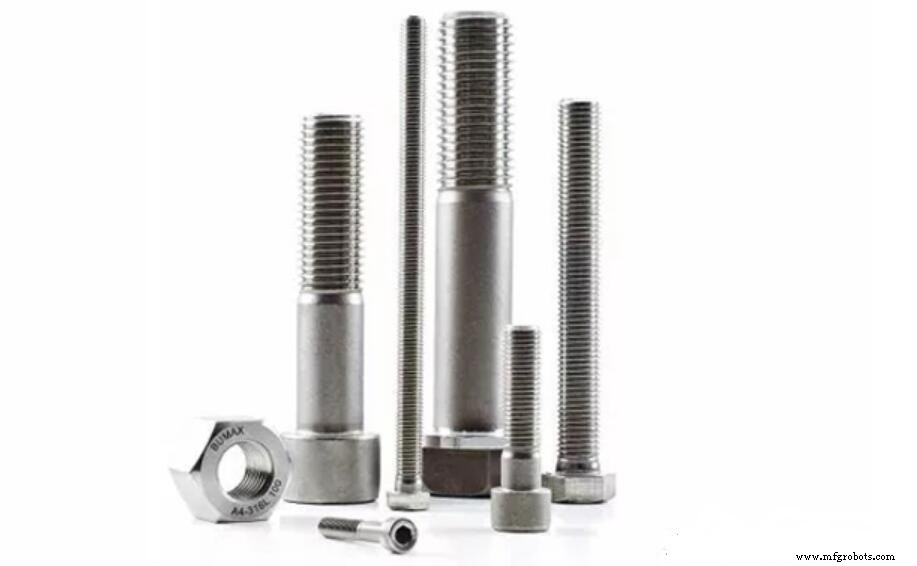
The Large Hadron Collider (LHC), the world’s largest and most powerful particle accelerator, relies on more than 250,000 high‑strength fasteners made from 316L stainless steel. These fasteners incorporate molybdenum to achieve the required strength and non‑magnetic performance essential for the accelerator’s precision.
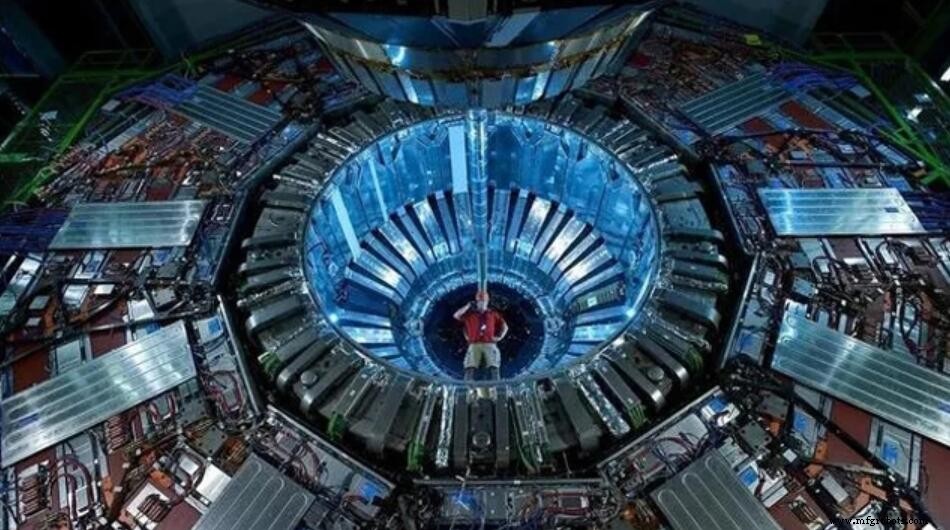
The LHC is a 27‑kilometre long superconducting magnet ring buried 100 m underground in the Jura Mountains on the Swiss‑French border near Geneva. First powered in September 2008, the collider is scheduled for a major upgrade that will double its collision rate. A critical component of this upgrade is the replacement of vacuum‑tube fasteners with molybdenum‑containing variants that guarantee low magnetic permeability and high tensile strength.
Standard 316L stainless steel fasteners must meet minimum tensile and yield strengths of 1,000 MPa and 900 MPa, respectively, while remaining non‑magnetic to avoid perturbing the particle beam. To meet these demanding specifications, Swedish manufacturer Bumax increases the molybdenum content to 2.5–3 % (compared with 2–2.5 % in conventional 316L). The higher molybdenum level suppresses the martensitic transformation that can occur during cold‑work strengthening, thereby preserving the austenitic, non‑magnetic structure required for flawless operation.
Why Molybdenum Matters
In a stainless‑steel alloy, molybdenum enhances both strength and resistance to magnetic susceptibility. During the cold‑work process necessary for achieving the LHC’s stringent mechanical properties, austenite can partially convert to martensite—a magnetic phase that would interfere with the delicate magnetic fields of the superconducting magnets. The elevated molybdenum content stabilizes the austenitic phase, ensuring that fasteners remain virtually non‑magnetic even under extreme thermal and mechanical loads.
Conclusion
High‑performance molybdenum‑alloy fasteners are indispensable for maintaining the LHC’s precise magnetic environment and for supporting the collider’s ambitious research goals. For deeper insight into molybdenum and other refractory metals, explore the resources at Advanced Refractory Metals (ARM).
ARM, headquartered in Lake Forest, California, is a global leader in the supply of high‑quality refractory metals and alloys—including molybdenum, tantalum, rhenium, tungsten, titanium, and zirconium—at competitive prices.
Metal
- Four Key Slotted Drive Types for Fasteners Explained
- Top 10 Industrial‑Scale 3D Printers for Large‑Format Production
- Static Electricity in Plastic Fasteners: Why ESD Ionizers Are Essential
- Craftech’s Durable Plastic Fasteners Empower APH’s Educational Tools for the Blind
- DIN Standards for Metric Fasteners: History, Impact, and Global Adoption
- Stratasys F770: Revolutionizing Large-Scale 3D Printing
- Overcoming the Challenges of Large Part Machining: Key Strategies and Solutions
- Inside Carbon's L1 Large-Format 3D Printer: A Deep Dive into Performance & Innovation
- Comprehensive Guide to Fastener Types for Industry Applications
- Why Large Ductwork Is Essential for Industrial Air Quality