



Static Electricity in Plastic Fasteners: Why ESD Ionizers Are Essential
Plastic fasteners can accumulate a static charge when they rub against each other or the storage bag, creating a risk of contamination.
Most of us have felt the familiar shock from walking across a carpet and touching a metal doorknob, or the cling on a freshly dried garment. That everyday phenomenon is electrostatic discharge (ESD), the same principle that powers lightning.
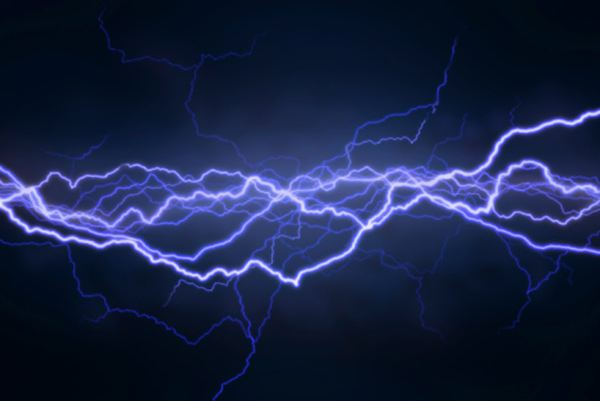
When plastic components become charged, airborne particles—dust, plastic shavings, hair, oil droplets, and other debris—are attracted to the surface. In critical fields such as medical device manufacturing, electronics, and semiconductor fabrication, even microscopic contamination can compromise performance or safety. Ordinary cleaning methods fail to remove these particles because the static attraction persists until the charge is neutralized.
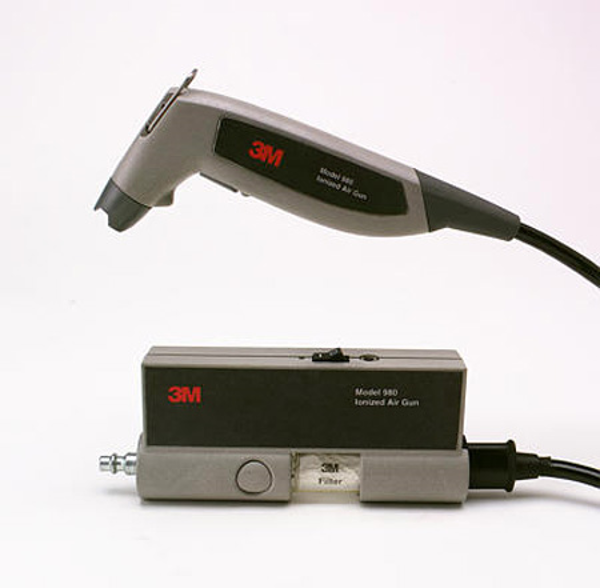
Removing the static charge requires an ESD ionizer. These devices release both positive and negative ions into the surrounding air, balancing the surface charge and allowing contaminants to be blown away.
How does static electricity arise? Each atom consists of a nucleus (protons and neutrons) surrounded by electrons. Protons carry a positive charge, electrons a negative one, and neutrons are neutral. If an atom loses electrons it becomes positively charged; if it gains electrons it becomes negatively charged. Materials that hold onto their electrons, like plastic, cloth, and glass, are insulators. Because electrons are not easily transferred, static charges accumulate on their surfaces, creating a surplus or deficit of electrons—what we call static charge.
ESD ionizers work by introducing both types of ions into the air. The most common industrial model is the corona ionizer, which applies a high voltage to a sharp tip or nozzle. A fan then disperses the ionized particles across the workspace, neutralizing static on both conductors that cannot be grounded and on insulators such as plastic fasteners.
While nuclear physicists identify additional subatomic particles, the above model captures the essentials needed for industrial application.
* In the context of ESD, the terms “static charge” and “static electricity” are used interchangeably, though strictly speaking static charge refers to a non‑moving surplus or deficit of electrons.
Looking for more information on plastic fasteners? Download our complimentary High Performance Plastic Material Guide!

Resin
- Top 3 High‑Strength Materials for Plastic Fasteners
- Plastic Recycling: From History to Future Outlook
- The Definitive Guide to Buying Plastic Fasteners: A 7‑Step Checklist
- Craftech’s Durable Plastic Fasteners Empower APH’s Educational Tools for the Blind
- DIN Standards for Metric Fasteners: History, Impact, and Global Adoption
- Avoiding Common Pitfalls with Plastic Fasteners: A Practical Guide
- Biodegradable Plastics: Benefits, Challenges, and the Path Forward
- Morgan Vague’s PET‑Degrading Bacteria: A New Front in the Fight Against Plastic Pollution
- Flush-Head vs. Concealed-Head Fasteners: Key Differences Explained
- The Complete Guide to Plastic Processing and Fabrication