



Advanced Abrasion‑Resistant Piping for Coal‑Fired Power Plants
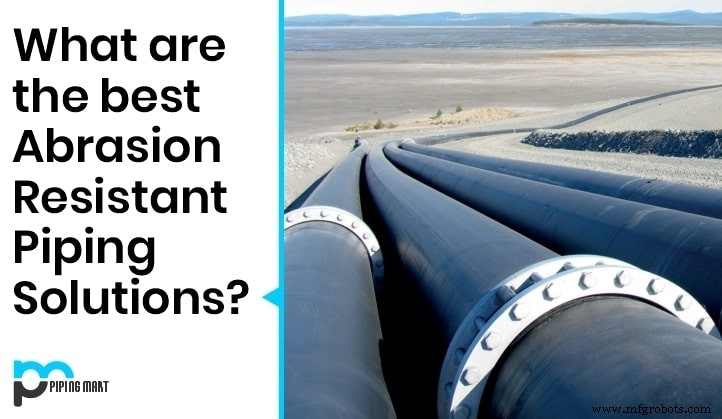
Steel piping remains the backbone of coal‑fired power plants, transporting coal‑ash slurry, calcareous slurry, and calcium sulfate by‑products through harsh, abrasive environments.
When hard particles collide with a steel surface, abrasive wear can quickly erode the pipe wall, leading to leaks, structural failure, and costly downtime. Traditional mild‑steel tubing cannot withstand the high pressures and corrosive media for more than a few years.
Engineers are therefore turning to specialized abrasion‑resistant piping that offers superior durability without breaking the budget.
Abrasive Applications
In flue‑gas desulfurization (FGD), limestone slurry is pumped into spray towers where it reacts with SO₂ and HCl, converting them into calcium sulfate. The resulting gypsum‑rich slurry is then conveyed via steel pipe to recycling or disposal facilities. The entire process exposes the piping to highly caustic, abrasive slurries that demand robust materials.
To keep operations running smoothly, plant managers are evaluating a range of abrasion‑resistant steels and surface treatments that can replace standard mild steel in these high‑wear zones.
Pipe Options
The market offers a spectrum of “abrasion‑resistant” steels, from A‑R steel at 200 BHN to iron‑cast pipe at up to 800 BHN on the Brinell scale. However, extreme hardness across the full wall thickness often makes the pipe brittle, which is problematic under the cyclic pressure and mechanical stresses typical in power‑plant piping.
Induction‑hardened pipes that achieve 600 BHN on the inner surface while maintaining a 250 BHN ductile outer layer strike the right balance. This dual‑grade approach ensures that the pipe can tolerate abrasive media yet remains weldable and easy to handle during installation and maintenance.
Manufacturers can produce these pipes in a variety of diameters—up to 40 in.—and wall thicknesses, and they are available with long‑radius bends to reduce fatigue and extend service life.
The mild‑steel‑like exterior allows for standard field cutting, welding, and fitting with flanges, welding rings, and couplings. This compatibility means that existing plant infrastructure can be upgraded without extensive redesign.
Metal
- Steel Pipe: Types, History, and Modern Manufacturing
- Choosing the Right Materials for Wire and Cable Forming – Expert Guide
- Choosing the Right Copper Pipe for Gas Lines: Types, Sizes, and Applications
- Top Corrosion‑Resistant Metals for Durable Performance
- Metal vs. Plastic Piping: A Practical Guide to Choosing the Right Material
- Understanding Steel Pipes: From Manufacturing to Infrastructure
- Understanding the Corrosion Resistance of Stainless Steel
- Top Metals & Alloys for High‑Pressure Applications
- What Is Galvanized Steel Pipe? | Benefits, Uses, and History
- Steel: The Backbone of Renewable Energy Infrastructure