



Choosing the Right Copper Pipe for Gas Lines: Types, Sizes, and Applications
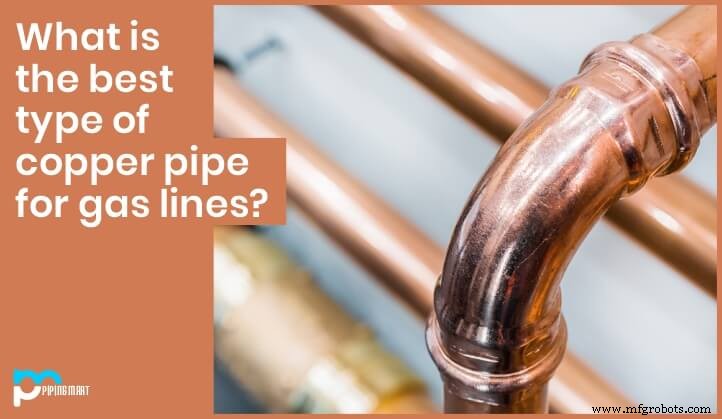
Copper piping remains a staple in gas, water, and HVAC systems due to its superior corrosion resistance and mechanical strength. In the United States, the most common copper pipe classifications—Type K, Type L, and Type M—are defined by ASTM B88 and are used throughout residential, commercial, and industrial installations. Older homes may also feature the distinct copper DWV (drain‑waste‑vent) line, which is specifically designed for venting applications.
Sizing of Copper Pipe
When selecting a copper pipe, the actual outer diameter (OD) is typically 1/8 in. larger than the nominal size. For example, a “1/2‑inch” copper tube has a 5/8‑inch OD. The corresponding inner diameter is calculated by subtracting the wall thickness— which varies among the K, L, and M forms—from the outer dimension. Choosing the correct form depends on fluid type, pressure requirements, operating conditions, and local code mandates.
Type K Pipe
Type K features the thickest wall among the traditional copper pipes, offering exceptional pressure resistance and durability. It is the preferred choice for main water lines, underground conduits, and industrial applications where the pipe must withstand back‑filled soil pressure. However, Type K is not approved for natural‑gas service, as the high‑pressure gas can compromise the integrity of its joints.
Type L Pipe
Type L strikes a balance between strength and cost. It is available in both rigid and flexible forms and can be joined by solder, compression, or flare fittings. This versatility makes Type L the most widely used copper pipe for residential and commercial water systems, as well as for exterior installations where a lighter yet robust material is required. Its wall thickness is greater than Type M but thinner than Type K.
Type M Pipe
Type M is the thinnest of the conventional copper pipes, offering the lowest material cost and making it attractive for many residential projects. It is typically used for potable water, domestic hot‑water lines, and small‑scale HVAC circuits. Because of its reduced wall thickness, Type M is not suitable for high‑pressure or gas applications in all jurisdictions.
Copper DWV Piping
Older buildings often employed copper DWV piping for drain, waste, and vent systems. These lines are rated for a minimum pressure range of 10–15 psi—well above the pressure of most municipal water supplies—and are distinguished by a yellow band or marking. In new construction, copper DWV has largely been replaced by PVC or ABS, but it remains a valid option in retrofits and in situations where corrosion resistance is paramount.
Metal
- Key Applications of Hafnium: From Nuclear Control Rods to Advanced Alloys
- Is Fiber‑Reinforced Plastic (FRP) Maintenance‑Free? Here’s What You Need to Know
- Why Steel Remains the Gold Standard for Agricultural Implements
- Choosing the Right Sheet Metal Fabrication Method for Your Project
- Choosing the Right CNC Machining for Your Project
- Oxygen‑Free Copper: Superior Conductivity and Purity for Electronics
- Choosing the Ideal Steel for CNC Machined Parts: A Practical Guide
- Top 5 Metals for CNC Machining: Expert-Recommended Choices
- Choosing the Ideal Gas for MIG Welding: A Comprehensive Guide
- The Ultimate Guide to Selecting the Best Hydraulic Pump