



PTFE: Exceptional Corrosion Resistance and Industrial Applications
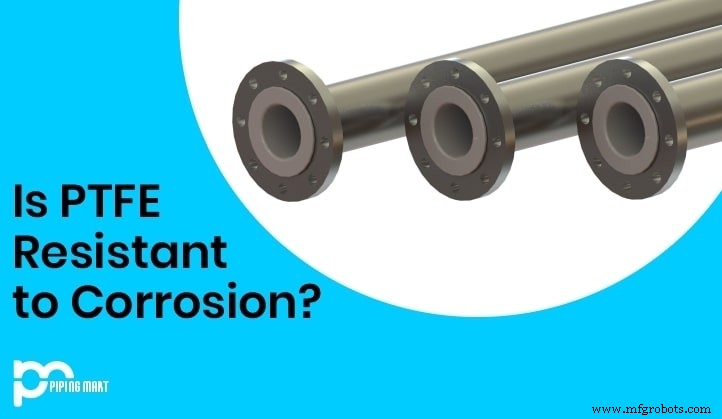
Polytetrafluoroethylene (PTFE) is a high‑molecular‑weight fluoropolymer composed almost entirely of carbon and fluorine atoms. Its strong C–F bonds give it remarkable chemical inertness and a hydrophobic surface that repels water and most organic liquids.
PTFE’s most familiar role is the non‑stick coating on cookware, but its utility extends far beyond the kitchen. Industries such as oil & gas, petrochemicals, electrical & electronics, and advanced manufacturing rely on PTFE for its low friction, high temperature tolerance, and robust chemical resistance.
Polymers that perform reliably under cost, durability, and recyclability constraints are increasingly demanded. PTFE delivers on all these fronts, with proven applications in coatings, insulation, thermal seals, lubricants, bearings, and even medical devices. Researchers have further enhanced its properties by incorporating nano‑ and micro‑fillers, enabling tailored performance for specific needs.
Key Properties of PTFE
PTFE is available in several forms—granular, powdered, and aqueous dispersions—each suited to different manufacturing routes.
- Granular PTFE is produced via suspension polymerization and is ideal for pressure and isostatic molding and extrusion.
- Fine PTFE powder results from controlled emulsion polymerization. It can be used as a dry additive to improve wear resistance or as a lubricant additive in composites.
- Aqueous PTFE dispersions are created by polymerization in water. These suspensions are commonly applied as cast films or coatings.
- Pure PTFE has modest mechanical strength at room temperature, but its performance improves significantly when blended with compatible fillers (e.g., glass fibers, carbon black). Within its service temperature range, PTFE offers reliable mechanical integrity.
- Electrically, PTFE is an excellent insulator with a low dielectric constant (~2.1) and high dielectric strength, making it a preferred material for high‑voltage applications.
PTFE’s Corrosion Resistance
PTFE remains chemically inert even in the most aggressive environments. It resists attack from acids, bases, oxidizers, and many organic solvents. The only notable exceptions are molten or dissolved alkali metals, elemental fluorine, and certain highly potent oxidizers.
Coated components—such as PTFE‑lined valves, pipe fittings, and flange gaskets—can operate safely in temperatures up to 260 °C while maintaining full chemical integrity. Its inherent lubricity also reduces wear in dynamic systems.
Other noteworthy attributes include excellent flexibility at low temperatures, low friction coefficient (<0.04), high electrical resistance, and a density of 2.2 g cm⁻³. While PTFE is largely insoluble, it can temporarily absorb some halogenated solvents; this interaction is physical and reversible.
Metal
- Where is PTFE (Teflon) Used? Key Industries and Applications
- Top Corrosion‑Resistant Metals for Durable Performance
- 4 Rust‑Proof Metals for Long‑Lasting Performance
- Top 5 Strategies to Enhance Corrosion Resistance of Metal Components
- Understanding the Corrosion Resistance of Stainless Steel
- Identifying High‑Temperature Corrosion Products for Prevention
- Preventing Aluminum Corrosion: Proven Strategies for Long-Lasting Durability
- High-Frequency Grade Electrical Steel – 0.20 mm Thin Gauge (EN 10303:2015 Compliant)
- S31803 Duplex Stainless Steel – High‑Strength, Corrosion‑Resistant Solution for Petrochemical & Offshore Applications
- Sandvik SAF 3207 HD™ – Premium Hyper‑Duplex Stainless Steel for Deepwater & Corrosive Environments