



Nano‑Tree ZnO Nanowires Boost Dye‑Sensitized Solar Cell Efficiency
Researchers from the Applied Nano Tech & Science Lab at Korea Advanced Institute of Science and Technology and the Laser Thermal Lab at UC Berkeley have developed a nano‑tree architecture that significantly improves the performance of dye‑sensitized solar cells (DSSCs).
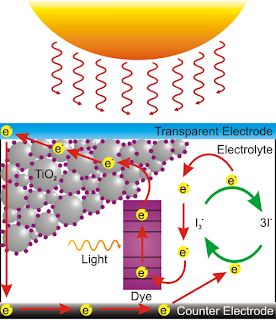
Dye‑Sensitized Solar Cells
Since the late 1960s, scientists discovered that organic dyes can convert light into electricity when coupled with oxide electrodes. This principle was first demonstrated in 1972 with chlorophyll extracted from spinach, laying the foundation for DSSCs—thin‑film devices that combine a photo‑sensitized anode with an electrolyte.
In a DSSC the dye molecules are typically nanometre‑sized, yet a sufficiently thick dye layer is required to capture enough light. Nanostructured scaffolds provide a high surface area for dye loading without compromising the device footprint.
Key Advantages
DSSCs can be fabricated using roll‑printing, are semi‑flexible and semi‑transparent, and rely on inexpensive materials. While their conversion efficiencies (≈ 11 %) are lower than conventional silicon cells (> 15 %), their favorable cost‑to‑performance ratio makes them competitive with fossil‑fuel generation.
Hydrothermal Nano‑Tree Synthesis
Drawing inspiration from natural tree branching, the team employed a hydrothermal method followed by polymer removal and seed deposition to grow zinc‑oxide (ZnO) nanowires that resemble miniature trees with extensive branches.
Performance Gains
Devices built with these branched ZnO nanowires exhibit a short‑circuit current density and overall light‑to‑electricity conversion efficiency nearly four times higher than those using vertically aligned ZnO nanowires. The improvement stems from the increased surface area for dye loading and enhanced light harvesting, as well as reduced charge recombination due to direct conduction along the crystalline branches.
Beyond solar cells, the hierarchical nano‑tree architecture holds promise for high‑capacity energy storage and efficient energy‑consumption devices.
Nanomaterials
- Solar Cells: From Early Experiments to Modern Photovoltaics – Technology, Production, and Future Outlook
- High‑Efficiency Graphene Solar Cells: 9% Power Conversion with TFSA Doping
- Nano‑Heterojunctions: Boosting Solar Cell Efficiency with Colloidal Quantum Dots
- High‑Efficiency Planar Perovskite Solar Cells via Sequential Vapor‑Grown Hybrid Perovskite Layers
- Designing Plasmonic Nanoparticle Strategies for Enhanced Organic Solar Cell Performance
- Enhanced Power Conversion in Flexible Fibrous Dye‑Sensitized Solar Cells via Multilayer TiO₂ Photoanodes and Composite Pt Counter Electrodes
- High‑Performance Dye‑Sensitized Solar Cells Using Screen‑Printed Multi‑Walled Carbon Nanotube Counter Electrodes
- Dye‑Sensitized Solar Cells: Fundamentals, Advances, and Commercial Outlook
- Enhancing 2D Perovskite Solar Cell Performance Through Water-Assisted Crystallization
- High-Performance MoIn₂S₄@CNT Counter Electrodes for Dye‑Sensitized Solar Cells