



Nano‑Heterojunctions: Boosting Solar Cell Efficiency with Colloidal Quantum Dots
 Solar Cell Basics
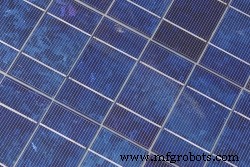
Solar cells harness sunlight and convert it into electricity. The global share of solar‑generated power has grown steadily as more modules are installed. Yet the gap between potential and actual utilization remains large. Semiconductors act as light absorbers, transforming photons into electron‑hole pairs that are driven apart by an internal electric field. Two key processes—light absorption and charge separation—determine performance. Longevity of minority carriers and carrier mobility are critical for high efficiency. Commercial modules currently achieve 12–20% efficiency, while state‑of‑the‑art inorganic single‑junction cells reach 20–25%—a plateau that has persisted over the last decade.
Inorganic Quantum‑Dot Solar CellsSolution‑processed inorganic cells built on colloidal quantum dots and nanocrystals offer a compelling route forward. Their tunable bandgaps enable absorption across a broad spectrum, and their low‑cost fabrication is attractive for large‑scale deployment. Incorporating multiple quantum wells, superlattices, or quantum dots into photovoltaic architectures can theoretically elevate efficiency far beyond conventional bulk‑semiconductor devices. Nanorod‑shaped donor–acceptor structures also exhibit stable performance in ambient air, though challenges remain in narrowing the gap between idealized and real‑world conversion efficiencies.
Nanorod‑Shaped HeterojunctionsDonor–acceptor solar cells fabricated entirely from inorganic nanocrystals spin‑cast from solution employ CdTe/CdSe nanorod heterojunctions. Each ultrathin (~100 nm) nanocrystal is deposited from a filtered pyridine solution, yielding large‑area, flexible, thin films densely packed with nanocrystals on virtually any substrate.
Research HighlightsSpanish researchers have pioneered a method that extends the charge‑carrier lifetime in colloidal nanocrystal solar cells by engineering nano‑heterojunctions composed of electron acceptor and donor nanomaterials. This strategy delivers high quantum efficiencies even when using photovoltaic materials with suboptimal optoelectronic properties. Cadmium‑based crystals were chosen because their carriers persist longer.
Extending Carrier LifespanBy creating a bulk nano‑heterojunction, the team mixed acceptor and donor materials so that, upon illumination, photogenerated electron‑hole pairs separate at the nanoscale and traverse the device along two distinct pathways. This architecture reduces recombination probability. Although the resulting power‑conversion efficiency is slightly below that of record PbS‑quantum‑dot cells paired with titania n‑type electrodes, the work demonstrates a proof‑of‑principle. Unlike prior studies that relied on sputtered oxide acceptors or high‑temperature sintering (>500 °C), this solution‑based, sub‑100 °C process offers tangible advantages for low‑cost roll‑to‑roll manufacturing.
Nanomaterials
- Solar Cells: From Early Experiments to Modern Photovoltaics – Technology, Production, and Future Outlook
- Nano‑Tree ZnO Nanowires Boost Dye‑Sensitized Solar Cell Efficiency
- High‑Efficiency Graphene Solar Cells: 9% Power Conversion with TFSA Doping
- High‑Efficiency, Low‑Cost Perovskite Solar Cells: Progress, Challenges, and Future Directions
- High‑Efficiency Planar Perovskite Solar Cells via Sequential Vapor‑Grown Hybrid Perovskite Layers
- Designing Plasmonic Nanoparticle Strategies for Enhanced Organic Solar Cell Performance
- Enhanced Power Conversion in Flexible Fibrous Dye‑Sensitized Solar Cells via Multilayer TiO₂ Photoanodes and Composite Pt Counter Electrodes
- Boosting Planar Sb₂S₃ Solar Cell Efficiency with Cs₂CO₃‑Modified TiO₂ Electron Transport Layer
- Enhancing 2D Perovskite Solar Cell Performance Through Water-Assisted Crystallization
- High-Performance MoIn₂S₄@CNT Counter Electrodes for Dye‑Sensitized Solar Cells