



Nonconductors Conduct Current at the Nanoscale
Nonconductors Conduct Current at the Nanoscale
Conventional conductors readily transmit electricity, while insulators or dielectrics resist it unless exposed to extreme voltage that triggers dielectric breakdown. At the nanoscale, however, researchers at the University of Michigan have shown that even a sliver of glass can conduct electric current without damage. By making the dielectric layer extremely thin, breakdown can occur at modest voltages that a typical battery can provide, and the heat generated is dissipated almost instantaneously. These ultra‑thin dielectric regions are termed “liquid glass electrodes.” They are fabricated using a femtosecond laser that emits pulses lasting only quadrillionths of a second.
Integrating Glass Electrodes into Devices
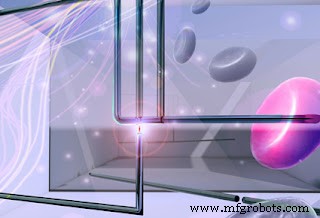
Miniaturized systems often struggle to route power because traditional wiring is too bulky. Incorporating glass electrodes directly into the device addresses this issue. By etching microchannels that hold an ionic fluid, electric current can flow through the fluid and enter the thin glass section without damaging the surrounding components. This approach removes the need for external power leads and expands the design freedom of microfluidic and MEMS devices.
Potential Applications
The ability to induce reversible dielectric breakdown at the nanoscale opens a range of possibilities. It could enable faster, cheaper portable diagnostics, micro‑electromechanical systems, and “lab‑on‑a‑chip” platforms that combine multiple laboratory functions on a single millimeter‑sized chip. The technology also offers a new route for integrated circuits that rely on controlled dielectric breakdown for electronic operation.
Nanomaterials
- Hands‑On Guide to Current Dividers: Build, Measure, and Simulate with a 6 V Battery
- Common-Emitter Amplifier Limitations: Distortion, Temperature, and High‑Frequency Challenges
- Insulated‑Gate Bipolar Transistors (IGBTs): Merging FET Precision with BJT Power
- DIAC: The Bidirectional Trigger for AC Thyristors
- Understanding Electrical Resistance and Circuit Safety
- Stained Glass: History, Craftsmanship, and Contemporary Revival
- Nano Gold Clusters: A Powerful Catalyst for Oxidation Reactions
- Nano Hydroxyapatite: Bioactive Material for Advanced Biomedical Applications
- Nanoclusters Enable Magnetic Plasmon Waveguides Beyond the Diffraction Limit
- Graphene‑Based Nanoscale Vacuum‑Channel Transistor: Fabrication, Performance, and Future Outlook