



Pyroelectric Nanogenerators: Turning Waste Heat into Clean Power
Pyroelectric Effect
Devices ranging from computers to cars to high‑voltage transmission lines lose significant heat to the environment. The pyroelectric effect—first noted by the Greek philosopher Theophrastus when heated tourmaline attracted straw—converts this lost thermal energy into electricity. When certain materials, such as tourmaline, are heated or cooled, their molecular structure rearranges, creating an electron imbalance that drives an electric current.
Nanogenerator
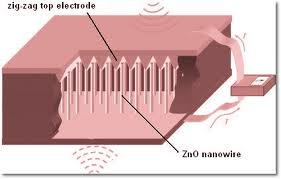
Researchers at Georgia Tech have engineered a pyroelectric nanogenerator (NG) that harvests waste heat by exploiting temperature fluctuations. Using an array of short zinc‑oxide nanowires standing vertically, the device produces power whenever it is heated or cooled, even during the day‑night temperature swing.
These NGs promise a self‑powered future for nanotechnology, enabling wireless sensors, temperature imaging, medical diagnostics, and personal microelectronics that run on ambient thermal energy.
Applications of Nanogenerators
Pyroelectric nanogenerators could become a cornerstone of consumer electronics, capturing heat that would otherwise be lost. They are especially valuable for low‑temperature environments, such as space missions, where they maintain performance when conventional batteries falter.
International Collaboration
A joint Ukrainian–American team has demonstrated the same pyroelectric principle using ferroelectric nanowires. These tiny structures generate an electric current in response to any ambient temperature change, turning thermal fluctuations into usable energy.
Pyroelectric Properties
In ferroelectric nanowires, the pyroelectric coefficient depends on wire radius and coupling. As the radius decreases, the coefficient increases until a critical size where the material transitions to a paraelectric state above the Curie temperature. This “size effect” allows tuning of phase‑transition temperatures, enabling a large, adjustable pyroelectric response.
With rectifying contacts, a polarized ferroelectric nanowire can generate a substantial direct current and voltage when temperatures vary. Such a device, free of moving parts, could operate reliably over long periods in applications ranging from in‑vitro biological systems to outer space.
Researchers anticipate these nanogenerators to achieve high efficiency at low temperatures, with performance declining as ambient temperature rises.
Wake Forest University’s Power Felt
Wake Forest University has developed Power Felt, a flexible thermoelectric fabric composed of carbon nanotubes embedded in plastic fibers. By leveraging temperature differences—such as room temperature versus body heat—the fabric generates an electrical charge.
Potential Uses of Power Felt
Power Felt can power or boost batteries in automotive seats, insulate pipes, harvest roof‑tile heat to reduce utility bills, monitor athletic performance in clothing or equipment, and track patient health when wrapped around IV or wound sites. In emergencies, a jacket lined with the material could charge a cell phone or power a weather radio, offering resilience during outages or accidents.
With 72 stacked layers, the fabric currently yields about 140 nanowatts of power. Adding more nanotube layers could reduce thickness while boosting output, enabling wearable devices that harvest body heat to power electronics like an iPod.
Nanomaterials
- Understanding AC Circuits: A Beginner's Guide
- Power Sources: AC and DC Explained
- Protective Relays: Safeguarding Industrial Power Systems
- Amplifiers: Harnessing Active Devices to Boost Power
- Understanding Bels and Decibels: From Power Gain to Voltage Conversion
- Rectifier Circuits: From Half‑Wave to Polyphase Full‑Wave Designs
- Calculating Power Dissipation in Resistive Circuits
- Accurate Power Measurement in AC Circuits: From Electrodynamometers to Hall‑Effect Sensors
- Bulldozer Technology: Design, Manufacturing, and Future Innovations
- Wind Power: Converting Air Movement into Clean Electricity