



Maximize Strand Pelletizer Performance with Proactive Maintenance
Compounders rely heavily on strand pelletizers, yet many operators do not keep a critical spare‑parts inventory or fully understand which components are essential to keep the machine running. The shortage of experienced maintenance staff only magnifies this challenge. The industry lacks formal training programs for new technicians, so most knowledge is gained on the job—through trial and error or mentorship from seasoned professionals.
Featured Content
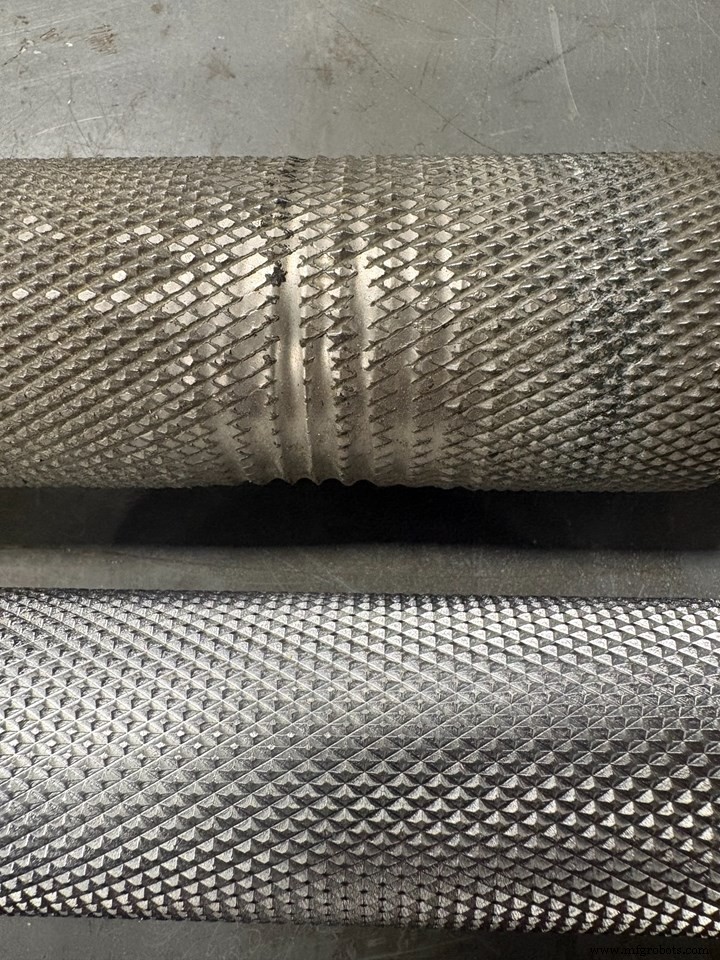
The knurled lower feed roll at the top is worn. The new one below it is chromed to resist wear. Source: Bay Plastics Machinery
In recent years we have observed a notable decline in experienced maintenance personnel. Workers replacing veterans often lack the understanding of critical adjustments inside the pelletizer.
Strand Pelletizer Service Priorities
Recognizing wear patterns is a vital skill for keeping your pelletizer efficient. Common wear points include:
- Rotor‑to‑bed knife gap: Maintain a 0.003 in. setting. Check weekly or whenever the machine stops, especially after a material changeover. Abrasive or filled materials accelerate wear; a growing gap produces tails and “zipper cuts” where strands are only partially cut.
- Lower feed roll‑to‑doctor blade gap: Keep a 0.005 in. setting tight to prevent strands from following the lower feed roll and wrapping around the rotor.
- Proper assembly of feed rolls and bearing housings: Correct installation of the bearing fitment in the housing and on the shaft journal extends life for bearings and feed rolls.
- Air‑cylinder settings: Operators sometimes crank up pressure to compensate for worn components, especially upper feed rolls. The recommended maximum is 40 psi; excessive air adds side loads that prematurely wear bearings and covers.
- Worn strand deflectors: These guide strands into the rotor. Wear or grooves cause long uncut strands; inspect them whenever you see poor cutting.
- Preventative Maintenance (PM) schedules: A solid PM plan optimizes component life. Without it, companies often run to failure, inflating repair costs and downtime. A well‑structured PM schedule saves money and reduces downtime.
- Feed roll coverings: Different coverings perform best with specific materials—abrasive-filled grades versus soft rubber, for example. Trials at Bay Plastics have shown significant differences in pellet quality based on the chosen covering.
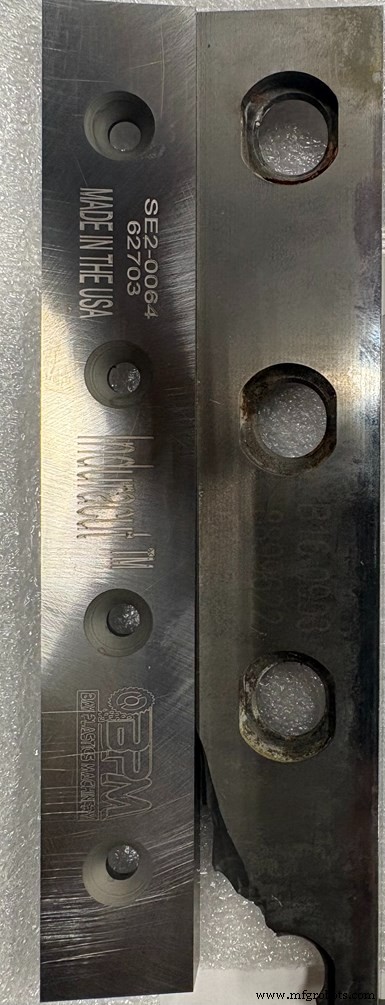
This bed knife is worn and broken.
Bad Parts = Bad Pellets
Inspect pellet quality daily. Dull rotors or worn bed knives lead to subpar pellets. Every shift should include multiple pellet inspections to catch changes early. Understanding wear patterns and identifying early failure signs keeps lines running longer and more efficiently.
Pellet appearance changes as parts degrade, so conduct a thorough visual inspection after every shutdown and perform a weekly PM.
Remember the old adage: “What you put into the pelletizer is what you will get out of it.” Sometimes the problem lies not in the machine but in how material is introduced.
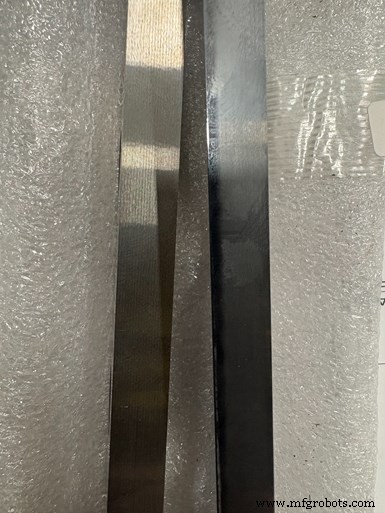
The bed knife is new.
- Roped or bunched strands produce poor pellets.
- Poor feed can cause angle cuts and premature feed‑roll wear.
- Using spreader bars and grooved rollers before the pelletizer helps keep strands evenly spread.
Keep These Pelletizer Parts on Hand
Critical spare parts inventory:
- Rotors: Keep three per machine—one in service, one on the shelf, and one in repair or re‑sharpening.
- Feed‑roll bearings and seals: Replace quickly when needed.
- Upper and lower feed rolls: Most common wear component.
- Doctor blades / wiper blades: Grooves cause strands to drive sideways, producing angle cuts.
- Bed knives: With a 32‑tooth rotor, the bed knife cuts 32 times per rotor blade. Flip it more often than just when you change rotors to maintain sharpness and better pellet cuts.
Again, perform a visual inspection at every shutdown and a weekly PM.
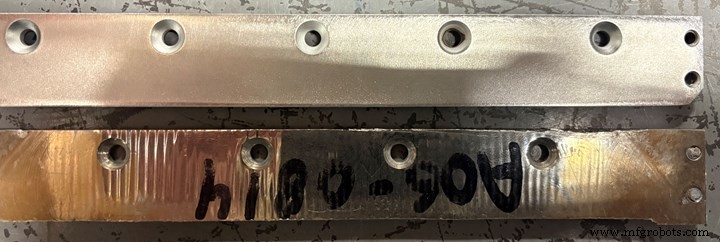
The top doctor blade is chromed and ready; the bottom is grooved and worn.
Pelletizer Uptime Tips
- Ensure strands enter the pelletizer evenly. Uneven flow may indicate misalignment with the extruder die or a dull rotor. Keep the pelletizer square to the extruder and all intermediate equipment.
- For poor pellet cuts, inspect the chamber for worn parts and evaluate strand introduction. Common culprits: dull bed knife, dull rotor, oversized rotor gap, worn doctor blade, ropes, strand size variations, material temperature, excessive air pressure.
- Strand wrapping on the lower feed roll can result from an oversized doctor‑blade gap, a worn blade, or insufficient cooling.
- Extensive wear—evident in pellet shape or consistent rotor crashes—signals the need for maintenance or a complete rebuild. If replacement parts are not on hand or proper assembly training is lacking, engage a repair expert. Cutting chambers can be assembled in multiple ways; on‑site training can bridge the knowledge gap.
Find the Right Pelletizer Repair Service
While routine maintenance can keep your strand pelletizer in top shape, some repairs require expert evaluation and service.
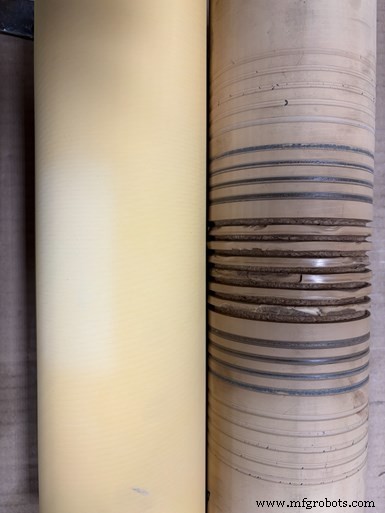
Left: brand‑new re‑covered feed roll. Right: worn and grooved.
When selecting a repair partner, look for:
- On‑site maintenance training: A technician who visits your facility and trains your team.
- Support for new and used equipment: Expertise in process optimization and line sizing for your specific material.
- Process support: Proven experience with diverse materials, ability to improve pellet quality, and willingness to conduct lab trials and share best practices.
- Full machine reviews: Comprehensive evaluations that restore OEM standards, update safety systems, and outline necessary actions.
Regular, thorough maintenance is the key to a long‑lasting strand pelletizer. Treat the machine with the same diligence you give to the pellets it produces.
About the Author: Jerry Greer has been the field service manager at Bay Plastics Machinery (Bay City, Michigan) for over eight years. His duties include electrical department supervision and field service management. He travels nationwide to help customers keep pelletizers running—including machines in service since the late 1980s. Contact: 989‑450‑1257; jgreer@bayplasticsmachinery.com; bayplasticsmachinery.com.
Resin
- CAMX 2018 Preview: L&L Products' Advanced Room-Temperature Cure Adhesives
- Kaneka Aerospace Achieves AS9100D Certification, Elevating Aerospace Quality Standards
- Avient Unveils 25% PCR PVB TPEs, Expanding Sustainable ReSound R Portfolio
- Acetal, Delrin AF, and PTFE: Premium Plastic Bearing Materials
- ABS (Acrylonitrile Butadiene Styrene): Composition, Properties, and Applications
- Advancing 3D Printing: Continuous Fiber‑Reinforced Composite Manufacturing
- Bakelite FoamSet: Lightweight, Heat‑Stable, Flame‑Retardant Foams for Injection & Compression Molding
- Dieffenbacher Boosts D‑LFT Line Flexibility and Throughput for Sustainable Thermoplastic Production
- Affordable Robot Extruder Unlocks Large-Scale Composite 3D Printing
- Alveus Partners with Compa Repairs to Commercialize Composite Ship Repair Solutions