



Engineering Sustainable Closures for Flexible Packaging: Cutting Material Use and Boosting Recyclability
In the flexible packaging industry, caps and spouts may seem modest, but they are pivotal to environmental performance and the consumer experience. A well‑designed closure must meet strict recyclability and material‑reduction targets while sealing reliably, dispensing correctly, and operating seamlessly on high‑speed filling lines—all under tight financial, regulatory, and ecological constraints.

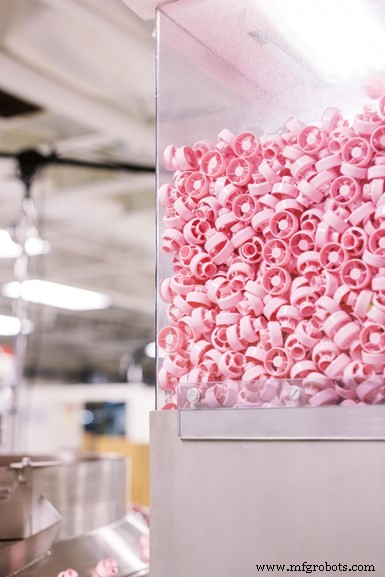
Thoughtfully engineered closures can drive sustainability by slashing material consumption and simplifying recycling. They protect product integrity with reliable seals, tamper evidence, and controlled dispensing. Source: Hoffer Plastics.
Achieving real environmental gains requires disciplined engineering rather than superficial design tweaks or simple resin swaps. Sustainable outcomes arise from optimizing materials, reducing weight, simplifying recycling pathways, and enhancing molding efficiency.
Featured Content
How Caps and Closures Drive Sustainability
While film and container design often dominate sustainability discussions, closures and fitments are equally critical. They enable lightweighting, improve recyclability, and support efficient manufacturing. Closure design advances sustainability in five key ways:
- Reducing overall material use through optimized resin selection and structural efficiency.
- Simplifying recycling by choosing compatible materials and supporting fully recyclable systems.
- Increasing manufacturing and logistics efficiency with faster cycle times, less scrap, and higher line performance.
- Expanding the use of flexible packaging by enhancing functionality and usability.
- Preserving product integrity to prevent waste via reliable sealing, tamper evidence, and controlled dispensing.
The following four engineering pathways provide a practical framework to achieve these goals without compromising customer performance expectations.
1. Material Optimization
Material choice and structural design dictate how a closure balances environmental impact with functional needs. Resin type, geometry, and tooling influence recyclability, material use, seal integrity, torque retention, molding efficiency, and long‑term durability. Engineers must evaluate alternatives in the context of part shape and manufacturing requirements to ensure performance, manufacturability, and end‑of‑life compatibility all align.
True circularity depends on how closures are processed after use, not just design intent. A growing trend is the shift toward mono‑material systems—using a single resin family, typically polypropylene (PP) or polyethylene (PE), across films, films, and fitments. Matching materials simplifies mechanical recycling, improves yield, and facilitates collaboration across the value chain.
Beyond aligning resin families, incorporating post‑consumer recycled (PCR) or bio‑based resins demands rigorous testing to confirm consistent stiffness, impact resistance, and process stability at scale. Successful material optimization balances sustainability goals with molding performance, line efficiency, and overall cost viability.
2. Lightweighting Considerations
Lightweighting remains a proven strategy to cut plastic use. For closures, the challenge is to reduce resin while safeguarding sealing surfaces, dispensing mechanisms, and durability. Modern lightweight designs redistribute material to critical load‑bearing areas and eliminate excess mass elsewhere. Advanced simulation, mold design, and high‑performance resins enable closures to do more with less.
While new materials facilitate optimization, the expertise of seasoned closure designers is indispensable. Lightweight solutions must withstand temperature variations, diverse filling processes, and consumer handling. The most effective designs achieve efficiency without compromising durability, usability, or manufacturing reliability.
3. Design for Recycling Fundamentals
A closure can use mono‑materials and be lightweight yet still fall short if it cannot be recovered at the end of life. Circularity hinges on how closures travel through collection, sorting, and reprocessing systems. Design for recycling treats end‑of‑life pathways as a core engineering constraint alongside filling performance and end‑use functionality.
In spouted‑pouch applications, resin choice can influence seal‑initiation temperature at the fitment‑to‑film interface. Tailored PE and PP sealants can lower initiation temperatures and widen the sealing window, producing stronger seals at lower temperatures without distorting the film.
Optimal performance emerges when sealing technology, film design, and spout material are integrated. The most robust systems align the film’s and spout’s seal windows, ensuring reliable sealing across variable line conditions.
4. Injection Molding Process Adjustments
Lightweighting, material optimization, and design for recycling rely on the ability to manufacture closures consistently at scale. Injection‑molding adjustments enhance sustainability by improving repeatability, reducing scrap, and supporting stable production.
Manufacturing robust, lightweight, and recyclable closures demands meticulous tooling design—careful gating, cooling, and material flow—to maintain dimensional stability and part performance. Advanced geometries, such as optimized threads and tamper‑evidence features, can cut material usage while preserving sealing, dispensing, and usability when supported by reliable tooling and process controls.

As brands, suppliers, and manufacturers respond to rising consumer expectations and evolving regulations, circularity guides the rethinking of flexible packaging. Through material innovation, thoughtful design, and deep collaboration across the supply chain, companies like Hoffer Plastics help shape a future where performance and environmental responsibility coexist.
Precision injection molding underpins sustainable manufacturing. Cavity‑pressure monitoring, closed‑loop control, and data analytics maintain repeatability, reduce scrap, and minimize startup waste. Advanced cooling strategies further stabilize cycles, cut energy and water use, and extend tool life. Prioritizing durable, repeatable tooling reduces downtime, maintenance‑related scrap, and overall lifecycle waste.
Delivering Sustainability Through Engineering Discipline
Achieving packaging sustainability depends on integrating all components—including caps and spouts—through a lifecycle‑oriented engineering approach. When closures are designed with materials, recyclability, manufacturability, and product integrity in mind, they become more than functional parts; they become measurable contributors to environmental progress.
About the Author – John Strubulis is a senior product manager at Hoffer Plastics in South Elgin, Illinois. With over 20 years of experience in flexible packaging, Strubulis leads product innovation, market expansion, and customer‑focused growth through advanced pouch closure design. He manages the Trust‑T‑Lok family of closures, shaping solutions that meet evolving consumer needs and industry demands. Contact: 847‑741‑5740; info@hofferplastics.com.
Resin
- NCAMP Launches First Certified Additive Manufacturing Qualification for Stratasys ULTEM 9085 Resin
- 9T Labs & Arkema Launch Cost‑Effective Manufacturing Method for Complex Aerospace Composite Parts
- Top 5 Plastic Bearings for Metal Surfaces: Phenolics, Nylon, PTFE, Acetal, UHMWPE
- Sicomin Launches Bio‑Foaming Epoxy & Expands Marine Partnerships
- Expert Design Guidelines for High-Quality Injection Moulding
- Optimizing Automated Composite Production for Low‑Volume Aerospace Structures
- SABIC’s Certified Renewable PP Powers New Eco‑Friendly Coffee Capsules
- Avient’s ColorMatrix Optica: Advanced Liquid Toner for Polycarbonate with Superior Clarity and Consistent Color Dispersion
- AGC Introduces Fluon Fluoropolymers to Boost Thermoplastic Composite Performance
- Lanxess AG Completes Acquisition of Emerald Kalama Chemicals, Expanding Global Specialty Chemicals Portfolio