



The Deming Cycle: A Proven Blueprint for Continuous Quality Improvement
Continuing our quality control series, this post explores the Deming cycle—an enduring framework that drives continuous improvement in processes and products.
Developed by Dr. W. Edwards Deming in the mid‑1900s, the Deming cycle—also called the Shewhart cycle or PDSA (Plan‑Do‑Study‑Act)—has become a cornerstone of modern quality management, underpinning standards such as AS9100.
Dr. Deming (1900‑1993) was an American statistician whose work reshaped Japanese manufacturing, earning him the National Medal of Technology and the National Academy of Sciences’ Distinguished Career in Science award in 1987. 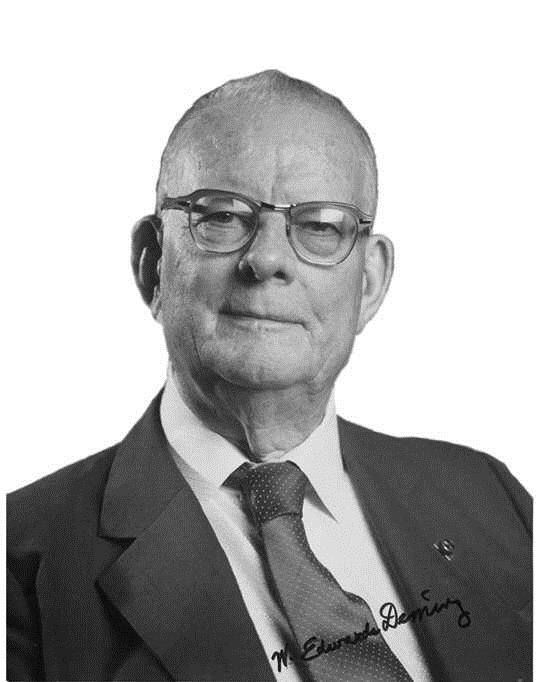
Initially trained in statistics, Deming pioneered more accurate census methods and later built a highly successful consulting practice. Among his most celebrated achievements was revitalizing Ford Motor Company’s profitability through systematic quality improvements.
Deming’s philosophy centers on transforming corporate culture to prioritize relentless quality enhancement. He named his iterative process the “Shewhart cycle,” honoring his mentor Walter A. Shewhart, who originally formulated a three‑step scientific cycle—specification, production, and inspection—mirroring the hypothesis‑test‑analyze method.
The Deming cycle expands on this foundation with an additional phase, creating a four‑step loop that encourages constant interaction among design, production, sales, and research. This structure ensures that quality remains the focal point of every managerial decision.
1. Design
Define objectives and processes that align with customer needs and organizational policies.
2. Production
Execute the defined processes.
3. Sales
Track and measure performance against established standards, reporting results for transparency.
4. Research
Analyze outcomes and implement actions that continually refine process performance.
Japanese industry adapted this framework into the PDCA (Plan‑Do‑Check‑Act) cycle, emphasizing error prevention and ongoing standard refinement. Deming regarded the PDCA model as ideal for quality control, while the PDSA approach better suited organizational system enhancement.
Today, both the Deming and PDCA cycles are integral to companies seeking higher production levels and superior quality, shifting managerial focus from short‑term profits to sustainable excellence.
Do you implement the Deming or PDCA cycle in your organization? Share your experiences in the comments below!
Resin
- Quality Control: The Cornerstone of Motor Reliability
- Elevating Quality Control: 3D‑Printed Tooling Enhances Manufacturing Precision
- Elevating Manufacturing Excellence with Industry 4.0: The Rise of Quality 4.0
- IoT Sensors Revolutionize Air Pollution Monitoring and Public Health
- Enhancing Manufacturing Excellence: Automated Quality Control Powered by Advanced Technology
- Mastering Quality Control: Strategies for Consistent Excellence
- Revolutionizing Quality Control with Low‑Code & No‑Code Software
- Enhance Production Efficiency & Quality with Automated CNC Machine Control
- Enhancing Quality Control: The Power of Sampling Plans for Small Metal Parts
- Elevate Product Quality with Motoman End‑of‑Line Robotics