



Top 5 Elastomers for High‑Performance Gaskets & Seals
Elastomers are polymers that exhibit elastic behavior, a hallmark of rubber. The terms “rubber” and “elastomer” are often used interchangeably to describe materials with viscoelastic properties. Their inherent flexibility, high elongation, resilience, and energy‑damping capability make them perfect for gaskets, seals, isolators, and similar components. 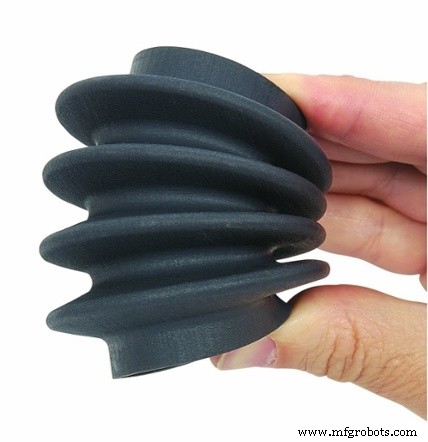
Elastomer manufacturing has evolved from natural rubber sourced from tree latex to sophisticated, engineered blends. By incorporating fillers, plasticizers, and adjusting copolymer ratios, manufacturers tailor properties to meet precise performance requirements, yielding a wide spectrum of elastomers now available on the market.
Choosing the appropriate elastomer begins with evaluating key performance criteria for gasket and seal applications. Engineers must consider operating temperature ranges, environmental exposure, chemical compatibility, and mechanical demands, as these factors critically influence an elastomer’s service life and performance.
Below are five elastomers that are widely used for gaskets and seals, each offering distinct advantages for specific service conditions.
1) Buna‑N / Nitrile (NBR)
Buna‑N, also known as Nitrile Butadiene Rubber (NBR), is a synthetic copolymer of acrylonitrile (ACN) and butadiene. It’s the go‑to material when fuels, oils, or greases are present.
Main Properties:
- Maximum temperature range: –54 °C to 121 °C (–65 °F to 250 °F)
- Excellent resistance to oils, solvents, and fuels
- Good abrasion, cold‑flow, and tear resistance
- Preferred for nitrogen or helium sealing
- Limited UV, ozone, and weathering resistance
- Poor resistance to ketones and chlorinated hydrocarbons
Common Applications:
- Aerospace and automotive fuel‑handling systems
Relative Cost: Low to moderate
2) EPDM
EPDM (Ethylene Propylene Diene Monomer) is produced by copolymerizing ethylene and propylene, with a diene monomer added to enable sulfur vulcanization.
Main Properties:
- Maximum temperature range: –59 °C to 149 °C (–75 °F to 300 °F)
- Excellent heat, ozone, and weather resistance
- Good resistance to polar substances and steam
- Outstanding electrical insulation
- Good resistance to ketones, diluted acids, and alkalines
- Limited resistance to oils, gasoline, and kerosene
- Poor resistance to aliphatic hydrocarbons, halogenated solvents, and concentrated acids
Common Applications:
- Refrigerated and cold‑room environments
- Automotive cooling systems and weather‑stripping
Relative Cost: Low – moderate
3) Neoprene (Chloroprene)
Neoprene is a synthetic rubber produced by polymerizing chloroprene (CR) into polychloroprene.
Main Properties:
- Maximum temperature range: –57 °C to 138 °C (–70 °F to 280 °F)
- Excellent impact, abrasion, and flame resistance
- Good tear resistance and low compression set
- Outstanding water resistance
- Good resistance to moderate exposure to ozone, UV, weathering, oils, greases, and mild solvents
- Limited resistance to strong acids, solvents, esters, and ketones
- Poor resistance to chlorinated, aromatic, and nitro‑hydrocarbons
Common Applications:
- Underwater and aquatic systems
- Electronics and cable protection
Relative Cost: Low
4) Silicone (VMQ)
Silicone rubbers (VMQ) are high‑molecular‑weight polysiloxanes that perform exceptionally in extreme thermal environments and maintain purity for hygienic uses.
Main Properties:
- Maximum temperature range: –100 °C to 250 °C (–148 °F to 482 °F)
- Superior high‑temperature resistance
- Excellent UV, ozone, and weather resistance
- Exceptional low‑temperature flexibility
- Very good dielectric properties
- Limited tensile strength and tear resistance
- Poor resistance to solvents, oils, and concentrated acids
- Limited steam resistance
Common Applications:
- Food and beverage equipment
- Pharmaceutical processes (excluding steam sterilization)
Relative Cost: Moderate – high
5) Fluoroelastomer (Viton®)
Viton® fluoroelastomers (FKM) are copolymers of hexafluoropropylene and vinylidene fluoride, with advanced grades incorporating tetrafluoroethylene or perfluoromethylvinylether.
Main Properties:
- Maximum temperature range: –30 °C to 315 °C (–20 °F to 600 °F)
- Best high‑temperature resistance of all elastomers
- Outstanding UV, ozone, and weather resistance
- Limited resistance to ketones, low‑molecular‑weight esters
- Poor resistance to alcohols and nitro‑containing compounds
- Limited low‑temperature performance
Common Applications:
- Aquatic/SCUBA sealing
- Automotive fuel systems with high biodiesel content
- Aerospace seals for fuel, lubricant, and hydraulic systems
Relative Cost: High
Do you have a favorite elastomer? Let us know in the comments below.
Looking for more detailed information? Download our free comprehensive elastomer guide.

Resin
- Top 10 Properties of Aluminium and Their Industrial Applications
- Key Cloud Metrics That Drive End‑User Experience and Performance
- Top 3 High‑Strength Materials for Plastic Fasteners
- Why Halar® ECTFE Leads the Way in Corrosive Environments
- New Thermoplastic Biomaterial Offers Precise Control Over Degradation and Mechanical Properties for Medical Applications
- Amodel PPA Supreme – Next‑Generation Polyphthalamide for E‑Mobility and Metal‑Replacement Applications
- Evonik's VESTALITE S: Advanced Epoxy Hardener for High-Performance SMCs in E-Mobility
- Top 4 Excavator Uses for the Steelwrist Tiltrotator
- Key Applications of Advanced Plastics Machinery
- Gold-Plated Tungsten Wire: Key Applications and Their Advantages