



Tantalum: Key Properties and Diverse Industrial Applications
Tantalum: Key Properties and Diverse Industrial Applications
Tantalum is one of the hardest transition metals, boasting a melting point of 2,996 °C—second only to tungsten and rhenium. Its high ductility allows it to be drawn into filaments or formed into foils, while its coefficient of thermal expansion is just 6.6 ppm/°C, giving it exceptional dimensional stability under temperature swings. Compared to copper, tantalum’s toughness and corrosion resistance are superior, making it indispensable in demanding environments.
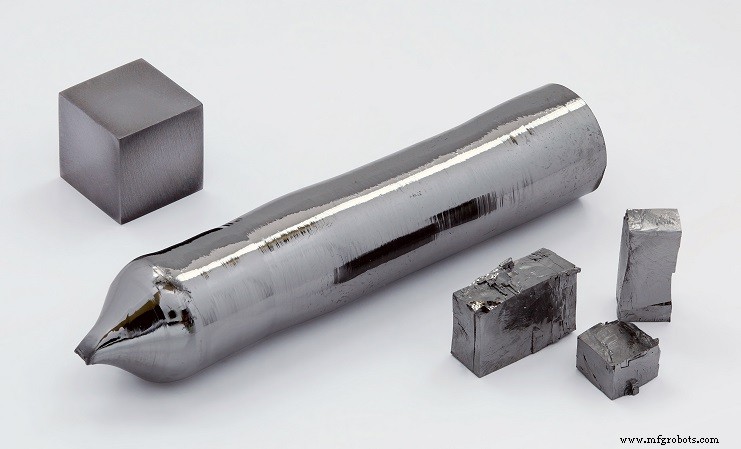

Properties and Applications of Tantalum
The Chemical Properties of Tantalum
Tantalum exhibits outstanding chemical stability. It remains inert to hydrochloric acid, concentrated nitric acid, and aqua regia across a wide temperature range. However, it can corrode in hot, concentrated sulfuric acid—corrosion begins above 150 °C. For instance, exposure to 100 % sulfuric acid at 175 °C for one year reduces the metal by only 0.0004 mm.
In fuming sulfuric acid (15 % SO₃), the attack rate increases markedly. At 130 °C for a year, the surface loss reaches 15.6 mm. Similarly, high‑temperature phosphoric acid (85 %) at 250 °C can erode the metal by approximately 20 mm per year. Mixed acids containing hydrofluoric acid also dissolve tantalum rapidly, and strong alkalis such as 40 % sodium hydroxide at 110 °C or potassium hydroxide at 100 °C will corrode it swiftly. Below 150 °C, most inorganic salts are harmless.
Industrial Applications of Tantalum
These remarkable properties translate into a broad spectrum of uses:
- Aerospace & Defense: Tantalum‑tungsten and tantalum‑tungsten‑hafnium alloys form high‑strength, heat‑resistant components for rockets, missiles, jet engines, and aircraft combustion chambers.
- Electronics: The metal’s excellent conductivity and resistance to oxidation make it ideal for high‑temperature capacitors, especially in military systems. Roughly half of global tantalum output goes into capacitors.
- Chemical Engineering: Tantalum reactors and piping resist corrosion from strong acids, bromine, and ammonia, extending equipment life by an order of magnitude compared to stainless steel.
- Medical Devices: Tantalum’s biocompatibility allows its use in orthopedic implants, while tantalum carbide is a key component of cemented carbide tools.
- Energy & Nuclear: Borides, silicides, and nitrides of tantalum serve as heat‑release elements and liquid‑metal cladding in advanced reactors; tantalum oxide finds use in high‑performance optical glasses and catalysts.
In addition, the metal’s ease of machining makes it a favorite for heat shields, heaters, and heat sinks in high‑temperature vacuum furnaces.
Conclusion
Understanding tantalum’s unique combination of strength, thermal stability, and chemical resistance reveals why it remains a critical material across high‑tech sectors. For further details and procurement, consider Advanced Refractory Metals (ARM), a leading global supplier of high‑quality refractory metals, including tantalum, molybdenum, rhenium, tungsten, titanium, and zirconium.
Metal
- Tantalum Products Explained: Powder, Wire, Capacitors & Their High-Tech Applications
- Tungsten–Copper Alloys: Key Properties, Manufacturing, and Applications
- Tungsten–Nickel–Iron Alloys: Properties, Applications, and Processing
- Tantalum Capacitors: Key Characteristics & Applications
- Properties and Compounds of Rhenium – A Technical Overview
- Top 10 Properties of Aluminium and Their Industrial Applications
- Standard Steels: Composition, Properties, and Applications
- Aluminum Types Explained: Classifications, Properties, and Practical Applications
- Copper‑Nickel Alloys: Key Properties and Practical Applications
- Copper–Nickel Alloys: Superior Corrosion Resistance & Versatile Uses