



Properties and Compounds of Rhenium – A Technical Overview
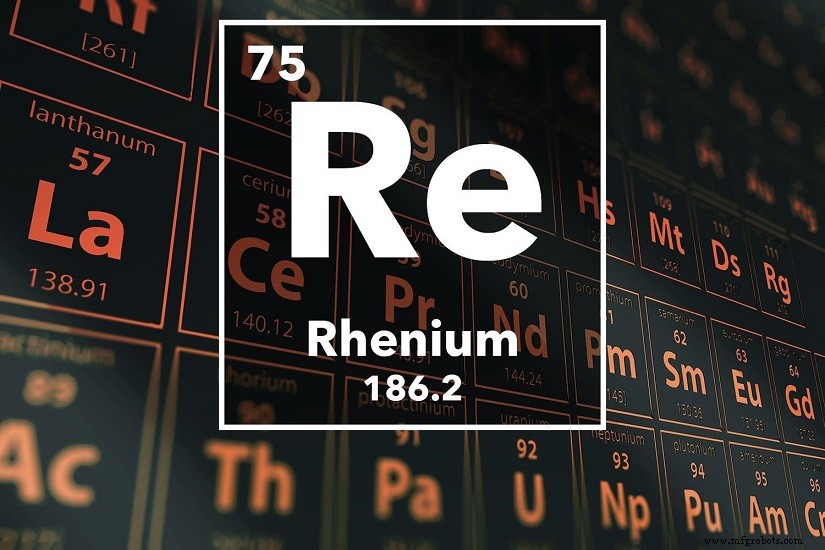
Properties and Compounds of Rhenium
Rhenium is a silvery‑white, extremely refractory metal that boasts one of the highest melting points of any element – 3,186 °C – second only to tungsten and tantalum. Its exceptional hardness, wear resistance, corrosion resistance, and stability in air make it indispensable in aerospace, electronics, petrochemicals, and high‑temperature alloy design. In this article we examine rhenium’s key physical and chemical characteristics and its most important compounds.
Properties and Compounds of Rhenium
The Properties of Rhenium
Physical Properties
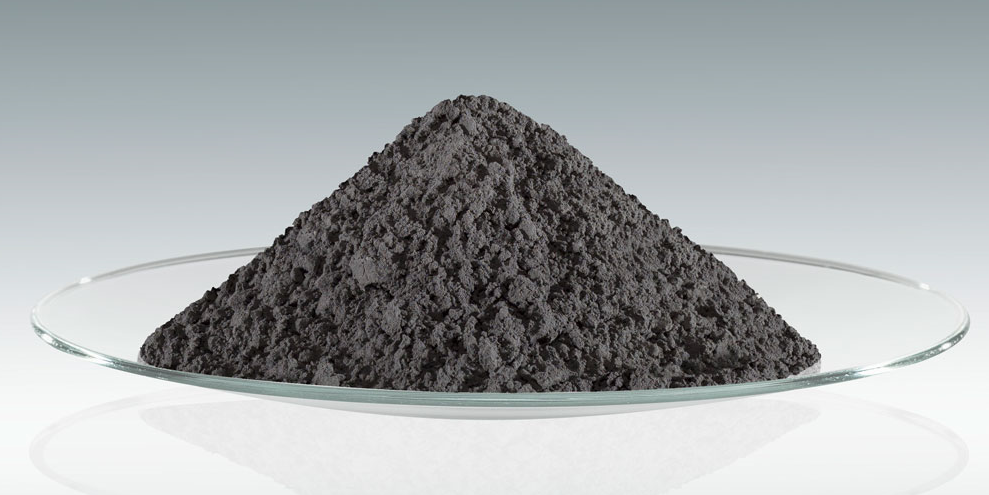
Rhenium presents as a bright, silver‑white metal or fine gray to black powder. It has a melting point of 3,186 °C, a boiling point of 5,596 °C, and a high density of 20.53 g cm⁻³. The metal’s intrinsic hardness and resistance to wear and corrosion enable its use in the most demanding service environments.
Chemical Properties
Rhenium’s electron configuration is [Xe]4f¹⁴5d⁵6s², giving rise to oxidation states ranging from –1 to +7. The most common oxidation states are +3, +4, +5, and +7. Its reactivity is highly dependent on particle size; powdered rhenium is considerably more reactive than bulk metal. Rhenium does not dissolve in hydrochloric acid but reacts with nitric acid to form perrhenic acid (HReO₄) via 3Re + 7HNO₃ → 3HReO₄ + 7NO + 2H₂O. It also reacts with ammonia‑containing hydrogen peroxide solutions to yield ammonium perrhenate (NH₄ReO₄) through 2Re + 2NH₃ + 4H₂O₂ → 2NH₄ReO₄ + 3H₂.
The Compounds of Rhenium
Rhenium Oxides
1. Re₂O₇
Re₂O₇ is a yellow, volatile solid and the most common rhenium oxide. It dissolves in water, forming perrhenic acid (HReO₄).
2. ReO₂
ReO₂ appears as a dark brown monoclinic solid with a density of 11.4–11.6 g cm⁻³. Although it boils at 1,363 °C, it begins to decompose around 700 °C, releasing metallic rhenium and rhenium hexoxide. ReO₂ is poorly volatile but serves as a getter and can be converted to perrhenate when co‑melting with alkali in air.
It is slightly soluble in water, insoluble in dilute acids, but dissolves in concentrated halogen acids. It reacts readily with nitric acid, hydrogen peroxide, and other oxidants to produce rhenic acid. Typical synthesis routes involve reduction of rhenium anhydride with hydrogen at 300 °C or decomposition of ammonium rhenate under an inert atmosphere at 400 °C. ReO₂ is a valuable precursor for hydrogen‑reduction processes that yield metallic rhenium and can act as a catalyst in organic synthesis.
3. ReO₃
ReO₃ is a red, metallic‑looking solid that is chemically inert under mild conditions. It is insoluble in water, dilute hydrochloric acid, and dilute sodium hydroxide, but dissolves in concentrated nitric acid, where it oxidizes to perrhenic acid.
Other Key Rhenium Compounds
At high temperatures, rhenium reacts with sulfur vapor to form rhenium disulfide (ReS₂). Rhenium diboride (ReB₂) is a super‑hard ceramic with hardness comparable to tungsten carbide, silicon carbide, and other transition‑metal borides.
Halides of rhenium are formed by reaction with halogens: ReF₄, ReF₅, ReF₆, ReF₇, ReCl₅, ReCl₆, ReCl₃, etc. ReCl₃ is a trimeric red solid that behaves as a covalent, non‑electrolytic compound in solution. Tetravalent rhenium readily forms diverse coordination complexes.
Conclusion
We hope this overview has clarified rhenium’s unique properties and its range of stable compounds. For further technical information and high‑quality refractory metals, please visit Advanced Refractory Metals (ARM), a global leader in tungsten, molybdenum, tantalum, rhenium, titanium, and zirconium supply.
ARM, headquartered in Lake Forest, California, offers competitive pricing and expert support for refractory metal solutions worldwide.
Metal
- Tungsten Flux: Key Properties & Industrial Applications
- Properties and Applications of Tungsten Alloy Counterweights
- Tungsten Diselenide (WSe₂): Structure, Properties, and Key Applications
- Tungsten Alloy Balls: Properties, Production, and Key Applications
- Tungsten–Copper Alloys: Key Properties, Manufacturing, and Applications
- Tantalum: Key Properties and Diverse Industrial Applications
- Aluminum 6061: Exceptional Corrosion Resistance & Versatile Applications
- Key Properties of Metals, Nonmetals, and Metalloids: Conductivity, Malleability, and Physical State
- Chromium: Essential Trace Element, Properties, and Practical Applications
- Aluminum Bronze: Key Properties & Industrial Applications