



Top 10 Properties of Aluminium and Their Industrial Applications
Top 10 Properties of Aluminium and Their Industrial Applications
Aluminium, abundant and versatile, is a cornerstone of modern engineering and everyday life. In this article, we examine its ten most significant properties and how each drives widespread industrial and commercial use.

Top 10 Property #1 – Low Density
With a density of only 2.7 g / cm³—roughly one‑third that of iron or copper—aluminium delivers exceptional weight savings. Despite its lightness, aluminium alloys achieve comparable or superior hardness, making them indispensable in aerospace, automotive, marine, and space‑flight components.
Top 10 Property #2 – Excellent Thermal Conduction
Aluminium’s thermal conductivity (~237 W / m·K) exceeds that of iron by more than three times. This makes it ideal for heat exchangers, heat sinks, cooking utensils, and any application where rapid heat dissipation is critical.
Top 10 Property #3 – Superior Ductility
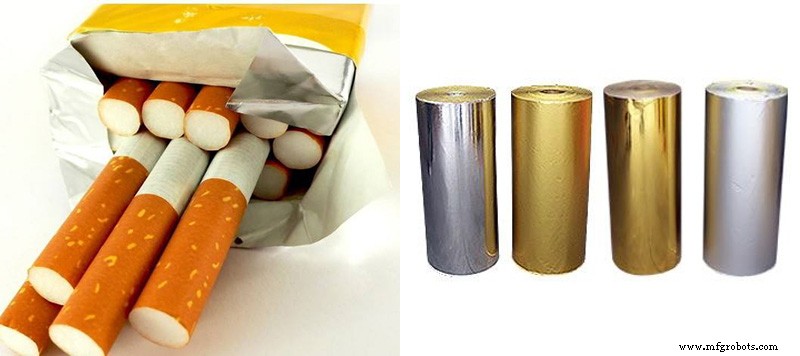
Aluminium ranks just behind gold and silver in ductility, enabling it to be rolled into foils thinner than 0.01 mm at 100 – 150 °C. Such foils are widely used for packaging cigarettes, confectionery, and other products requiring flexible, protective layers.
Top 10 Property #4 – High Corrosion Resistance
In ambient air, aluminium naturally forms a dense oxide film that protects the metal from corrosion. This property underpins its use in medical devices, chemical reactors, refrigeration systems, and pipelines for oil and gas.
Top 10 Property #5 – Catalyst and Deoxidizer
Aluminium acts as a deoxidizer in steelmaking, and aluminium‑based powders, when mixed with high‑melting‑point oxides, form cermets used in high‑temperature aerospace and missile components.
Top 10 Property #6 – High‑Energy Combustion
Aluminium powder releases substantial heat and bright light upon combustion, making it a key ingredient in pyrotechnics, propellants, and military explosives such as ammonium‑aluminium mixtures.
Top 10 Property #7 – Decorative Finishes
Aluminium powder, with its silvery‑white luster, is used in silver paints and coatings to protect iron products from corrosion while providing an attractive finish.
Top 10 Property #8 – Low‑Temperature Strength
Unlike many metals, aluminium’s strength improves at cryogenic temperatures without becoming brittle. This makes it suitable for refrigerators, freezers, Antarctic vehicles, and cryogenic hydrogen production equipment.
Top 10 Property #9 – Superior Reflectivity
Aluminium plates reflect ultraviolet light more strongly than silver and are used to manufacture high‑quality mirrors, solar concentrators, and telescope reflectors.
Top 10 Property #10 – Sound‑Absorbing Capabilities
Aluminium composites absorb sound effectively, leading to their use in acoustic panels, HVAC ductwork, and interior ceilings of large buildings and broadcast studios.
Conclusion
We hope you found this overview of aluminium’s key properties informative. For deeper insight into aluminium applications or to explore our high‑quality aluminium products, visit Advanced Refractory Metals.
Metal
- Tungsten–Copper Alloys: Key Properties, Manufacturing, and Applications
- Tantalum: Key Properties and Diverse Industrial Applications
- Hafnium Oxide (HfO₂): Structure, Properties, and Key Applications
- Aluminum 6061: Exceptional Corrosion Resistance & Versatile Applications
- Aluminium Alloys Explained: Composition, Properties, and Key Applications
- Aluminum Types Explained: Classifications, Properties, and Practical Applications
- Delrin (POM) Plastic: Properties, Grades, and Uses in CNC Machining
- Copper‑Nickel Alloys: Key Properties and Practical Applications
- Aluminum Bronze: Key Properties & Industrial Applications
- Aluminium: Key Properties & Common Uses Explained