



Top 3 Plastic Engineering Innovations of the Week
I’m always amazed by the cutting‑edge plastic engineering stories that surface on Twitter each week. The breadth of applications—from lifesaving devices to everyday convenience—highlights the versatility and potential of modern polymers.
Below are my top three plastic engineering highlights from this week:
1. The Origami Kayak – A Collapsible Watercraft
When San Francisco resident Anton Willis realized his cramped apartment couldn’t accommodate his full‑size kayak, he drew inspiration from Japanese origami to create the Oru. The result is a 25‑lb kayak that folds into a 33 × 29 × 10‑inch carrying case. Even the paddle splits to fit inside the case, which can also hold a life preserver.
Willis initially prototyped with paper before selecting Coroplast®, a corrugated plastic that combines paper‑like flexibility with resistance to water, salt, UV light, and repeated folding. In durability tests, the Coroplast® prototype survived 20,000 folds and shows no significant damage after that—equivalent to nearly 55 years of daily use.
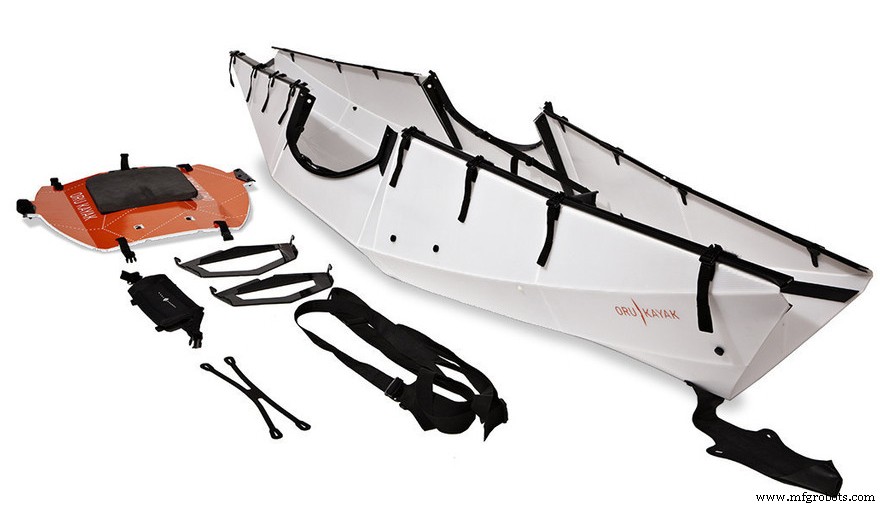
Willis launched a Kickstarter campaign in 2012, raising the necessary funds in just five hours. The Oru is now back‑ordered for the next four months; check out the original article here for details.
2. The Invisible Bike Helmet – A Stylish Neck‑Brace Air‑Bag
Two Swedish scientists have developed a helmet that looks like a simple neck brace. The collar is made of fabric, while a built‑in air‑bag—constructed from a high‑strength nylon—inflates upon impact, delivering protection equivalent to a standard bike helmet.

It offers the aesthetic of a regular collar with the safety of a helmet, making helmet hair a thing of the past. Check out their website here and the original news story here for more information.
3. BMW i3 – A Carbon‑Fiber Reinforced Plastic Electric Car
BMW’s new i3 electric vehicle, released today in Germany, showcases the future of automotive design: a chassis largely composed of carbon‑fiber reinforced plastic (CFRP). The passenger area uses CFRP, while the exterior and battery cover are aluminum.
CFRP is lighter than steel yet stronger than most metals, allowing the i3 to be 20 % lighter than the Nissan Leaf. This weight reduction improves acceleration, range, and compliance with tightening emission standards.
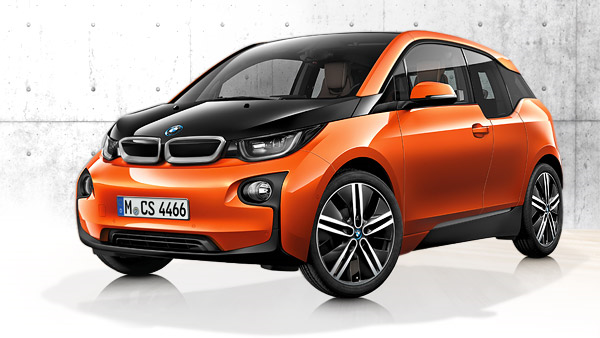
For more on BMW’s innovative use of CFRP, read the original news article here.
These stories illustrate how plastic engineering continues to shape everyday life and industry. If you have favorites to share, drop them in the comments below.
Want to dive deeper into plastic materials? High Performance Plastics Material Guide
 hbspt.cta.load(208988, '61fdd52d-224a-4f76-85e8-e46c8d514afc', {});
Resin
- Industrial Internet Consortium Celebrates 1 Year: Demo, Keynote & Testbed Insights
- Top 3 High‑Strength Materials for Plastic Fasteners
- Top 5 Drive Styles for Plastic Screws – Expert Insights for Your Projects
- Vespel® – The High‑Performance Polyimide for Extreme Environments
- How Plastic Materials Are Revolutionizing Modern Construction
- Top 3 UV Stabilizers for Plastics: Enhancing Durability and Performance
- How to Identify the Type of Plastic in Your Everyday Items
- National Composites Week: 20 Landmark Stories Shaping the Past Decade
- 2019’s Leading Composite Industry Highlights
- Delrin vs Nylon: Selecting the Right Polymer for Your Project