



How Cryogenic Temperatures Affect High‑Performance Plastics: Expert Insights
Cryogenic Temperatures and High‑Performance Plastics
Cryogenics is the science of producing and studying materials at extremely low temperatures—typically below ‑150 °C. Modern industries—from aerospace to biomedical devices—rely on cryogenic environments for fuel storage, spacecraft components, MRI machines, particle accelerators, and superconducting magnets. 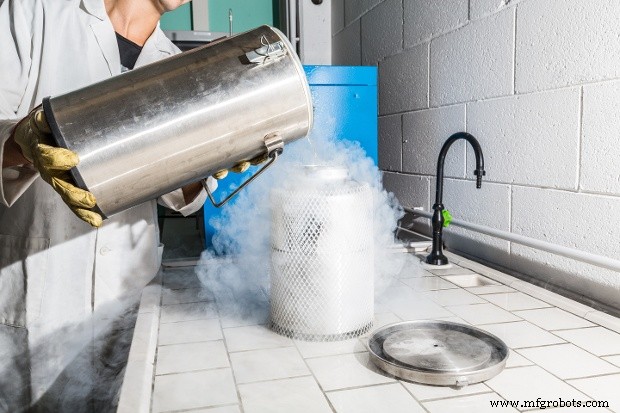 Curbell Plastics® recently published a comprehensive white paper by Dr. Keith Hechtel, detailing how cryogenic conditions influence common high‑performance polymers. This article distills the key findings to help designers and engineers make informed material choices.
-
Mechanical Properties
Across the board, polymers become markedly harder and stiffer at cryogenic temperatures. For instance, the compressive modulus of PTFE rises from roughly 100 kpsi at room temperature to an impressive 900 kpsi when cooled to 20 K (‑424 °F). However, this increased rigidity comes at the cost of brittleness: impact strength and tensile elongation decline sharply. Since plastics already have lower fracture toughness compared to many metals, extra caution is required when they operate under high pressure or impact in cold environments.
-
Thermal Properties
Polymers exhibit a higher coefficient of thermal expansion (CTE) than metals. When cooled from ambient to near‑zero Kelvin, PTFE can contract by about 2.2 %, whereas aluminum shrinks by less than 0.5 %. Such differential shrinkage can jeopardise tight tolerances and component fitment. Engineers often mitigate this by incorporating carbon or glass fibers, which reduce the overall CTE and help maintain dimensional stability.
-
Friction and Wear
Just as cryogenic hardening improves steel’s wear resistance, the same principle applies to plastics. As temperature falls, a polymer’s hardness increases, reducing friction and wear. A useful analogy is the difference between an athletic shoe and a dress shoe: the former’s softer sole generates more friction, while the latter’s firmer sole slides more easily. Plastic bearings, for example, retain excellent wear resistance even without lubrication—critical when conventional oils lose viscosity at low temperatures.
For in‑depth data, charts, and practical recommendations, download the full white paper from Curbell Plastics.
Do you design for cryogenic environments? Share your experience in the comments below.
Looking to expand your knowledge on high‑performance plastics? Download our free guide now!

Resin
- How Plastic Materials Are Revolutionizing Modern Construction
- Can Organic Materials Drive the Next Generation of Plastics?
- Why Aerospace Ranks Plastics as the Ultimate Weight‑Saving, Corrosion‑Resistant Material
- From Parkesine to Polyester: The Evolution of Plastic Materials
- How Plastics Power Modern Medicine
- Fiber‑Reinforced Plastic: Why It Outperforms Steel, Aluminum, and Timber in Modern Applications
- Understanding Creep in Plastics: Causes, Types, and Practical Implications
- From Ivory to Bakelite: Tracing the Evolution of Modern Plastics
- Top 15 Plastic Injection Molding Materials for Optimal Performance
- Mastering Plastic Extrusion: Process, Materials & Key Applications