



Tesla Giga Nevada Accelerates Large‑Part Production to Under 24 Hours Using Fuse X1
"At Tesla, we set ambitious deadlines and consistently exceed them. Rapid 3D‑printing turnaround is a key advantage over conventional manufacturing," says Cody Jepsen, Engineering Technician in Additive Manufacturing at Tesla Giga Nevada.
Tesla’s additive‑manufacturing teams span Nevada, California, and Texas, with a single Nevada shop producing 10,000 to 30,000 parts per week. Speed is not just a goal—it’s a requirement. Every part must arrive in under 24 hours, so printers must run fast, changeovers must be brief, and uptime must be maximized.
Historically, Jepsen had to run large‑format SLS printers at only half their vertical capacity—about 230 mm—so that each build finished within the 24‑hour window. That workaround meant slicing large parts into sections, preparing custom dovetail joints, and then labor‑intensive post‑processing: gluing, sanding, and assembly.
Enter the Fuse X1. With a build envelope of 330 × 330 × 565 mm, the X1 delivers more than double the effective height of traditional SLS machines while still completing most builds in under 24 hours. Jepsen can now print large components in one piece, eliminating the extra CAD, assembly, and finishing steps that previously added hours of work.
"Using the full Z height within a 24‑to‑26‑hour window unlocks our workflow and dramatically increases throughput," Jepsen explains. The larger build volume also lets him fit more parts in a single job, shrinking backlog and reducing the need for costly external outsourcing.
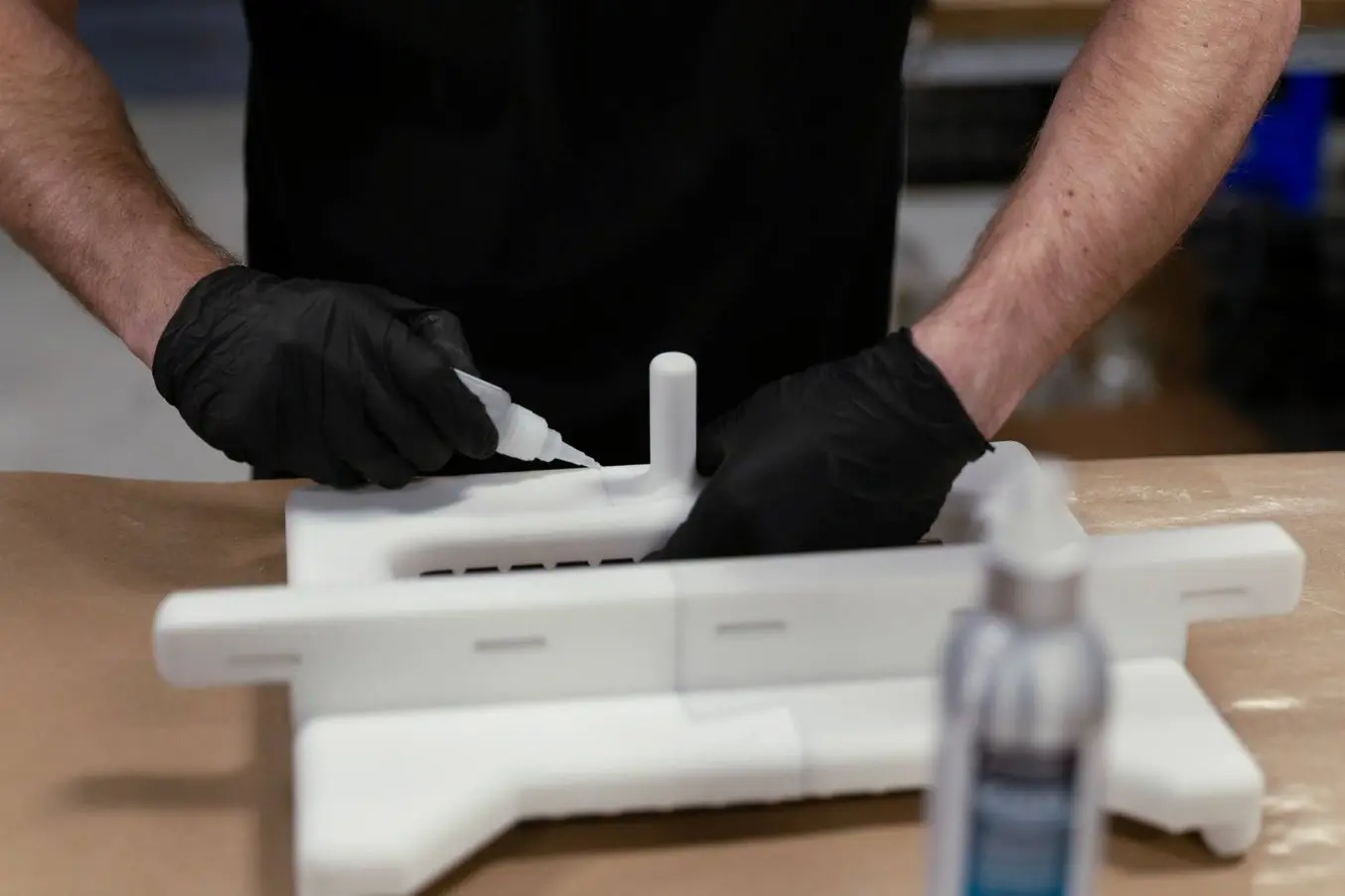
One example is a rework jig that previously required sectioning, dovetail joints, and 20–25 minutes of manual post‑processing. With the Fuse X1, Jepsen prints the jig whole, depowders it, and blasts the surface—an automated finish that saves nearly an hour of labor per jig.
Similarly, the window dunnage rack—used to secure multiple windows on a single pallet—was traditionally split into two pieces and required four separate builds to produce eight racks. The Fuse X1 now prints eight racks in a single 24‑hour build, doubling throughput and eliminating gluing labor.
Traditional SLS printers also suffer from prolonged cooling times. The X1’s modular Build Units feature integrated insulation, keeping parts in optimal thermal conditions while allowing the machine to begin the next job before the previous build has fully cooled.
Jepsen’s department also produces high‑volume, low‑cost parts like non‑marring shims. Previously, dedicated builds on traditional SLS machines drove up costs and delayed the decision to switch to injection molding. With the X1’s adaptive thermal control, Jepsen now packs shims around larger parts, maximizing build density and keeping the per‑unit cost competitive—so the injection‑molding switch may never be necessary.
Beyond the X1, Tesla Giga’s Additive Manufacturing shop also runs Formlabs SLA printers—Form 4 and Form 4L—across a range of specialty resins, from heat‑resistant Rigid 10K to ESD and Tough families. The Form 4’s speed allows same‑day delivery, and the ease of material swaps gives engineers the flexibility to iterate quickly.
With 10,000 to 30,000 parts a week, machine uptime is critical. Jepsen notes that Formlabs’ customer support sets the gold standard for industrial 3D printing, with same‑day part replacement shipping that keeps downtime to a minimum.
As printers become faster, Jepsen says, the need for expansion diminishes. "I’m getting the same volume of parts from one X1 as I did from two or three traditional large‑format SLS systems," he remarks. The X1’s small footprint—just 12.5 ft² (1.3 m²)—means more units can fit in the same space, further reducing the need for new floor area.
Overall, Tesla Giga’s additive‑manufacturing team demonstrates how the latest 3D‑printing technology can scale high‑volume, rapid‑turnaround production while cutting labor and material costs.
Explore Formlabs 3D printers and the Fuse X1 to discover reliable, high‑throughput solutions, or contact sales to request a quote.
3D printing
- How to Fix Layer Separation in 3D Printing: Improve Adhesion and Prevent Delamination
- Speed and Precision: Top Fast 3D Printing Techniques for Engineers
- Interview with RIZE CEO Andy Kalambi: Advancing Sustainable, Scalable Industrial 3D Printing
- How Automotive OEMs Overcome Additive Manufacturing Challenges with Digital Solutions
- What Is SLA 3D Printing? A Comprehensive Guide to Stereolithography
- Discover RP Platform’s Innovations at formnext 2017 – Meet Our Expert Team
- Precise Z‑Offset Calibration for Ender 3: Step‑by‑Step Guide
- How MES Software Can Revolutionize Production Planning for Your 3D Printing Service
- Solid Edge for 3D Printing: Is It the Right Choice?
- Software That Solves Four Major Additive Manufacturing Hurdles