



Revolutionizing Production: Markforged’s 3D‑Printed Spool Dispenser Innovation
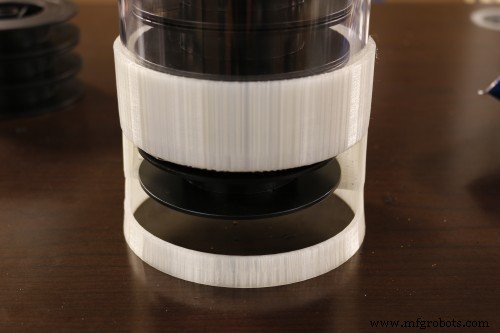
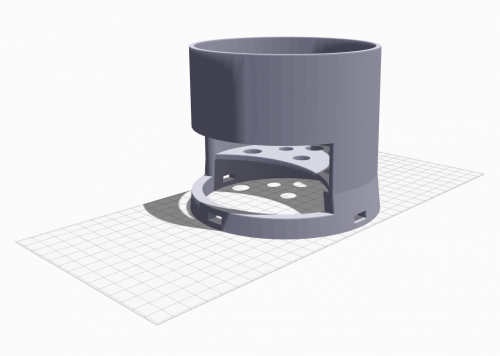
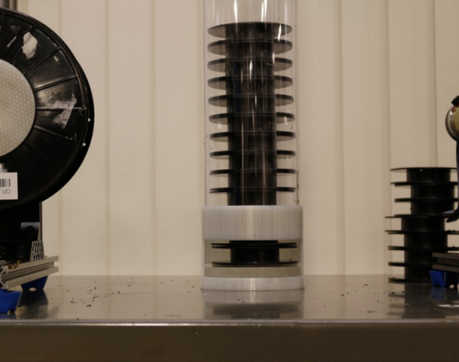
At Markforged, we rigorously test our printers against a wide range of demanding scenarios, pushing them harder than even our most demanding customers require. We discover challenging geometries by leveraging industrial‑strength 3D printing across all internal operations. From rapidly iterated test fixtures for hardware R&D to precision jigs for production, our Mark One and Mark Two printers drive fast, continuous innovation company‑wide. We value 3D‑printed parts because they enable long‑term usage testing, give us insight into our customers’ needs, and demonstrate how high‑strength printed components can drive continuous improvement for manufacturers. A great example of how we’ve put these principles to work lives in our material production department. Markforged’s highly engineered composite filaments are produced in-house on our custom manufacturing line on large‑format reservoir spools. The carbon fiber, Kevlar, or fiberglass filaments are then spooled in smaller volumes on our end‑use spools that customers use daily. With thousands of spools passing through manufacturing each month, any inefficiency in processing time per spool quickly translates to significant productivity loss. Jazmin and Faisal, our operations technicians, identified that picking individual empty spools from supply cartons was slow and wasteful, while the haphazard stacking of spools on the workbench created a disorganized, messy workflow. Because every employee can access our in‑house 3D printer farm, they seized the opportunity to develop an innovative solution. Jazmin devised an efficient workflow and designed a 3D‑printed spool‑dispenser mouth that incorporated a polycarbonate tube as a spool magazine. She teamed up with Faisal to translate the concept into a physical prototype. Faisal’s model reflected his knack for adding valuable features beyond the original purpose; he incorporated zip‑tie mounting points at the dispenser’s base, which later proved useful when we repurposed surplus prints for other company needs. The rapid iteration inherent to 3D printing became evident during this phase. When the first prototype was printed, a supplier tolerance issue in the polycarbonate tube’s outer diameter required a geometry tweak. Because the part was printed, Faisal could quickly adjust the SolidWorks model, export a new STL, upload it to Eiger, and print a new batch—all without the need for onsite supervision that CNC machining would demand. The updated dispenser was installed on the production line the following day. Historically, continuous innovation was the realm of software engineers; the slower, higher‑barrier manufacturing of physical parts had kept hardware designers from rapid testing. While widespread 3D printing has begun to shift this paradigm, the limited strength of most consumer printers still hinders hardware teams from creating robust prototypes comparable to the high‑strength, longer‑lead‑time aluminum parts traditionally used. Markforged printers overturn that paradigm entirely, redefining prototyping so that every team member can contribute to continuous improvement and elevate company performance.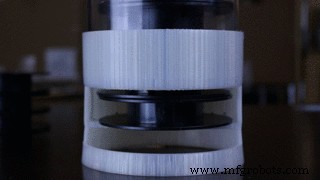
3D printing
- Designing a 3‑D‑Printed Tesla Turbine – Part 1: Recreating the Housing with Markforged
- In‑Process Inspection: Elevating 3‑D‑Printed Part Quality
- Markforged Sets New Standards in Antweight Combat Robotics
- Optimizing the IRIS+ Drone: Lightweight, Durable Arms with Onyx 3D Printing
- Weekly 3D‑Printed Highlight: Kevlar‑Reinforced Pliers
- Skateboard Part 1: Building Durable 3D‑Printed Wheels
- Professional Guide to Finishing and Painting 3D Printed Parts
- Markforged’s In‑House 3D‑Printed Tooling: Rapid Solutions for Everyday Shop Challenges
- Explore Markforged Eiger: Test Your Parts with Our Production‑Quality Slicer
- Guaranteeing Dimensional Accuracy in 3D Printed Parts