



How 3D‑Printed Assistive Devices Are Improving Lives for Children with Disabilities
Tamara Kittelson‑Aldred had spent 11 years as an occupational therapist before her daughter, Eleanore, was born in 1989 with multiple disabilities that ultimately required a wheelchair. Tamara’s clinical expertise and her role as a parent intertwined daily until Eleanore’s untimely death in 2001.
“It was already my profession, and then I entered this world of being a parent … It was quite the transition to learn how to live with my feet in both worlds,” Tamara explains.
After Eleanore’s passing, Tamara founded Eleanore’s Project, a nonprofit focused on improving the quality of life for children with disabilities and their families. The organization is headquartered in Peru, where adaptive technology is scarce. “It’s all about ensuring people have the supports they need to sit upright, function well, and stay healthy,” she says. “Without these supports, bodies can develop dislocated joints, spinal curvatures, and other complications.”
Teaching posture and proper support to Peruvian professionals and families can be complex, especially when there is a language barrier or limited medical background. “It can be difficult to convey anatomical concepts to people who don’t have a foundation in anatomy or medical terminology,” Tamara notes.
To simplify education, Tamara partnered with occupational therapist and Eleanore’s Project board member Sammie Wakefield to create Hammie—a simplified anatomical model that visually demonstrates postural principles for those without a medical background.
Hammie quickly became an invaluable tool in Peru. However, Wakefield’s hand‑crafted wooden models were time‑consuming and the parts wore out over time.
3D‑Printed Assistive Technology Devices
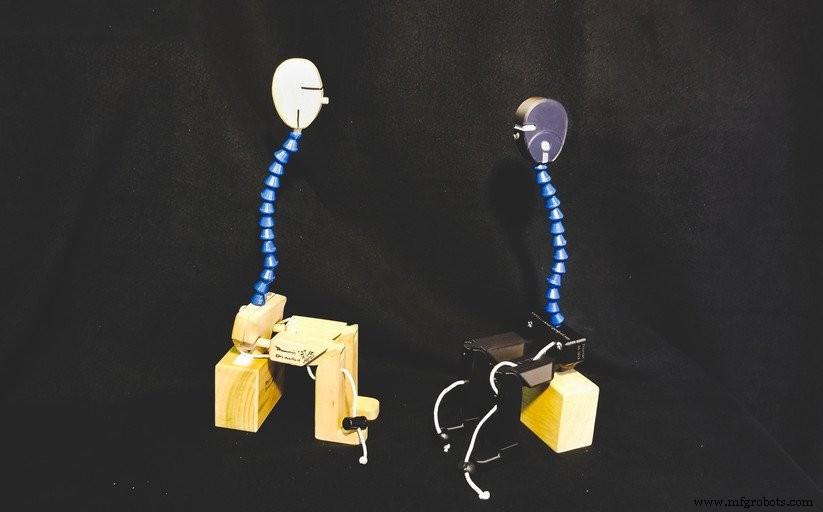
In 2016, Brian Burkhardt, a former VA rehabilitation engineer, volunteered in Peru as part of Eleanore’s Project. His job at the VA is to design assistive devices for people with severe spinal cord or traumatic brain injuries, ALS, MS, and other conditions that limit independence, especially mobility.
“The first year I was there, Sammie brought out this wooden figure called Hammie. It was a very simplified analog of a pelvis, legs, and spine, with rudimentary ligaments that could be tightened or loosened,” Burkhardt recalls. “It was intended as a teaching tool for therapists and patients to show the consequences of poor wheelchair seating or bad posture.”
Burkhardt saw an opportunity to streamline the process. “I bet I could model this in SolidWorks and print it more easily than wood,” he said. With an ABS printer and a new Markforged machine, he began prototyping with ABS before discovering that Onyx was the ideal material. Iteration became quick and inexpensive, and the new Hammie cost only $40 in material—down from $100—and weighed 35% less.
“That was the beginning,” Tamara says. The project is still in its early stages, but the potential to improve wheelchair seating and mobility for people with complex body shapes and movement challenges is growing rapidly. “We’re excited to spread these clear, accessible concepts so that clinicians can provide better care both locally and globally,” she adds.
Assistive Technology Services from the Veteran’s Association
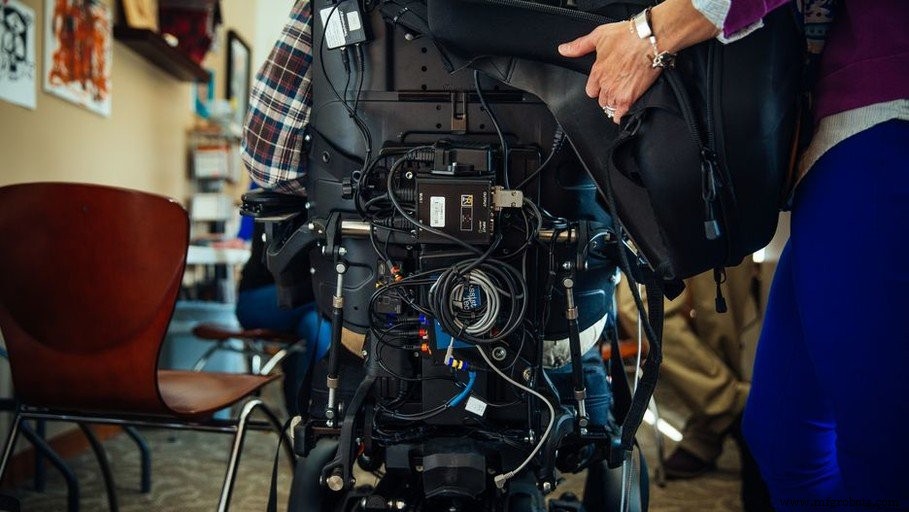
The success of the 3D‑printed Hammie led Burkhardt to use his Markforged printer for additional VA projects. He now improves wheelchairs, augmentative communication devices, home automation systems, and cognitive aids. “We help integrate technology and reduce the technical burden on therapists and patients so they can focus on rehab goals,” he explains.
Burkhardt has experimented with PLA and ABS printers for one‑off, highly customized products, but these machines required significant maintenance. After learning about continuous fiber reinforcement available only on Markforged, the VA acquired a Mark Two. “With Onyx, the parts were stunning, easier to print, and offered the strength and flexibility we needed,” he says.
Recent projects include a custom leather punch holder for a veteran‑turned‑artist, an adaptive makeup applicator for a veteran with a spinal injury, individual‑specific stylus holders for those with limited fine motor control, and ergonomically shaped splints to prevent contractures in veterans with spinal cord injuries.
“One of our core principles is we don’t say no,” Burkhardt notes. “If someone has a need, we’ll keep working on it until we find a solution.” He adds, “It’s inspiring to transform what seemed impossible into a tangible, possible solution.”
Interested in 3D printing? Chat with one of our product specialists for a demo or a quote!
3D printing
- Metal 3D Printing Today: From Prototype to Production
- How Desktop 3D Printers Are Reshaping Industrial Manufacturing
- From Clumsy Clip to Custom Car Mount: How 3D Printing Solved a Real-World Problem
- Revolutionizing Injection Molding with Stratasys PolyJet Technology
- Revolutionizing Sand Casting with Stratasys FDM Technology
- Auburn University Advances Assistive Technology: 3D‑Printed Prosthetics Revolutionize Care
- Understanding 3D Printer Costs: FDM vs. Resin Prices Explained
- Why 3D Printers Are Slow—and How to Speed Them Up
- How Loud Are 3D Printers? Find Quiet Models & Reduce Noise
- Optimizing Mining Operations Through Smart Technology